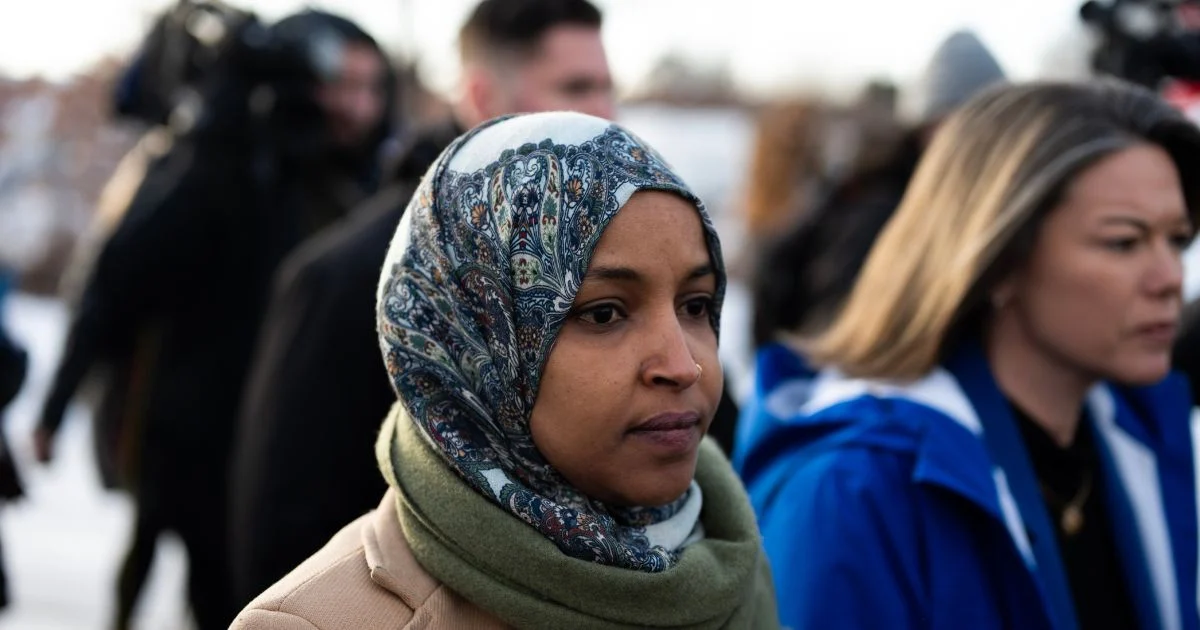
The administration of President Donald Trump is reportedly engaged in a concerted effort to build a case aimed at stripping Democratic Minnesota Representative Ilhan Omar of her U.S. citizenship, potentially leading to her deportation. This development follows a dramatic federal raid on Omar’s Washington, D.C., residence on Monday morning, part of an investigation focusing on allegations that the congresswoman used a fraudulent birthdate on her naturalization paperwork. The probe, which has intensified with recent federal actions, signals a significant escalation in the Trump administration’s broader initiative to identify and denaturalize individuals alleged to have misrepresented facts during their immigration processes.
A Deep Dive into the Allegations
Central to the investigation are claims regarding Omar’s birthdate at the time of her naturalization in 2000. Public records reportedly indicate a birthdate that would have made her at least 18 years old when she sought U.S. citizenship. If she was indeed 18 or older, she would have been required to apply for citizenship independently, undergoing a more rigorous process. However, the investigation alleges that Omar modified her official birthdate to 1982, which would have classified her as a minor at the time of her naturalization. This status would have allowed her to gain citizenship automatically through her father’s naturalization, a process known as "derived citizenship." Omar has previously stated that her original birth records were destroyed amidst the civil conflict in Somalia, a common challenge faced by refugees from war-torn regions. The discrepancy in her birthdate and the implications for her naturalization pathway form a critical component of the federal inquiry.
Beyond the congresswoman herself, the "multipronged effort" also reportedly extends to the actions of her deceased father, Nur Said. Reports, including one from the New York Post on Tuesday, October 13, 2026, suggest that Omar’s father may have misrepresented his background when seeking asylum in the United States. According to Oxford University academic Mohamed Haji Ingiriis, Nur Said was a military officer loyal to the regime of Somali dictator Siad Barre until its collapse in 1991. U.S. immigration law typically bars individuals who were involved in human rights abuses, persecution, or served in military regimes responsible for such acts from receiving asylum. Ingiriis claimed that Nur Said was a "beneficiary of the military regime" and should not have been granted asylum, suggesting he "fled when the dictatorship fell" after having contributed to the "mayhem" in Somalia. If these allegations prove true, a finding that her father fraudulently obtained asylum could potentially invalidate his naturalization and, consequently, Omar’s derived citizenship, opening another avenue for denaturalization proceedings.
Chronology of Events and Federal Actions
The investigation into Representative Omar has been ongoing, but it gained significant public attention with a series of recent federal actions and media reports.
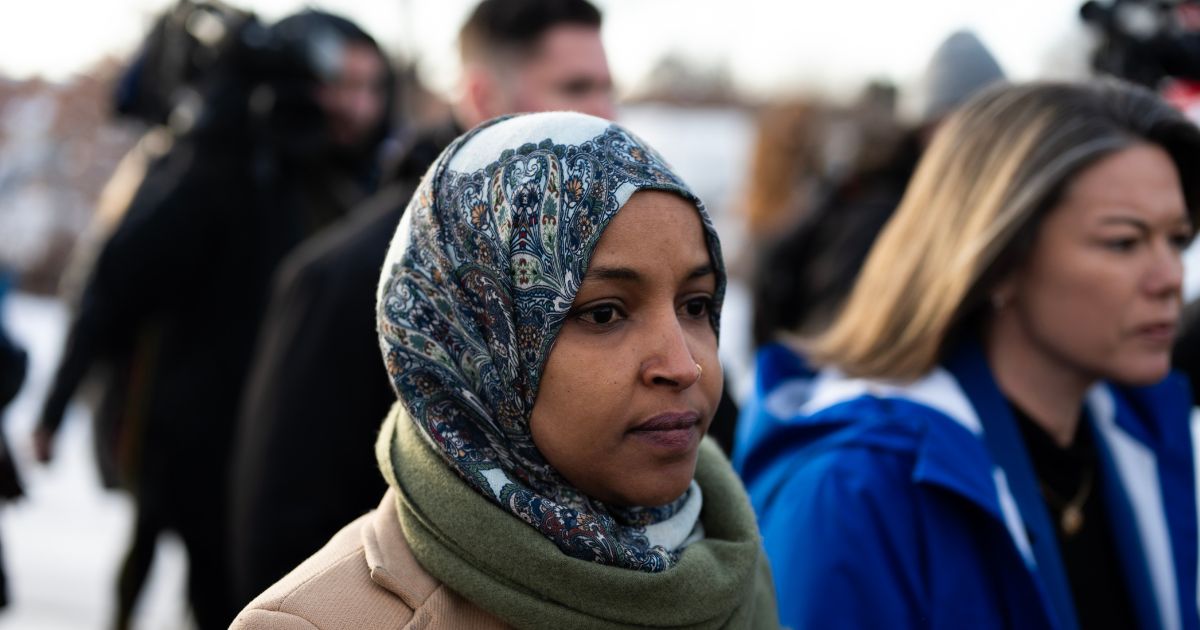
- Monday, October 12, 2026: Federal agents from Homeland Security Investigations (HSI) executed a judicially authorized search warrant at Rep. Ilhan Omar’s residence in Washington, D.C. During the raid, agents reportedly seized Omar’s phone and other documents pertinent to the investigation. The Justice Department confirmed the enforcement action in a statement, noting it was "part of an ongoing federal investigation." This dramatic move underscored the seriousness of the allegations.
- Tuesday, October 13, 2026: The New York Post published a report detailing allegations concerning Omar’s deceased father, Nur Said. The report cited academic sources claiming he was a military commander loyal to the former Somali dictator Siad Barre, potentially making him ineligible for refugee status under U.S. law.
- Tuesday, October 13, 2026 (or earlier, leading up to the raid): Subpoenas were reportedly issued for Omar’s family members, including her sister, signaling a broad investigative scope to gather evidence related to the family’s immigration history.
- Wednesday, October 14, 2026: The Wall Street Journal published an article that provided the first explicit confirmation from U.S. officials that the Trump administration’s investigation into Omar was aimed at building a case for stripping her of her U.S. citizenship and ultimately deporting her. The report highlighted Omar as potentially the "highest-profile — and most controversial — part" of the administration’s denaturalization efforts.
- Thursday, October 15, 2026: The news of the denaturalization objective became widely reported, based on The Wall Street Journal‘s findings.
President Trump also weighed in on the matter following the raid. While insisting he had not specifically targeted Omar as an example, he made highly critical remarks: "I’ve always found her to be totally crooked, personally," Trump stated on Monday. "But that has nothing to do with me. I think she’s a terrible person, just a complainer. She comes from a country that is a non-country. And then she comes over here and she complains about our Constitution. I think she’s a terrible person." These comments, while not directly addressing the legal specifics, framed the political backdrop against which the investigation is unfolding.
Legal Framework for Denaturalization in the United States
Denaturalization, the process by which a naturalized U.S. citizen can have their citizenship revoked, is a rare and legally complex procedure. Under Section 340 of the Immigration and Nationality Act (INA), the U.S. government can initiate denaturalization proceedings if it can prove that citizenship was obtained illegally or through misrepresentation or concealment of material facts. The burden of proof for the government is exceptionally high, requiring "clear, unequivocal, and convincing evidence" to revoke a person’s citizenship. This standard is significantly higher than the "preponderance of the evidence" typically required in civil cases.
Historically, denaturalization has been applied in cases involving individuals who misrepresented their wartime activities (e.g., Nazi collaborators), individuals involved in organized crime, or those who made material misrepresentations about their identities or criminal records. The Trump administration has significantly ramped up denaturalization efforts, notably through initiatives like "Operation Janus," launched in 2017, which focused on identifying individuals who used fingerprints of other people or assumed new identities to illegally obtain citizenship. Later, "Operation Integrity" continued these efforts. These programs aimed to address what the administration viewed as vulnerabilities in the immigration system and to uphold the integrity of naturalization processes.
For a denaturalization case to succeed, the government must demonstrate several key elements:
- Concealment or Misrepresentation: The individual must have concealed or misrepresented a fact.
- Materiality: The concealed or misrepresented fact must have been "material," meaning it would have affected the outcome of the naturalization decision. For instance, if Omar’s true age or her father’s true background would have rendered them ineligible, that fact would be material.
- Willfulness: The concealment or misrepresentation must have been willful, meaning the individual knew they were providing false information or withholding crucial details.
- Procurement of Citizenship: The citizenship must have been procured as a result of the misrepresentation.
If the government successfully proves these elements in court, a federal judge can issue an order revoking citizenship. Once denaturalized, the individual reverts to their prior immigration status, often becoming a lawful permanent resident or an undocumented immigrant, making them subject to deportation proceedings.
Rep. Ilhan Omar: A Prominent Political Figure
Ilhan Omar’s journey to becoming a U.S. Representative is a compelling one. Born in Mogadishu, Somalia, in 1982 (according to her public records), she and her family fled the Somali civil war, spending four years in a refugee camp in Kenya before immigrating to the United States in 1995. She became a naturalized U.S. citizen in 2000. Omar rose through Minnesota politics, first serving in the Minnesota House of Representatives from 2017 to 2019, before being elected to the U.S. House of Representatives in 2018, representing Minnesota’s 5th congressional district. She is one of the first two Muslim women, and the first Somali-American, elected to Congress.
As a member of "The Squad," a group of progressive Democratic congresswomen, Omar has been a vocal proponent of progressive policies, including Medicare for All, the Green New Deal, and comprehensive immigration reform. Her political career has been marked by both significant accomplishments and controversies, making her a high-profile target for political opponents. Her outspoken nature and criticisms of U.S. foreign policy, particularly regarding Israel, have frequently drawn the ire of conservatives and garnered significant media attention. The current investigation, therefore, lands squarely on a figure already accustomed to intense scrutiny and political battles.
Statements, Reactions, and Broader Implications
The news of the denaturalization probe has predictably elicited strong reactions across the political spectrum.
- From Rep. Omar and her Allies: Representative Omar has consistently maintained that the investigation is a "political operation meant to silence her." Her legal team is likely to argue that any discrepancies in paperwork were unintentional, clerical errors, or due to the challenges of record-keeping in a war-torn country, rather than willful misrepresentation. Supporters in the Democratic Party and progressive advocacy groups are anticipated to condemn the probe as politically motivated, an abuse of power by the Trump administration, and a targeted attack on a prominent minority woman in Congress. They may point to President Trump’s past rhetoric regarding Omar as evidence of political animus rather than a legitimate legal inquiry.
- From the Trump Administration and Republicans: The Department of Justice and Homeland Security officials involved in the probe would emphasize their commitment to upholding the "rule of law" and ensuring the integrity of the U.S. immigration system. They would likely assert that no individual, regardless of their political office, is above the law. Congressional Republicans and conservative media outlets are expected to fully support the investigation, portraying it as a necessary step to address alleged fraud and ensure that those who obtain citizenship through deceit are held accountable. They may highlight the importance of accurate information in the naturalization process for national security and fairness.
- Immigration Advocacy Groups: Organizations advocating for immigrant rights are likely to express concerns about the broader implications of such a high-profile denaturalization case. They may warn that it could create a chilling effect on naturalized citizens, particularly those from refugee backgrounds who may have legitimate difficulties in obtaining complete and accurate documentation from their countries of origin. They might argue against the selective enforcement of immigration laws for political purposes.
- Legal Experts: The legal community is likely to offer diverse opinions. Some experts may highlight the extremely high bar for denaturalization, suggesting the government faces a formidable challenge in court. Others might acknowledge the seriousness of the allegations, particularly concerning material misrepresentation, and underscore the government’s legitimate interest in maintaining the integrity of the naturalization process. The focus would be on whether the government can meet the "clear, unequivocal, and convincing" evidentiary standard.
The implications of this investigation extend far beyond the individual case of Ilhan Omar.
- Political Climate: The probe is unfolding in a highly polarized political environment, particularly concerning immigration. It could further inflame debates about who belongs in America and the rights of naturalized citizens.
- Precedent for Denaturalization: Should the government succeed in denaturalizing a sitting member of Congress, it would set a significant legal and political precedent. It could embolden future administrations to pursue similar cases against other high-profile individuals or perceived political adversaries.
- Integrity of the Immigration System: The investigation raises fundamental questions about the robustness of the U.S. naturalization process and the consequences for individuals who are found to have circumvented its requirements. It also highlights the complexities of verifying information from conflict-affected regions.
- Somali-American Community: For the Somali-American community and other immigrant communities, this case could be viewed as a direct attack on their representation and integration into American society, potentially fostering feelings of vulnerability and distrust in government institutions.
As the investigation progresses, the legal battles are expected to be intense and protracted. The outcome will not only determine the future of Representative Ilhan Omar but also could reshape legal precedents regarding U.S. citizenship and the boundaries of political accountability. The scrutiny will remain high, and the implications far-reaching, as the nation watches how this high-stakes legal and political drama unfolds.