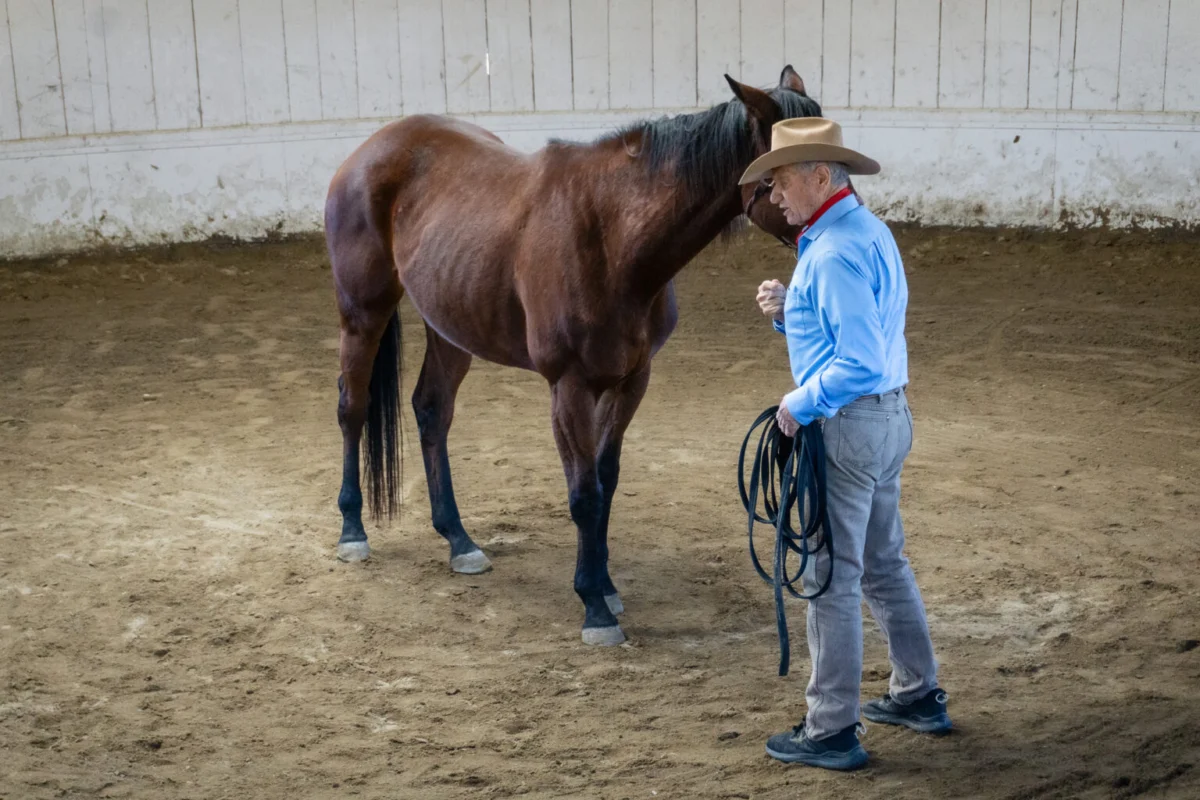
The enduring wisdom of Monty Roberts, renowned globally as the "Horse Whisperer," continues to guide horse owners and trainers toward a more profound and effective understanding of equine behavior. In an era boasting unprecedented access to horsemanship education, a paradox emerges: why do so many individuals find themselves navigating a sea of conflicting opinions and seemingly irreconcilable training methodologies? Roberts’ philosophy, deeply rooted in the principles of trust, communication, and empathy, offers a steadfast beacon for those seeking to forge genuine partnerships with their horses, transcending mere obedience to cultivate willing cooperation.
The Core of Equine Training: Beyond Spoken Words
At the fundamental level of horse training, the challenge lies in bridging the communication gap between human language and equine instinct. Unlike human-to-human interactions, a thousand-pound animal cannot be instructed through verbal commands in the initial stages of learning. Instead, shaping their actions is a meticulous process known as training, a field rich with diverse approaches. As Roberts succinctly puts it, "A good trainer can get a horse to do almost anything, but the great trainer can get the horse to want to do it." This distinction is crucial, highlighting the difference between enforced compliance and genuine engagement.
The pursuit of a horse that "wants" to perform is not about eliminating discipline but about redefining its application. Roberts’ methodology emphasizes the importance of "reinforcing" desired behaviors rather than relying on punitive measures. This nuanced approach is often misunderstood, particularly concerning the terms "positive reinforcement" and "negative reinforcement." While "positive reinforcement" is generally perceived as beneficial and "negative reinforcement" as detrimental, a deeper, scientific understanding reveals a more complex reality. The ultimate aim is to foster a specific behavior, such as standing still, without resorting to methods that could engender fear or distrust.
The Principle of Backing Up: A Foundation of Focus and Effort
Roberts often uses the example of training a horse to stand still on command to illustrate this principle. A seemingly counterintuitive, yet highly effective, component of this training involves asking the horse to back up. This action is not a natural inclination for horses; it demands greater physical exertion and mental concentration than simply standing still or moving forward. Because it requires a deliberate effort that deviates from their instinctual comfort zone, backing up becomes a powerful tool for teaching horses to attune to and respond to human cues.
The efficacy of this technique hinges on the bedrock of trust. A horse must feel secure in the belief that its handler is guiding it with safety and intention, especially when asked to perform an action that feels unnatural. The increased physical and mental energy expended during backing up is precisely what makes it such a valuable exercise. It establishes a foundation for the desired behavior – standing still – by demonstrating that compliance with a non-instinctual request can lead to a cessation of effort.
The Gradual Progression: From Cues to Confident Stillness
The training progression for teaching a horse to stand still on command, utilizing the backing-up principle, unfolds systematically. When a horse attempts to move away from a cue to stand still, the handler gently redirects this energy into a controlled backward movement. Through consistent repetition, the horse begins to associate standing still with the desired outcome. This process cultivates a deeper understanding of the handler’s expectations.
A significant milestone in this training is reached when the handler can release the reins, a physical cue of control, and observe whether the horse maintains its stillness. When a horse remains calm and motionless upon the release of reins, it signifies that the lesson has been internalized. This demonstrates not only an understanding of the cue but also a level of trust that allows the horse to remain stationary without direct physical restraint.
The ultimate objective is to make standing still the horse’s preferred, natural response. This transformation is not merely about achieving a specific behavior; it is about cultivating a relationship founded on mutual trust, effective communication, and a shared understanding. While this method may require more initial effort, the reward is a horse that exhibits patience, respect, and a willingness to engage with its handler.

Deconstructing Reinforcement: Beyond Misconceptions
The divergence in training philosophies often stems from misinterpretations of reinforcement principles. The common perception that "positive" is inherently good and "negative" is inherently bad can lead trainers astray. Scientifically, both forms of reinforcement, when applied correctly, serve to strengthen a desired behavior. The critical factor is not the label but the outcome.
Roberts stresses that the true goal is to "reinforce" the desired behavior – in this case, standing still – without punishing the horse. Punishment, defined as the application of something painful or aversive to deter behavior, can erode trust and lead to unpredictable and potentially dangerous responses from the horse. This is a stark contrast to the principles of negative reinforcement as understood in equine training.
Negative reinforcement, in its correct application, involves the cessation of an aversive stimulus once the desired behavior is exhibited. In the context of teaching a horse to stand still, this means that the backing-up exercise, which requires more effort, ceases once the horse has achieved stillness. This process encourages the horse to "think for itself" and choose the desired action, rather than simply complying out of fear of punishment. This fosters a more robust and respectful relationship, built on understanding rather than coercion.
A Real-World Application: The Trailer Loading Challenge
A compelling real-world example of Roberts’ methodology is illustrated by a horse that exhibited dangerous behavior when unloading from a trailer. Upon the release of the trailer gate, the horse would bolt backward down the ramp, creating a hazardous situation for anyone nearby. The sound of its hooves pounding the ground was a clear indicator of the horse’s fear and lack of control.
Through a painstaking process of repeated loading and asking for a slow, deliberate retreat before proceeding to the stall, the horse was gradually taught how to unload safely. This required immense patience and a consistent application of the principles of trust and communication. The training focused on making the unloading process a controlled, predictable experience for the horse, gradually building its confidence.
The ultimate testament to the success of this training came when, after a journey, the horse began to unload. It momentarily deviated from the trained behavior, unloading a bit faster than usual. However, recognizing the established routine and the handler’s presence, the horse paused, reloaded itself onto the trailer, and then proceeded to unload with the trained decorum, all on its own initiative. This spontaneous self-correction demonstrated a profound level of understanding and a willingness to adhere to the learned behavior, indicating a truly established partnership.
Cultivating a Harmonious Partnership: The Rewards of Patience and Empathy
The creation of a strong, positive relationship with a horse is one of the most rewarding experiences available to any equine enthusiast. This journey demands not only patience but also a deep understanding of the horse as a prey animal, inherently wired with a flight instinct. By embracing the role of a student of equine behavior, individuals can cultivate a bond with their horses that fosters mutual enjoyment and a shared appreciation for each other’s needs.
Monty Roberts’ legacy is built on decades of perfecting the art of fostering trust and understanding between humans and horses. His innovative techniques have reshaped the landscape of horse training, promoting deeper, more respectful relationships grounded in empathetic communication.
For those eager to deepen their horsemanship skills and implement these transformative methods, opportunities abound. Courses are available through the Monty Roberts Learning Center, offering a structured pathway to mastering these principles. Furthermore, his seminal book, "From Our Hands to Yours," provides an in-depth exploration of his life-changing approach to training and building trust with horses. By embracing Monty Roberts’ philosophy, horse lovers worldwide can embark on a journey toward creating more harmonious and fulfilling partnerships with their equine companions.