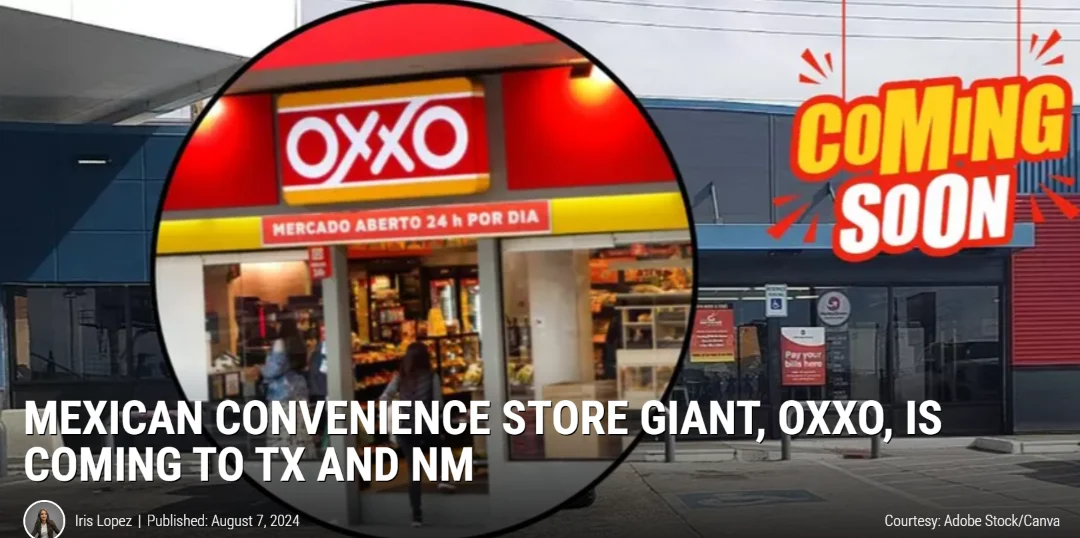
This significant expansion marks a pivotal moment for Fomento Económico Mexicano, S.A.B. de C.V. (FEMSA), the multinational beverage and retail company behind the ubiquitous OXXO brand, as it deepens its presence in the highly competitive United States convenience store market. The acquisition involves a substantial $385 million deal with Delek U.S. Holdings, encompassing 249 convenience stores primarily operating under the DK brand across the two southwestern states. This strategic move, which awaits regulatory approval expected in the second half of 2024, signals a transformative shift for the retail landscape in these regions, promising a new era of convenience retail characterized by OXXO’s distinctive red and yellow branding and its unique blend of products and services.
A Strategic Leap into the U.S. Market
FEMSA’s decision to acquire a significant portfolio of established convenience stores in Texas and New Mexico is a calculated maneuver aimed at capitalizing on the burgeoning consumer market in these border states. The U.S. convenience store sector, valued at over $250 billion annually, presents a robust growth opportunity, particularly in regions with strong demographic ties to Mexico. OXXO, already a household name and a cornerstone of daily life across Mexico and several other Latin American countries, is poised to introduce its successful operational model and product diversity to a new segment of American consumers.
FEMSA’s Retail Powerhouse: The OXXO Phenomenon
OXXO’s journey began in 1978 in Monterrey, Nuevo León, Mexico, initially conceived as a retail outlet for FEMSA’s brewing division, offering beer, snacks, and tobacco. Over the decades, it has blossomed into one of the largest and most successful convenience store chains globally, boasting over 20,000 locations primarily concentrated in Mexico. OXXO’s business model is characterized by its high-density footprint, strategically placed stores that ensure accessibility, and a comprehensive offering that extends beyond typical convenience store fare. Customers in Mexico rely on OXXO not just for groceries, snacks, beverages, and ready-to-eat items, but also for a wide array of services including bill payments, mobile phone top-ups, cash withdrawals, and even basic financial transactions. This integrated service approach, often lacking in traditional U.S. convenience stores, has been a key driver of its success and customer loyalty.
Beyond Mexico, OXXO has embarked on an ambitious international expansion, establishing a significant presence in countries like Chile, Colombia, Peru, and Brazil. This regional success has provided FEMSA with invaluable experience in adapting its operational strategies and product assortments to diverse cultural and regulatory environments. The move into the U.S. market, while not OXXO’s first foray (having a limited presence in some border towns previously), represents its most substantial and strategically significant expansion into North America to date. The acquisition of 249 operational stores provides an immediate and substantial platform for scaling its operations, circumventing the slower process of organic store development.
Delek U.S. Holdings’ Strategic Divestment
On the other side of this transaction is Delek U.S. Holdings, a downstream energy company primarily engaged in petroleum refining, logistics, and retail marketing. The company operates a network of approximately 250 convenience stores, predominantly under the DK brand, as well as the MAPCO brand in other regions. For Delek, the sale of its Texas and New Mexico retail assets to FEMSA represents a strategic divestment aimed at streamlining its portfolio and focusing on its core refining and logistics operations.
Industry analysts suggest that such divestments are common for energy companies seeking to optimize capital allocation and enhance shareholder value by concentrating on segments where they possess a competitive advantage. While the retail segment provided a steady revenue stream, its margins and growth potential might have been viewed as secondary to the company’s primary energy ventures. A spokesperson for Delek U.S. Holdings, in a statement regarding similar strategic moves, might emphasize the company’s commitment to maximizing value for its shareholders and ensuring a smooth transition for the acquired operations and their employees. The $385 million valuation reflects the strategic importance and established operational footprint of these 249 locations, offering a clean exit for Delek from this specific retail market.
The $385 Million Transaction: A Closer Look
The acquisition price of $385 million underscores the value placed on the existing infrastructure, established customer base, and strategic locations of the DK stores. These 249 locations are spread across Texas and New Mexico, two states characterized by dynamic economies, growing populations, and significant cross-border commercial and cultural ties. The concentration of stores in these specific geographies allows OXXO to establish a strong regional hub, facilitating efficient supply chain management, marketing efforts, and operational oversight.
Chronology of the Deal and Regulatory Hurdles
The journey to this significant acquisition began with intensive negotiations between FEMSA and Delek U.S. Holdings. While the precise timeline of initial discussions remains undisclosed, the formal announcement of the $385 million deal has set in motion a series of regulatory reviews. In the United States, mergers and acquisitions of this scale typically undergo scrutiny by antitrust authorities such as the Federal Trade Commission (FTC) or the Department of Justice (DOJ) to ensure fair competition and prevent monopolistic practices.
The deal is currently awaiting these regulatory approvals, which are anticipated to be finalized in the second half of 2024. Once approved, the ownership transfer will be formalized, paving the way for the extensive process of converting the DK-branded stores to OXXO. This conversion is expected to be a phased approach, likely starting with prominent locations and gradually rolling out across the entire portfolio. The re-branding will involve not only signage changes but also interior remodels, inventory adjustments to incorporate OXXO’s signature product lines, and the integration of OXXO’s service offerings. This process will be critical in introducing the OXXO brand identity and customer experience to the new markets.
Market Dynamics and Competitive Landscape
OXXO’s entry into the Texas and New Mexico convenience store market will undoubtedly intensify competition in an already crowded sector. The U.S. convenience store industry is highly fragmented, featuring national giants like 7-Eleven, Circle K (Alimentation Couche-Tard), and Stripes (7-Eleven), alongside numerous regional chains and independent operators.
Overview of the U.S. Convenience Store Market
The U.S. convenience store market is a robust and resilient segment of the retail industry, driven by consumer demand for quick access to fuel, food, beverages, and other essential items. According to industry reports from organizations like the National Association of Convenience Stores (NACS), the sector consistently generates hundreds of billions in sales annually. Key trends include an increasing focus on fresh food offerings, grab-and-go meals, and enhanced digital services. Texas, in particular, is a powerhouse market for convenience retail, benefiting from its vast geography, large population, and significant transient traffic. New Mexico, while smaller, also presents strategic corridors for trade and travel.

Key Competitors and OXXO’s Positioning
OXXO will face direct competition from established players. 7-Eleven, with its extensive network and strong brand recognition, is a formidable competitor. Circle K and Stripes also command significant market share in the Southwest. OXXO’s strategy will likely hinge on differentiating itself through its unique product assortment, particularly its strong ties to Mexican culture and cuisine, and its expanded service offerings. The existing DK locations, being operational, already possess established customer traffic and local knowledge, providing OXXO with a foundational advantage.
Demographic Considerations: The Hispanic Market Segment
A critical aspect of OXXO’s strategic entry is the demographic composition of Texas and New Mexico. Both states have substantial and growing Hispanic populations, many of whom have strong cultural ties to Mexico. Texas’s Hispanic population exceeds 12 million, representing over 40% of the state’s total, while New Mexico’s Hispanic population is nearly 50%. This demographic represents a significant target market for OXXO, which can leverage its authentic Mexican brand identity, familiar products, and services that resonate deeply with this consumer base.
OXXO’s success in Mexico is partly attributed to its understanding of local consumer preferences, offering a mix of international brands alongside popular Mexican staples. This localized approach, if successfully replicated in the U.S., could provide a distinct competitive edge, attracting not only the Hispanic community but also broader consumer segments seeking novel products and experiences.
Anticipated Impact and Future Outlook
The arrival of OXXO on a large scale in Texas and New Mexico carries multifaceted implications for the economy, consumers, and the competitive landscape.
Economic Implications
The acquisition and subsequent rebranding process are expected to generate economic activity. Investment in store renovations, potential expansion of product lines, and the adoption of new technologies will create opportunities for local contractors, suppliers, and service providers. Furthermore, the expansion of a major international retailer like OXXO could lead to job creation, both at the store level and potentially in regional distribution and management roles. While Delek’s divestment might entail some restructuring, OXXO’s expansion strategy often prioritizes retaining and retraining existing staff, ensuring continuity while integrating them into the new corporate culture. The increased competition could also stimulate innovation among existing retailers, potentially leading to better services and prices for consumers.
Consumer Experience and Product Offerings
For consumers in Texas and New Mexico, the most tangible change will be the transformation of their local DK stores into OXXO outlets. This will likely mean an expanded and diversified product selection. While retaining popular American convenience store items, OXXO is expected to introduce a range of Mexican products, including popular snacks, beverages, ready-to-eat Mexican food items, and coffee blends that reflect the brand’s heritage. The integrated service model, offering bill payment, money transfers, and mobile top-ups, could be a significant draw, particularly for communities that currently lack easy access to such financial services. This could enhance the convenience store’s role as a community hub, moving beyond mere transaction points to service centers.
Competitive Repercussions
The entry of a well-resourced and experienced player like OXXO will inevitably prompt reactions from incumbent convenience store chains. Competitors may respond by enhancing their own product offerings, improving store aesthetics, or launching aggressive marketing campaigns. The focus on fresh food and specialized services might become more pronounced across the industry as retailers vie for consumer loyalty. This heightened competition is generally beneficial for consumers, as it often drives innovation and improves service quality.
Analyst Perspectives
Market analysts view FEMSA’s acquisition as a strategic long-term play. While the initial integration and brand recognition build-out will present challenges, the underlying demographics and OXXO’s proven business model offer significant upside. Analysts might point to the potential for OXXO to achieve synergies by leveraging its existing supply chain networks from Mexico and optimizing operational efficiencies. Risks, however, include adapting to U.S. consumer tastes and regulatory frameworks, managing labor costs, and navigating the intense competitive environment. The successful integration of technology for inventory management, customer engagement, and payment processing will also be crucial for OXXO’s long-term success in this new market. The $385 million valuation is seen as a fair price for market entry, providing an immediate footprint rather than the slower, more capital-intensive greenfield development.
Looking Ahead: OXXO’s North American Ambitions
This acquisition of 249 stores in Texas and New Mexico is more than just an isolated deal; it is widely perceived as a foundational step in OXXO’s broader North American expansion strategy. The U.S. market, with its vast consumer base and high purchasing power, represents an attractive frontier for growth. Success in these border states could serve as a blueprint and a springboard for further expansion into other U.S. states, particularly those with significant Hispanic populations or strong economic ties to Mexico.
Challenges for OXXO will include navigating the complexities of U.S. labor laws, establishing robust supply chains that can efficiently source and distribute both domestic and imported products, and building brand awareness among a diverse consumer base. However, FEMSA’s extensive experience in managing large-scale retail operations and its deep understanding of consumer behavior positions OXXO favorably to overcome these hurdles. The company’s commitment to innovation, customer service, and community integration will be key determinants of its long-term success in the American convenience store market.
In conclusion, OXXO’s acquisition of DK locations is a landmark event that signifies a major strategic shift for FEMSA and a notable change for consumers in Texas and New Mexico. As regulatory approvals pave the way for store conversions in the latter half of 2024, the bright red and yellow branding of OXXO will soon become a familiar sight, ushering in a new chapter for convenience retail in the U.S. Southwest and potentially setting the stage for OXXO to become a more prominent player across the North American continent.