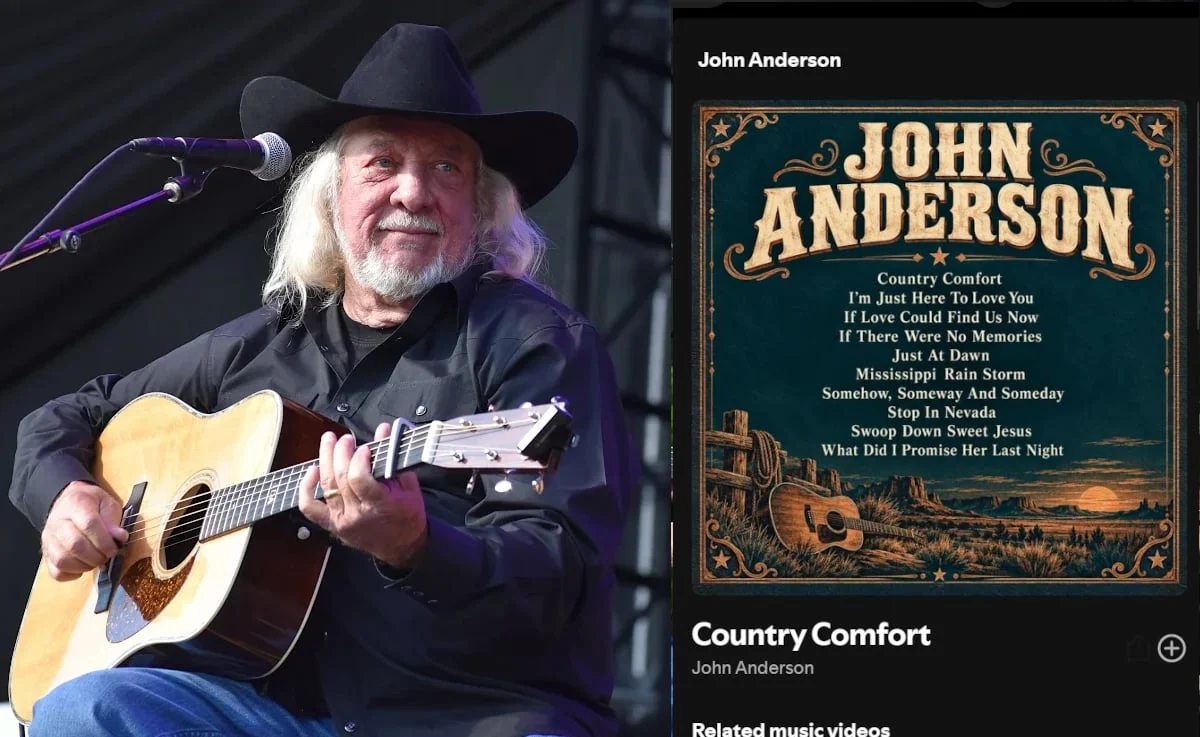
The country music community is currently grappling with the sudden and controversial release of a self-titled album attributed to the late John Anderson, a Country Music Hall of Fame inductee who passed away on October 21, 2026. Anderson, whose career spanned over four decades and helped define the "New Traditionalist" movement of the 1980s, left a profound legacy characterized by his soulful, distinctive vocal delivery. However, the appearance of a "new" album on streaming platforms just 48 hours after his death has raised significant ethical and legal questions regarding the exploitation of deceased artists in the digital age.
John Anderson’s passing at the age of 71 marked the end of an era for country music. Known for hits such as "Swingin’," "Seminole Wind," and "Straight Tequila Night," Anderson was celebrated for a voice that combined the grit of traditional honky-tonk with a smooth, emotive resonance. While early obituaries, including a notable piece in The New York Times, struggled to accurately describe his vocal timbre—using terms like "gravelly" and "warbled"—fans and peers recognized him as one of the most technically gifted and influential stylists in the genre’s history. It is this very reverence that critics argue is being leveraged by anonymous entities seeking to capitalize on the spike in listenership that inevitably follows a legendary artist’s death.
The Sudden Appearance of a "New" Record
On October 23, 2026, a 10-track album titled John Anderson appeared on major Digital Service Providers (DSPs) such as Spotify, Apple Music, and Amazon Music. The release was distributed through Anderson’s official, verified artist profiles, leading many casual listeners to believe it was a legitimate posthumous tribute or a collection of final recordings curated by his estate.
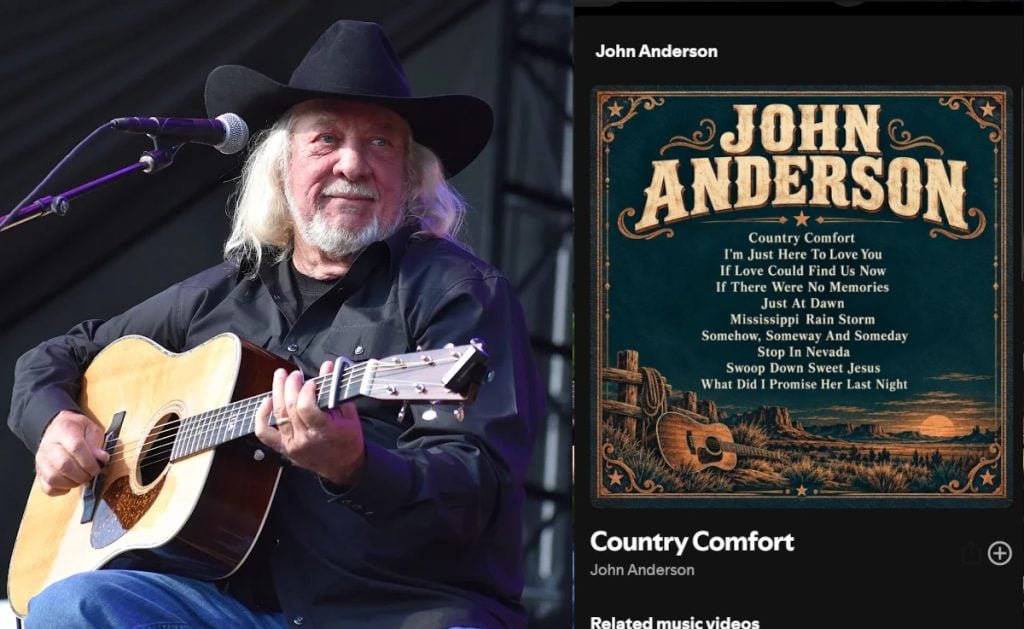
Upon closer inspection, several red flags emerged. The album lacked a formal press release, and no announcements were made via Anderson’s official social media channels or through his long-term management. The most immediate cause for concern was the album’s cover art, which displayed the hallmarks of modern Artificial Intelligence (AI) generation. The image featured a likeness of Anderson that appeared distorted, with the "uncanny valley" effect common in low-tier AI prompts, including anatomical inconsistencies and a lack of the photographic texture associated with professional portraiture.
The use of AI-generated imagery for a Hall of Fame artist’s release is increasingly viewed as a sign of "bottom-feeder" publishing—where entities with rights to obscure recordings use cheap technology to package products for a quick profit. This incident mirrors a similar controversy involving the late Don Williams, where AI-generated content was used to populate streaming services following his death, often deceiving fans into thinking they were supporting the artist’s family when, in fact, the proceeds were flowing to third-party rights holders.
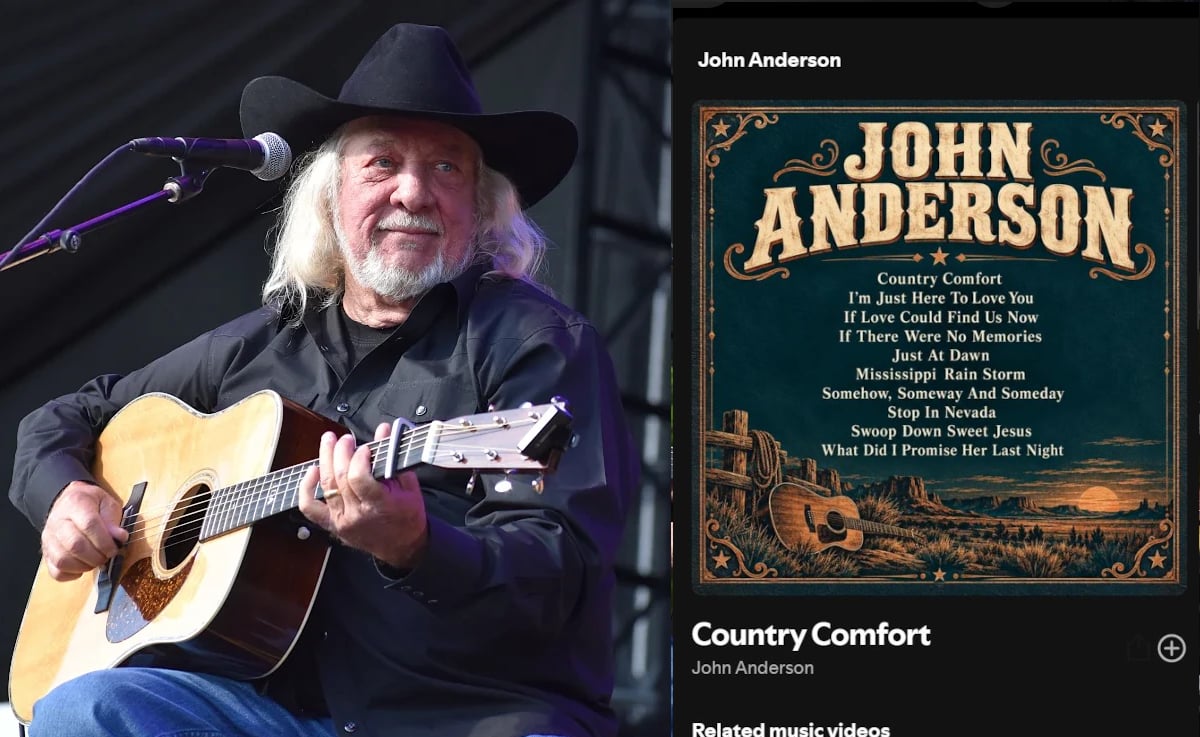
Unearthing the Origin of the Recordings
While the packaging of the album is modern and arguably deceptive, the audio content itself is not AI-generated. Research into the tracklist reveals that these recordings date back to the very beginning of John Anderson’s career in Nashville, long before he achieved superstardom with Warner Bros. Records.
Representatives from the Anderson camp have confirmed that these songs are "work-for-hire" demos. In the mid-1970s, before signing his first major recording contract, Anderson worked as a demo singer—a common "day job" for aspiring artists in Nashville. In this role, singers are paid a flat fee to record versions of songs written by professional songwriters, which are then used to pitch those songs to established stars or labels.
"Many of those songs were ‘work for hire’ stuff John did arriving in Nashville," a representative stated. "Some are so young he hasn’t even found his vocal identity yet." This lack of a developed vocal identity explains why some listeners found the tracks unrecognizable as the "John Anderson" they knew. The recordings capture a young man still molding his style, lacking the signature "slur" and deep resonance that would later define his 1980s output.
A History of Recycled Material
This is not the first time these specific recordings have surfaced. The 10 tracks on the 2026 release have a convoluted history of being repackaged by various "budget" labels.
In April 1999, a company called Renaissance Records—specializing in rare and out-of-print re-pressings—released these same songs on a CD titled Backtracks. That version contained 11 songs, including "Bad Morning for Leaving," which is notably absent from the 2026 digital release. In 2002, the collection was rebranded and released by Orpheus Records under the title Somehow, Someway, Someday.
The controversy surrounding the 2026 release stems from the metadata used on streaming platforms. The uploader listed the release date as October 23, 2026. In the world of streaming algorithms, this "new" date pushes the album to the top of the "Latest Release" section on artist profiles. For fans visiting Anderson’s page to mourn and listen to his classics, this "new" album is the first thing they see. This tactic is widely considered predatory, as it intentionally misleads the public about the nature and age of the recordings to maximize "new release" traffic.
The Ethical Dilemma of Posthumous Catalog Management
The release of the John Anderson album highlights a growing problem in the music industry: the "vulture" phase of catalog exploitation. When an artist dies, there is a measurable surge in streaming numbers. According to industry data, a major artist’s streams can increase by 300% to 1,000% in the week following their passing.
For legitimate estates, this is a time to preserve a legacy. For entities that hold rights to early demos or abandoned masters, it is a window of opportunity. Because these songs were "work-for-hire," Anderson likely never owned the master recordings. In the 1970s, the contracts for demo singers rarely included provisions for future digital royalties or control over how the recordings were packaged.
"It’s opportunistic like a termite finding fresh wood," the Anderson representative noted, expressing frustration at the difficulty of stopping such releases. Because the uploader likely holds some form of legal claim to the masters—however tenuous or acquired through a chain of defunct label sales—DSPs are often slow to remove the content unless a clear copyright violation or trademark infringement (such as the unauthorized use of the artist’s name and likeness in AI art) is proven.
Legal Protections and the Tennessee ELVIS Act
The timing of this release is particularly poignant given recent legislative efforts to protect artists. In 2024, Tennessee enacted the ELVIS Act (Ensuring Likeness, Voice, and Image Security), which was designed to protect songwriters and performers from unauthorized AI exploitations. While the ELVIS Act primarily targets the unauthorized use of AI to mimic a voice or likeness, the use of AI-generated cover art to sell an artist’s "brand" falls into a gray area of personality rights.
Legal experts suggest that the John Anderson estate could potentially challenge the release based on the deceptive nature of the AI-generated cover and the falsified release date metadata, which could be argued as "unfair competition" or "deceptive trade practices." However, the cost of litigation often outweighs the immediate revenue generated by these small-scale digital "vultures," making it a difficult battle for estates already dealing with the logistics of an artist’s passing.
Analysis of the Early Demos
Despite the unethical nature of the release, the music itself provides a fascinating, if raw, look at a future legend in the making. The tracklist includes several interesting covers and early co-writes:
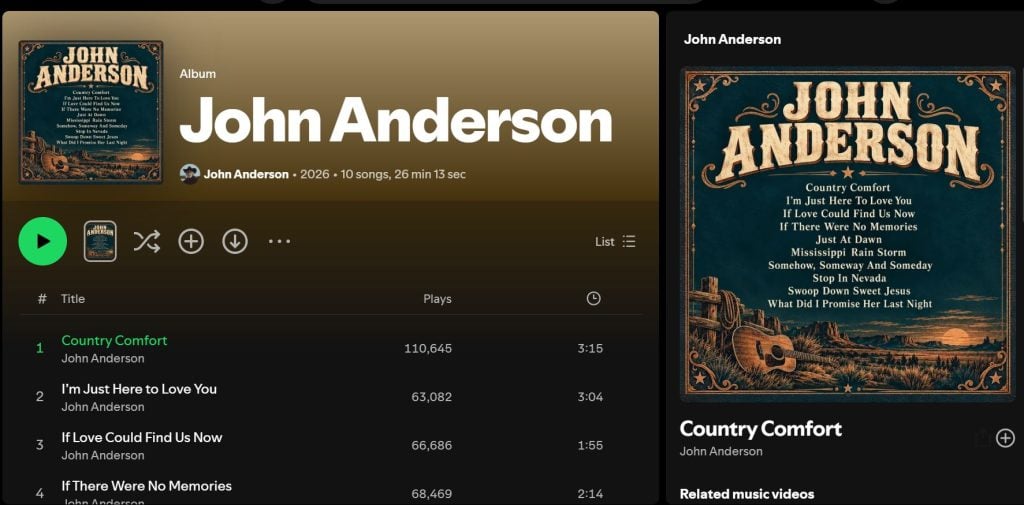
- "Stop in Nevada": Originally written and recorded by Billy Joel for his 1973 album Piano Man. Anderson’s version reflects the era’s trend of country artists "country-politanizing" pop hits.
- "Country Comfort": An Elton John and Bernie Taupin composition from the 1970 album Tumbleweed Connection. This choice highlights the cross-genre influence that shaped Nashville in the early 70s.
- "If There Were No Memories": A rare early solo write by Anderson, showing his nascent songwriting abilities.
- "Swoop Down Sweet Jesus": A co-write featuring Anderson and "Wild" Bill Emerson, showcasing his roots in gospel-tinged country.
For a musicologist, these tracks are valuable historical artifacts. They show a singer who is technically proficient but still imitating his heroes—leaning perhaps more toward a standard Nashville croon before he discovered the "mountain soul" sound that would make him famous.
The Future of Anderson’s Digital Legacy
As of late October 2026, the album remains available on most streaming services, accruing thousands of streams from unsuspecting fans. The John Anderson estate has not yet filed a formal injunction, though sources indicate they are exploring their options to have the metadata corrected or the album removed entirely.
The incident serves as a cautionary tale for the music industry. It underscores the need for stricter metadata verification on streaming platforms and better protections for artists against the unauthorized use of AI in marketing. For fans of John Anderson, the recommendation remains to stick to his celebrated discography—albums like Wild and Blue, Seminole Wind, and his 2020 masterpiece Years—which were created with the artist’s full creative intent and soul.
In the end, while "vulture" labels may find ways to profit from a legend’s passing, they cannot diminish the actual work John Anderson left behind. His true legacy is found in the songs he chose to sing, the stories he chose to tell, and the unmistakable voice that, in its prime, was second to none in the halls of country music.