

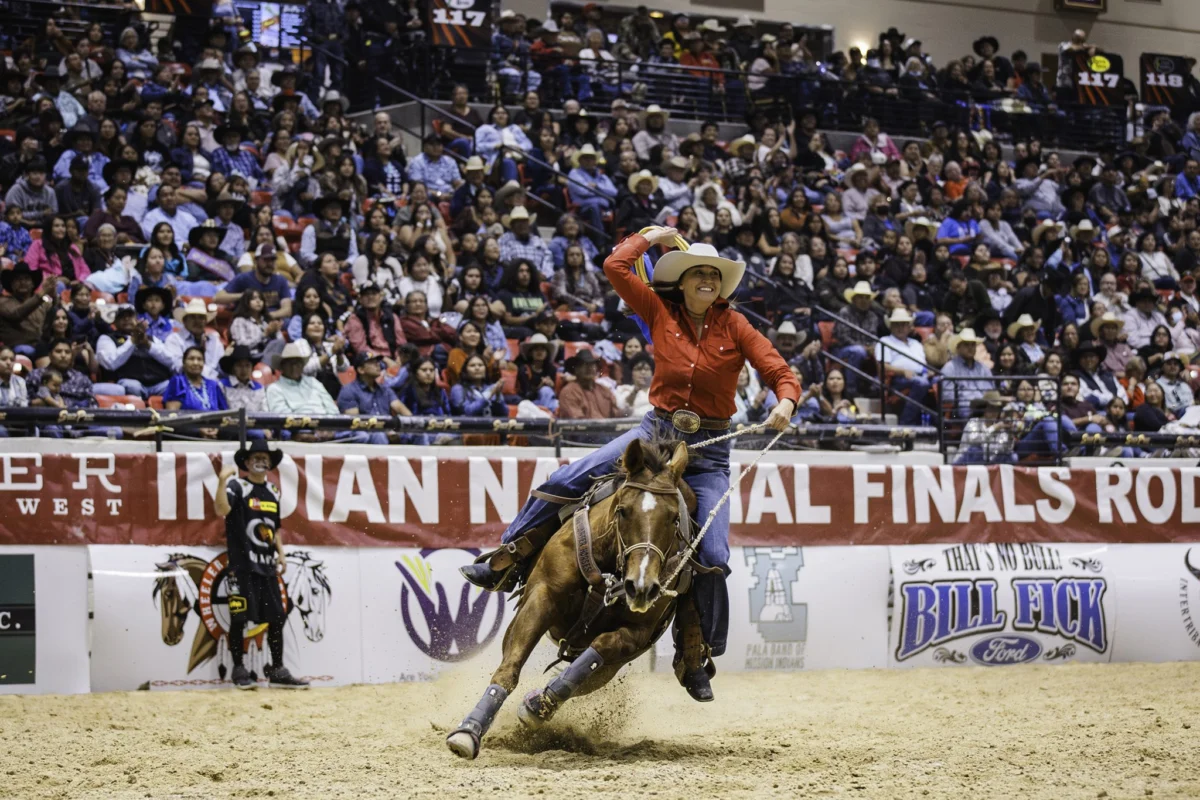
As the Indian National Finals Rodeo (INFR) prepares to mark its monumental 50th anniversary in October 2026, the event stands as a powerful testament to Indigenous athletic prowess, cultural resilience, and community spirit. This milestone year promises to be the grandest yet, inviting back all past champions to Las Vegas for an unprecedented celebration of five decades of Native American rodeo excellence. Capturing the heart-pounding action and profound cultural narrative of this esteemed championship is official INFR photographer Clay Guardipee, whose work offers an intimate, authentic glimpse into the world of Indigenous rodeo, revealing not just the spectacle but the very soul of a people.
The 50th anniversary arrives on the heels of another significant first for the INFR: the inaugural Calgary Stampede First Nations Rodeo & Relay. Staged in June 2026 with the invaluable support of Elbow River Camp Tipi Holder advisors from Treaty 7 First Nations, this groundbreaking event showcased the vibrant talents of athletes from across the United States and Canada. The electrifying atmosphere at Calgary’s GMC Stadium reached a fever pitch as competitors demonstrated "righteous rodeo and blazing relay chops," signaling a new era of visibility and collaboration for Indigenous rodeo on an international stage. These events collectively underscore the growing prominence and enduring cultural significance of the INFR.
A Half-Century of Heritage: The INFR’s Enduring Legacy
The Indian National Finals Rodeo, established in 1976, was born from a vital need to create a dedicated platform for Native American cowboys and cowgirls to compete at the highest level, celebrate their rich equestrian traditions, and preserve a way of life deeply intertwined with the land and animals. Before the INFR, Indigenous rodeo athletes often competed in mainstream circuits, but a national championship exclusively for Native Americans provided a crucial space for cultural affirmation, community building, and the recognition of unique Indigenous rodeo styles and practices.

Over its five-decade history, the INFR has grown exponentially, evolving from a regional gathering to a premier national event. It brings together over 4,000 members from more than 75 tribes across the United States and Canada, with hundreds of top athletes qualifying each year to compete in Las Vegas. The championship features traditional rodeo events such as bareback riding, saddle bronc riding, bull riding, barrel racing, steer wrestling, team roping, tie-down roping, and breakaway roping, but it also uniquely incorporates events like the Junior and Senior Barrel Racing, showcasing a wide spectrum of talent across generations. The INFR World Champion buckle, as Guardipee notes, is the ultimate aspiration for any Indian cowboy, representing not just a title but a deep connection to heritage and community.
The economic impact of the INFR is substantial, both for its participants and its host city. The event draws thousands of spectators, generating significant revenue for local businesses in Las Vegas, including hotels, restaurants, and entertainment venues. Beyond the direct economic benefits, the INFR fosters a robust network of sponsors, vendors, and support services that further bolster the rodeo ecosystem within Indigenous communities. Prize purses, while varying by event and year, typically amount to hundreds of thousands of dollars, providing significant financial incentives for athletes who dedicate their lives to the sport.
A Milestone Year: The 50th Anniversary Celebration
The upcoming 50th INFR, scheduled for October 13–17, 2026, at the South Point Hotel, Casino, & Spa in Las Vegas, is set to be an unparalleled spectacle. The decision to invite all past champions back to Las Vegas for the anniversary underscores the deep respect for the event’s history and the legends who have shaped it. This reunion will not only honor individual achievements but also serve as a powerful narrative of collective progress and enduring legacy.
Attendees can expect a heightened sense of excitement and competition. The atmosphere at the South Point Hotel, a venue renowned for its equestrian facilities, will be charged with anticipation as competitors vie for the coveted world champion titles. Beyond the arena, the celebration will likely include special ceremonies, cultural showcases, and opportunities for interaction with rodeo legends, further enriching the experience for both participants and spectators. The 50th anniversary is more than just a rodeo; it is a cultural festival, a family reunion, and a living history lesson wrapped into five days of intense competition.

The Inaugural Calgary Stampede First Nations Rodeo & Relay: A New Chapter
The success of the inaugural Calgary Stampede First Nations Rodeo & Relay in June 2026 marked a pivotal moment for Indigenous rodeo. This event, held in collaboration with the Elbow River Camp Tipi Holder advisors from Treaty 7 First Nations, represented a significant step forward in recognizing and celebrating First Nations rodeo traditions within a broader, internationally recognized context like the Calgary Stampede.
The Stampede, known globally as "The Greatest Outdoor Show on Earth," provided an immense platform for Indigenous athletes. The collaboration was particularly significant, bringing together historical and contemporary aspects of Indigenous culture and sport. The support from the Treaty 7 First Nations advisors was crucial, ensuring that the event authentically represented First Nations customs and values. Athletes from various tribes across the U.S. and Canada demonstrated their exceptional skills in both traditional rodeo events and the thrilling relay races, which are deeply rooted in Indigenous equestrian practices. The "blazing relay chops" highlight the unique excitement and historical depth that Indigenous relay racing brings to the rodeo arena, often featuring multiple riders and horses in a fast-paced, high-stakes competition. This event not only offered a showcase of talent but also fostered greater understanding and appreciation of Indigenous cultures among a diverse audience, bridging communities through the universal language of sport and horsemanship.
Behind the Lens: The Vision of Clay Guardipee
At the heart of documenting these extraordinary events is Clay Guardipee, the official photographer for the Indian National Finals Rodeo. His photographs are distinguished not only by their technical quality but by an intuitive understanding of the riders and the rodeo action—an "insider’s view" that comes from a lifetime immersed in the culture. Guardipee, a member of the Blackfeet Tribe, grew up in Cut Bank, Montana, a region where rodeo is not just a sport but a way of life. His personal connection to the rodeo lifestyle, further solidified by meeting his wife during an INFR event and moving to Mitchell, South Dakota, ensures he is "never far from the dust flying."

Guardipee’s journey into photography was a natural extension of his passions. "I am just a guy with a camera," he modestly states, but his work reveals a profound artistic sensibility. He found a way to combine his lifelong love for rodeo with his interest in photography. "Rodeo came pretty easy for me when it came to taking photos because I’ve always been around the lifestyle," he explains. This inherent understanding allows him to anticipate moments, capture fleeting emotions, and frame the action in a way that resonates deeply with those who know and love the sport.
From Passion to Profession: Guardipee’s Photographic Journey
Guardipee’s path to becoming the official INFR photographer was paved with dedication and a deep-seated aspiration. Growing up, rodeo was a family affair; his father, brother, uncles, and cousins all competed. This constant exposure ingrained the lifestyle into his very being. As he matured and competed less himself, photography emerged as a way to remain intimately connected to the world he cherished. "Once you’re around the lifestyle and people, you don’t want to give it up," he says, encapsulating the pervasive influence of rodeo in his life.
The ambition to photograph the INFR was a significant goal for Guardipee. "Being a Native American, the INFR is a pretty big deal. So it was for sure on my mind that someday I would be the official photographer for it," he recounts. His consistent hard work, exceptional skill, and professional approach eventually caught the attention of the INFR organizers, leading to his appointment. This achievement not only fulfilled a personal dream but also positioned him as a vital chronicler of Indigenous athleticism and cultural identity, ensuring that the stories and moments of INFR are preserved with authenticity and respect.
The Heart of Indigenous Rodeo: What Makes INFR Unique

For Guardipee, the INFR transcends the typical rodeo experience. It is the pinnacle of achievement for Native American cowboys and cowgirls, a stage where their cultural pride and competitive spirit converge. "For Native Americans, the INFR is the top. Any Indian cowboy wants to have that INFR World Champion buckle," he emphasizes. This deep-seated desire fuels an emotional intensity that sets the INFR apart.
Guardipee’s objective as a photographer goes beyond merely documenting the action; he seeks to "capture those moments for them" – moments that encapsulate the struggle, triumph, and sheer passion of the competitors. He believes that capturing an image that will "last forever and be a photo on someone’s wall is the true success for me." The INFR, he observes, elicits a broader spectrum of emotions than other rodeos, and he actively seeks to bring these nuanced feelings, both within and outside the arena, to life through his lens. These emotions are critical to understanding the profound connection between the athletes, their animals, and their heritage.
Rodeo as Life: Its Place in Indigenous Culture
Guardipee powerfully articulates that for many Indigenous people, rodeo is not merely a sport but "truly life." It is an intrinsic part of their upbringing, a heritage passed down through generations, and a fundamental aspect of their identity. "It’s what some of us grew up doing and all that we know," he states, highlighting its pervasive influence. This perspective underscores that rodeo is an expression of deep cultural values, including horsemanship, resilience, bravery, and community.
The concept of "rodeo family" extends beyond blood relatives, creating a vast, supportive network. This community provides a sense of belonging and mutual encouragement, essential elements in a demanding and often solitary sport. The passion for rodeo, Guardipee implies, is a driving force that shapes lives and builds unbreakable bonds. It is through these traditions that cultural knowledge, skills, and values are transmitted, ensuring the continuity of Indigenous identity in the modern world.

Capturing the Unpredictable: Challenges and Techniques
Photographing the dynamic, often chaotic action of rodeo presents significant challenges. Guardipee acknowledges the inherent unpredictability of the sport: "It’s unpredictable, and you never know what will happen each ride or run." While experience provides an educated guess, he estimates that success is "80 percent luck on where you might be standing during the action." The ability to be ready when luck aligns is paramount. This requires constant vigilance, quick reflexes, and an intimate understanding of the flow of each event.
Guardipee’s equipment choices reflect his commitment to capturing high-quality, impactful images. He relies on Canon R3 and R5 cameras, known for their speed, autofocus capabilities, and robust performance in challenging conditions. His preference for "all different kinds of Canon lenses," particularly fixed focal length "prime lenses," speaks to a desire for superior image quality, sharpness, and the ability to work effectively in varying light conditions. Prime lenses, with their wider apertures, are especially adept at isolating subjects and creating striking depth of field, essential for powerful sports photography.
As an official photographer, Guardipee is afforded "full access" by the rodeo committees, allowing him to move freely around the arena. This unrestricted movement is critical for his artistic vision. "It allows me to move around a lot more than just sitting in one spot," he explains. "I feel that you can capture more of the feeling by moving around than just staying in one spot for just a snapshot of the whole event." This dynamic approach enables him to capture diverse perspectives and tell a more comprehensive visual story of the competition and the surrounding atmosphere.
Beyond the Arena: The Broader Spectacle

While the adrenaline-fueled action on the arena dirt is central to the INFR, Guardipee also finds compelling visual narratives in moments outside the main competition. He is particularly drawn to the preparations of the athletes. "I love seeing how different it is for each person. How each of them gets nervous or not nervous. If they are more serious or more relaxed and laughing and having a good time before they compete," he shares. These candid glimpses into the human element of rodeo—the moments of quiet contemplation, shared laughter, and intense focus before the gate swings open—add depth and humanity to his photographic portfolio.
For attendees, the INFR experience extends well beyond the rodeo events. The South Point Hotel, Casino, & Spa offers a host of amenities, including vendors selling Native American arts, crafts, and rodeo gear, bowling alleys, and a movie theater. However, Guardipee, ever the dedicated professional, admits that his schedule is "super-busy" during the INFR, leaving little downtime. Despite the attractions, he asserts, "there’s just no better place to be than at the rodeo," underscoring the magnetic pull of the competition itself. The entire venue transforms into a vibrant hub of activity, a cultural marketplace, and a social gathering point that reinforces the strong community ties of Indigenous rodeo.
The Enduring Impact of an Image
Ultimately, Guardipee’s aspirations for his INFR photographs are deeply rooted in cultural sharing and emotional connection. "When people look at my images from the INFR, I hope they can feel the culture of the Native American people and Indian Country," he articulates. He strives to convey the profound passion Indigenous communities have for their animals and the fierce competitiveness that defines their athletes.
His ultimate goal is to evoke a visceral response in viewers: "I hope they can feel something…that the moment is happening like they were there." Through his lens, Guardipee acts as a bridge, transporting viewers into the heart of the INFR, allowing them to experience the raw power, the intense emotion, and the rich cultural tapestry that makes this event a unique and cherished part of Indigenous heritage. His work not only documents but celebrates, educates, and inspires, ensuring that the spirit of Native American rodeo resonates far beyond the arena.

Looking Ahead: The Future of Indigenous Rodeo
As the INFR celebrates its 50th anniversary, the future of Indigenous rodeo appears brighter and more visible than ever. The success of the Calgary Stampede First Nations Rodeo & Relay signals a growing appetite for showcasing Indigenous talent and culture on larger, more diverse platforms. These events contribute significantly to cultural preservation, offering younger generations powerful role models and a pathway to connect with their heritage through sport.
The INFR continues to be a cornerstone for Native American athletes, providing a professional circuit that honors tradition while embracing modern competition. The dedication of individuals like Clay Guardipee ensures that the stories, struggles, and triumphs of these athletes are told with authenticity and artistry. The 50th anniversary in October 2026 is not merely a look back at half a century of achievement but a powerful affirmation of a vibrant, living culture that continues to thrive and inspire.
The Indian National Finals Rodeo will take place from October 13–17, 2026, at the South Point Hotel, Casino, & Spa in Las Vegas. Further information is available at infr.org. All photography is courtesy of Clay Guardipee.









