

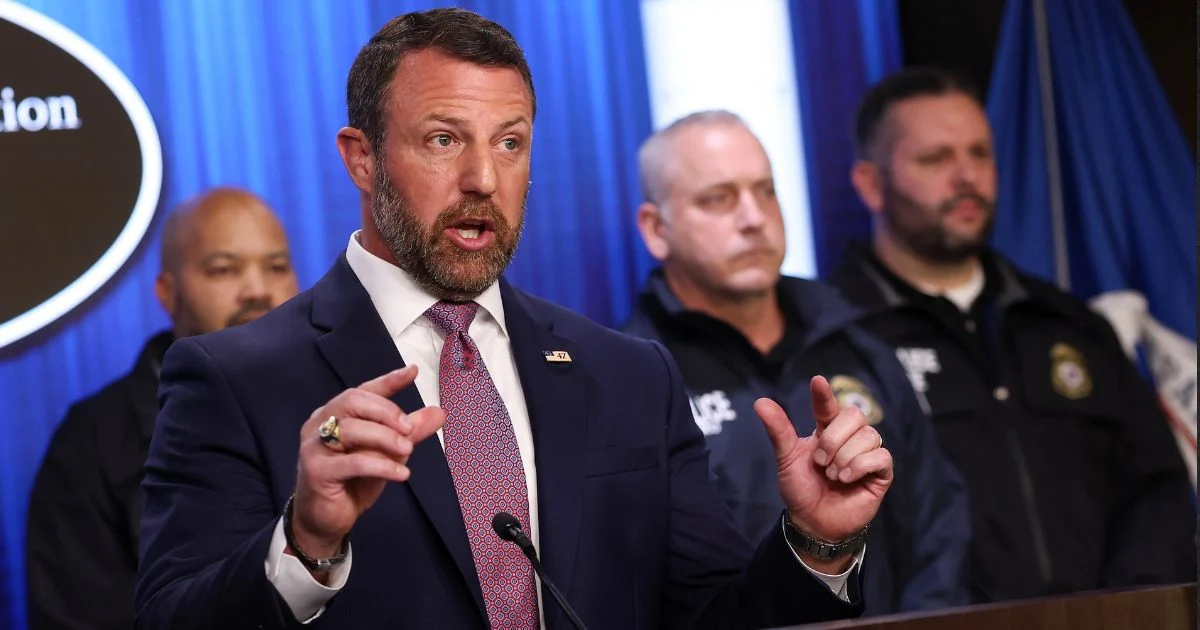
Department of Homeland Security (DHS) Secretary Markwayne Mullin launched a scathing rebuke of New York City’s sanctuary policies and Councilman Zohran Mamdani on Friday, October 9, 2026, following a U.S. Immigration and Customs Enforcement (ICE) operation in the Bronx that resulted in agents shooting an undocumented immigrant. The incident, which saw Oscar Belgal, an undocumented immigrant from the Dominican Republic, shot after allegedly attempting to flee and weaponize his vehicle against ICE officers, has reignited the contentious national debate over federal immigration enforcement in sanctuary jurisdictions.
The Bronx Incident: A Detailed Account
The confrontation unfolded during an attempted arrest of Oscar Belgal by ICE Enforcement and Removal Operations (ERO) agents. According to Marcos Charles, ICE ERO Executive Associate Director, Belgal had a history of evading law enforcement, having successfully eluded capture during a previous arrest attempt in September. On the day of the shooting, agents approached Belgal, who then "refused lawful orders to exit his vehicle." Charles elaborated, stating that Belgal "then accelerated his vehicle, smashing into two of our government ICE vehicles and then weaponized his vehicle and proceeded to accelerate going towards other officers." This escalation, agents reported, necessitated the use of force, leading to Belgal being shot.
Further details released by Secretary Mullin during his Friday news conference indicated that Belgal was on probation, had an immigration detainer, and was suspected of having direct or indirect knowledge of a gang-related shooting involving a Customs and Border Protection (CBP) officer the previous year. Mullin stressed that Belgal’s actions during the attempted arrest were a direct threat to the lives of federal agents.
Councilman Mamdani’s Fiery Condemnation and Calls to Abolish ICE
In the wake of the shooting, New York City Councilman Zohran Mamdani vociferously condemned ICE’s actions, claiming the agency "killed far more of our neighbors than they could ever have claimed to save." Mamdani’s remarks align with a broader movement among progressive politicians and advocacy groups calling for the abolition of ICE, arguing that its operations are overly aggressive, discriminatory, and detrimental to immigrant communities. His comments reflect a deep-seated ideological opposition to federal immigration enforcement within sanctuary cities.

Secretary Mullin’s Counter-Attack: Blaming Sanctuary Policies
Secretary Mullin directly challenged Mamdani’s narrative and laid the blame squarely on New York City’s sanctuary policies. "Well, Mayor," Mullin asked, seemingly addressing the broader city leadership, "if you abolish ICE, who will then take criminals off the streets of your own town?" Mullin emphasized that state and local officials, through their non-cooperation with federal immigration authorities, create an environment where individuals like Belgal can operate with perceived impunity.
He delivered a stark warning, invoking the stance of former President Donald Trump: "If sanctuary politicians refuse to take care of their own streets, President Trump has made it very clear we will." This statement signals a potential escalation of federal intervention in local jurisdictions should Trump return to office, underscoring the deep ideological divide on immigration enforcement. Mullin further asserted, "The state of New York knew he was illegal and they chose to release him back into the streets," highlighting Belgal’s known gang affiliation and his previous evasion of ICE. "Sanctuary politicians, they create an environment for criminal activity to thrive," Mullin concluded, linking these policies directly to public safety risks.
The Broader Context: Sanctuary Cities and Federal-Local Tensions
Sanctuary city policies, adopted by hundreds of jurisdictions across the United States, broadly restrict local law enforcement’s cooperation with federal immigration agencies like ICE. These policies vary in scope but typically prohibit local police from inquiring about immigration status, holding individuals solely for ICE detainers, or sharing information about undocumented residents with federal authorities unless mandated by a warrant.
Proponents of sanctuary policies argue that they foster trust between immigrant communities and local law enforcement, encouraging undocumented residents to report crimes without fear of deportation. They contend that local police resources should be focused on local crime, not federal immigration enforcement. Furthermore, advocates often cite humanitarian concerns, arguing that robust federal enforcement tears families apart and can lead to racial profiling.
Conversely, critics, including Secretary Mullin and many federal officials, assert that sanctuary policies obstruct justice, endanger public safety, and undermine federal immigration laws. They argue that by releasing individuals with immigration detainers, sanctuary cities are knowingly allowing potentially dangerous criminals to remain on the streets, making communities less safe. This perspective often highlights cases where undocumented individuals with criminal records have committed further offenses after being released by local authorities despite an ICE detainer. The debate over sanctuary cities has become a flashpoint in national politics, reflecting fundamental disagreements about federalism, immigration enforcement priorities, and the role of local government.
The Unanswered Question: The Stabbing of an NYPD Officer
Secretary Mullin intensified his criticism by drawing a stark contrast between the public outcry over the ICE shooting and the perceived silence regarding a recent attack on a New York Police Department (NYPD) officer. "NYPD officers are some of the finest officers we have out there. Just last week, one was stabbed seven times by illegals," Mullin stated, emphasizing that these individuals had detainers that New York had chosen to release, and both had "extensive criminal backgrounds."
Mullin then directly challenged New York’s leadership: "Did the mayor of New York say anything about that? Did the individuals that’s in the streets demanding justice for this criminal that we picked up yesterday? Did anybody come out for the officer that was stabbed seven times by these criminals?" He concluded with a pointed indictment: "Not a word was said. Not a word was said by the mayor. Not a word was said by the governor." This accusation highlights a perceived hypocrisy, suggesting that local officials prioritize the rights of undocumented immigrants over the safety of their own law enforcement officers when it suits their political agenda. Mullin further condemned Councilman Mamdani’s rhetoric, stating, "His words are dangerous and incite hostility," arguing that such statements are akin to "stabbing his own officers with words just as illegal immigrants stab them with weapons."
Implications and Future Outlook
The heated exchange between Secretary Mullin and Councilman Mamdani, set against the backdrop of the Bronx shooting and the NYPD officer stabbing, underscores the escalating tensions between federal immigration authorities and sanctuary jurisdictions. This incident is likely to have several significant implications:
- Heightened Federal-Local Conflict: The rhetoric from DHS signals a continued, and potentially intensified, federal pushback against sanctuary policies. This could manifest in legal challenges, attempts to withhold federal funding, or more aggressive federal enforcement operations within these cities.
- Political Polarization: The incident further entrenches the political divide on immigration. For proponents of strict enforcement, it validates their concerns about public safety in sanctuary cities. For immigration advocates, it reinforces their view of ICE as an overzealous and dangerous agency.
- Public Safety Debate: The contrasting incidents – the ICE shooting of an alleged aggressor and the stabbing of an NYPD officer by previously released individuals – will fuel public debate over which policies best ensure community safety. This debate often pits the perceived need for comprehensive immigration enforcement against concerns for civil liberties and community trust.
- Impact on 2026 and Beyond: Secretary Mullin’s explicit reference to President Trump’s stance on "law and order" suggests that immigration enforcement and sanctuary city policies will remain a central theme in upcoming political cycles. A potential return of a Trump administration could see significant federal action aimed at dismantling or penalizing sanctuary jurisdictions.
- Law Enforcement Morale: The Secretary’s defense of federal agents and his emphasis on the lack of support for local officers attacked by individuals released from custody could impact morale within both federal and local law enforcement agencies, particularly in areas with sanctuary policies.
The events in New York City represent a microcosm of the broader national struggle over immigration policy, law enforcement jurisdiction, and public safety. As federal agencies continue to assert their authority and local governments maintain their sanctuary stances, such confrontations are likely to persist, keeping the issue at the forefront of American political discourse. The lack of dialogue and the deep entrenchment of opposing viewpoints suggest that a resolution to these fundamental disagreements remains distant.









