For over two decades, Craig Johnson has carved out a unique and beloved niche in contemporary American literature, transporting readers deep into the rugged, enigmatic landscape of Wyoming through the eyes of Sheriff Walt Longmire. Since the publication of The Cold Dish in 2004, Johnson has meticulously crafted the fictional Absaroka County, a world teeming with unforgettable characters, intricate mysteries, a distinct vein of dark humor, profound explorations of Native American history and culture, the haunting specters of military pasts, and the unforgiving beauty of the American West. His prolific output, encompassing more than 20 novels and a collection of novellas and short stories, stands as a testament to his storytelling prowess and the enduring appeal of his iconic protagonist.
The Longmire series transcends the boundaries of traditional genre fiction, skillfully blending elements of classic Westerns, hardboiled detective stories, and character-driven literary fiction. This genre fluidity, coupled with Johnson’s commitment to authentic voice and setting, has garnered him a dedicated readership and significant critical acclaim. While each installment offers a standalone mystery, the overarching narrative arc delves into Walt Longmire’s personal evolution, his complex relationships, and the moral dilemmas inherent in upholding justice in a land where ancient traditions often clash with modern realities. Selecting just five standout novels from such a rich and extensive canon is an arduous task, as each book offers unique insights into the world Johnson has built. However, the chosen five encapsulate the core essence of the Longmire saga—its thrilling plots, its deep emotional resonance, and its lasting contribution to the pantheon of Western literature.
The Genesis of a Modern Western Icon: The Longmire Series’ Evolution
Craig Johnson’s journey into the literary landscape began with a clear vision for a contemporary Western hero rooted in tradition but facing modern challenges. The Cold Dish, published by Viking Books in 2004, introduced Walt Longmire as a man grappling with personal loss while fiercely dedicated to his community. This debut immediately set the tone for the series: a blend of compelling mystery, rich character development, and a strong sense of place. Johnson has maintained a remarkably consistent publication schedule, typically releasing a new novel annually, allowing readers to grow alongside Walt and the supporting cast. This steady stream of narratives has fostered a deep connection between the audience and the fictional world of Absaroka County, a testament to Johnson’s unwavering dedication to his craft.

Beyond the main novels, Johnson has expanded the Longmire universe through novellas and short stories, often offering glimpses into pivotal moments or unexplored facets of his characters’ lives. This comprehensive approach to world-building ensures that Absaroka County feels less like a backdrop and more like a living, breathing entity. The series’ consistent quality and deepening thematic complexity have not only secured its place in the mystery genre but have also significantly broadened the definition of what a "Western" can be in the 21st century. Johnson’s work frequently explores themes such as the preservation of Native American culture, the struggles of veterans, the complexities of familial bonds, and the ever-present tension between natural law and statutory justice, all against the stark, beautiful backdrop of Wyoming.
Critical Acclaim and Broader Impact
The Walt Longmire series has been a critical darling since its inception. Reviewers frequently laud Johnson for his vivid prose, intricate plotting, and the compelling authenticity of his characters. He has been particularly praised for his ability to portray the nuances of modern Western life, avoiding romanticized clichés while embracing the genre’s enduring appeal. The series has garnered numerous accolades, including multiple Spur Awards from the Western Writers of America, a testament to its excellence within the Western genre, and a Lefty Award for best mystery novel. These awards underscore the books’ literary merit and their success in captivating both mystery and Western aficionados.
Perhaps the most significant expansion of the Longmire phenomenon came with its adaptation into a television series. Initially airing on A&E in 2012 before moving to Netflix in 2015, the "Longmire" television show introduced the characters and stories to a vast global audience. Starring Robert Taylor as Walt Longmire, Lou Diamond Phillips as Henry Standing Bear, and Katee Sackhoff as Vic Moretti, the show ran for six seasons, further cementing the series’ cultural footprint. While the television adaptation naturally took liberties with plotlines and character dynamics, it largely retained the spirit, tone, and thematic depth of Johnson’s novels, fueling increased interest in the original literary works and drawing new readers into Absaroka County. The show’s success highlighted the universal appeal of Johnson’s storytelling—a compelling blend of crime, drama, and the timeless struggle for justice in a changing world. This cross-media success underscores the powerful narrative foundation Johnson established, demonstrating its resonance across different forms of storytelling.
Deconstructing the Top Five Longmire Novels

The enduring appeal of the Longmire series lies in its ability to offer diverse narrative experiences while maintaining a consistent core of character and setting. The following five novels represent pivotal moments in the series, showcasing Johnson’s versatility and the rich tapestry of his literary universe.
5. Depth of Winter (2018)
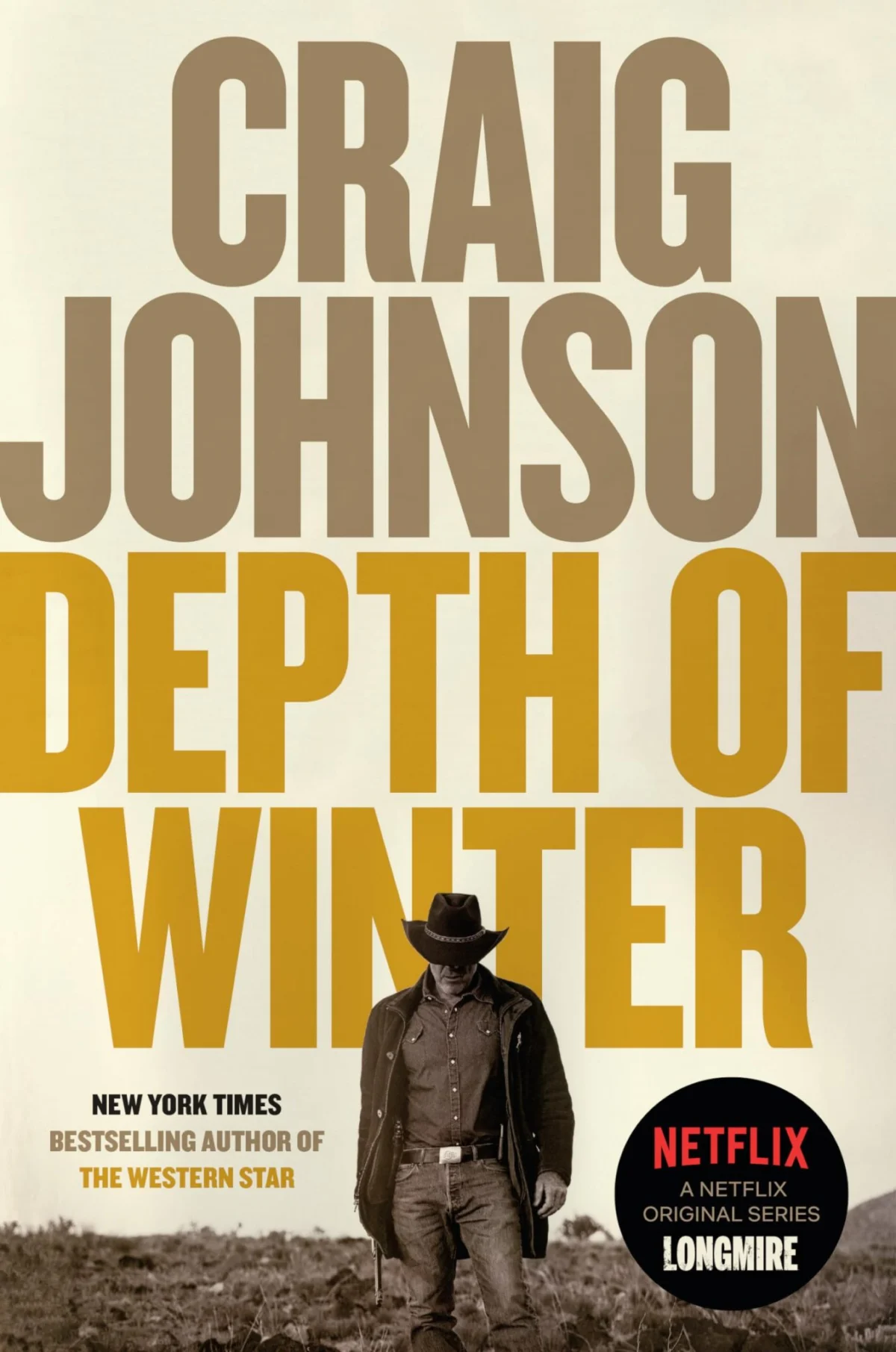
Depth of Winter, the 14th installment in the Longmire series, represents a significant departure from the familiar confines of Absaroka County, propelling Walt Longmire into a desperate, intensely personal mission. Following the harrowing events of preceding novels, Walt ventures into the cartel-controlled regions of Mexico, driven by the singular goal of rescuing his kidnapped daughter, Cady, and confronting the formidable antagonist, Tomas Bidarte. This narrative choice injects a fresh, high-stakes urgency into the series, showcasing Walt unleashed from the bureaucratic constraints of his Wyoming sheriffdom.
The novel stands out as the most action-heavy selection on this list, marked by a body count that dramatically surpasses previous installments. Johnson masterfully crafts a narrative that feels like a modern Western epic, where Walt assembles a ragtag posse of unexpected allies—including old friends and newly encountered figures—to navigate the treacherous criminal underworld. The setting, far from the Bighorn Mountains, allows Johnson to explore themes of vengeance, paternal love, and moral ambiguity against a backdrop of brutal cartel warfare. For longtime readers, Depth of Winter provides immense satisfaction, culminating a storyline that had been meticulously developed across several earlier books. The result is a visceral, often strange, and surprisingly humorous journey that pushes Walt to his absolute limits, affirming his unwavering commitment to family and justice, regardless of the jurisdiction. It’s a testament to Johnson’s ability to evolve his character and world without losing the essence of what makes Walt Longmire so compelling.
4. The Western Star (2017)

Published in 2017, The Western Star delves deeply into Walt Longmire’s formative years, expertly leveraging his past to inform a complex dual-timeline narrative. The novel unfolds across two distinct but interconnected investigations: a present-day effort by Walt to prevent a notorious prison inmate from receiving compassionate release, and a decades-old mystery involving a murder and a disappearance aboard the titular Western Star, an opulent passenger train that once traversed Wyoming’s expansive landscapes. This structural choice provides Johnson with a unique opportunity to explore the historical layers of his fictional world and the enduring impact of past events on the present.
The setup allows Johnson to playfully engage with classic mystery conventions, notably paying homage to Agatha Christie’s Murder on the Orient Express with its isolated setting and contained cast of suspects. However, The Western Star firmly grounds its narrative in authentic Wyoming history, using the grandeur of the old passenger train and the state’s rugged beauty as more than just scenery—they become integral to the unfolding mysteries. By intertwining Walt’s youthful experiences as a deputy with his current responsibilities as sheriff, the novel enriches his character, revealing the origins of his moral compass and investigative instincts. This book is particularly representative of what makes the Longmire series so compelling: its seamless integration of specific Western landscapes and history with the timeless conventions of the mystery genre, demonstrating how the past constantly echoes into the present.
3. Hell Is Empty (2011)
Hell Is Empty, released in 2011, pushes Walt Longmire into the harrowing territory of a classic Western survival story, demonstrating the sheer brutality and unforgiving nature of the Wyoming wilderness. The premise is stripped-down and tailor-made for high-stakes action: Walt is tasked with escorting three dangerous prisoners through the treacherous Bighorn Mountains when the men orchestrate a desperate escape, taking an FBI agent hostage in the process. This initial setup immediately transforms the narrative into a relentless pursuit, a modern-day manhunt against a backdrop of natural peril.
What unfolds is often described as "Die Hard in the Wyoming wilderness," a relentless struggle for survival and justice. Walt must track the fugitives through a brutal snowstorm, battling not only the escaped convicts but also the debilitating effects of exhaustion, extreme cold, and violence. The novel introduces one of the series’ most chilling and memorable adversaries in Raynaud Shade, a character whose cunning and ruthlessness amplify the peril. Johnson’s masterful prose makes the Bighorn Mountains feel enormous, hostile, and very much a character in themselves, turning Walt’s pursuit into a genuine test of endurance and will. The isolation and the elemental struggle transform Hell Is Empty into one of the most cinematic books in the series, a gripping testament to human resilience and the stark realities of justice in the wild, untamed West. It’s a powerful exploration of man against nature and man against man, stripped to its most primal form.

2. The Cold Dish (2004)
It is almost impossible to discuss the enduring appeal of the Walt Longmire series without placing The Cold Dish, the inaugural novel from 2004, near the top of any favorites list. This debut introduced readers to Sheriff Walt Longmire at a particularly vulnerable juncture in his life, still deeply mourning the recent death of his wife, Martha, while simultaneously confronting a series of perplexing killings of young men. This personal tragedy adds a layer of poignant depth to Walt’s character from the outset, making him immediately relatable and complex.
More significantly, The Cold Dish is where the rich and immersive world of Absaroka County begins to take shape. Readers are introduced to the foundational characters who would become indispensable to the series: Henry Standing Bear, Walt’s steadfast best friend and confidant; Vic Moretti, the sharp, fiery deputy from Philadelphia; Ruby, the quirky and efficient dispatcher; and, of course, Dog, Walt’s loyal canine companion. The relationship between Walt and Henry, in particular, is established immediately as the emotional anchor of the books—a friendship characterized by unwavering loyalty, sharp wit, deep understanding, and an honesty that allows Henry to call Walt out when necessary. While the central mystery involving the killings is compelling and well-crafted, the true and lasting attraction of The Cold Dish lies in the profound experience of discovering Absaroka County for the very first time, and meeting the unforgettable individuals who populate its landscape. It lays the groundwork for all the adventures, heartbreaks, and triumphs that follow, making it an indispensable starting point for any reader.
1. Another Man’s Moccasins (2008)
Another Man’s Moccasins, the fourth novel in the Longmire series published in 2008, consistently ranks as one of the most emotionally resonant and thematically rich installments. Johnson masterfully weaves together two distinct mysteries separated by several decades, creating a narrative that is both deeply personal and historically significant. In the present day, Walt investigates the discovery of a Vietnamese woman’s body along a desolate Wyoming highway, a case that initially seems like a tragic anomaly in his rural jurisdiction. Simultaneously, a faded photograph from his days as a young Marine during the Vietnam War pulls him back into his very first murder investigation, a haunting memory from Saigon.

The brilliance of this novel lies in how these two seemingly disparate stories gradually converge, revealing profound connections that span continents and generations. Another Man’s Moccasins is a powerful meditation on the lasting scars of war, the complexities of memory, the insidious nature of human trafficking, and the unseen burdens that individuals carry long after they have returned home from conflict. The character of Virgil White Buffalo, a homeless Crow veteran who becomes a primary suspect, is particularly memorable. His troubled life provides a poignant contrast to the post-military experiences of Walt and Henry Standing Bear, highlighting the diverse ways in which war impacts individuals and communities. This novel is quintessential Longmire, blending a gripping mystery with profound explorations of human empathy, historical trauma, and the quest for healing, solidifying its place as a series highlight.
The Enduring Legacy of Longmire
Craig Johnson’s Walt Longmire series has firmly established itself as a significant contribution to contemporary Western literature and crime fiction. By marrying the timeless archetypes of the Western genre with the intricate plotting of modern mysteries, Johnson has created a body of work that appeals to a diverse readership. His meticulous research, evocative prose, and unwavering commitment to character authenticity have not only garnered critical acclaim but have also inspired a devoted global fanbase.
The series’ cultural significance extends beyond its literary merits. Through Walt Longmire’s adventures, Johnson has provided a nuanced portrayal of the American West, exploring its majestic beauty, its harsh realities, and the complex interplay of cultures—particularly the often-overlooked history and struggles of Native American communities. The television adaptation further amplified this impact, bringing Johnson’s vision to millions and fostering a broader appreciation for character-driven storytelling rooted in a strong sense of place. As the series continues to evolve, readers eagerly anticipate each new installment, confident that Johnson will deliver more captivating mysteries, deeper character insights, and an unwavering commitment to exploring the heart of what it means to seek justice in the wild, beautiful, and often contradictory landscapes of Absaroka County, Wyoming. Craig Johnson’s legacy is one of a master storyteller who not only entertains but also enriches our understanding of a vital corner of the American spirit.