
The convergence of traditional country instrumentation with dark, often subversive themes has long existed on the periphery of the American music industry, though it frequently resurfaces during periods of cultural tension. While mainstream Nashville often prioritizes polished production and optimistic narratives, a parallel lineage of "Gothic Country" or "Underground Country" has maintained a steady influence by exploring the macabre, the theological, and the visceral. This subgenre is not a modern invention but a continuation of a legacy that includes the murder ballads of the 19th century and the stark, death-obsessed recordings of the early 20th-century pioneers.
To understand the current landscape of roots music, one must examine the pivotal records that bridged the gap between traditional Appalachian sounds and the aggressive aesthetics of punk and metal. These albums, many of which emerged during a creative "heyday" for the underground scene between 2006 and 2012, redefined the boundaries of the genre.
The Historical Foundation of Dark Country Roots
The exploration of darkness is an essential, if sometimes overlooked, pillar of the country music canon. Long before the term "Gothic Country" was coined, artists like The Carter Family and The Louvin Brothers documented the harsh realities of mortality and the supernatural. The Louvin Brothers’ 1959 album Satan Is Real serves as a primary blueprint for the subgenre, blending high-lonesome harmonies with terrifyingly literal depictions of hellfire.
Similarly, Johnny Cash’s "American Recordings" series, produced by Rick Rubin, demonstrated that the "Man in Black" persona resonated most deeply when it leaned into themes of sin, redemption, and the grave. This historical context is vital for understanding why the underground movement of the 21st century found such a receptive audience. It was not a rejection of country music, but a reclamation of its most haunting elements.
Hank Williams III: The Architect of Modern Underground Country
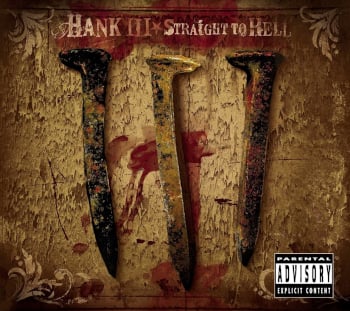
In 2006, the release of Straight To Hell by Hank Williams III (Hank3) marked a definitive shift in the country music industry. As the grandson of Hank Williams Sr., Hank3 carried a significant genealogical burden, yet he chose to utilize his platform to dismantle the contemporary Nashville establishment. Straight To Hell was the first album released under the Country Music Association (CMA) umbrella to feature a Parental Advisory sticker, a milestone that signaled the arrival of a new, more aggressive era of roots music.
The album functioned as a bridge between disparate subcultures. By blending neotraditional country with the raw energy of his punk and metal influences—stemming from his work with groups like Superjoint Ritual—Hank3 united "country punks" and traditionalists under a single banner.
Industry analysts often point to Straight To Hell as the first truly successful DIY-style album to penetrate the mainstream country infrastructure. It forced big-box retailers like Walmart to carry "clean" versions of the record, highlighting a cultural friction between the artist’s raw expression and the industry’s commercial standards. Beyond the controversy, the album’s six-minute closing track, "Angel of Sin," serves as a conceptual resolution, offering a sobering look at the "dead end" of the hard-living lifestyle depicted in the preceding songs.
The Evolution of Bluegrass: .357 String Band and the Milwaukee Scene
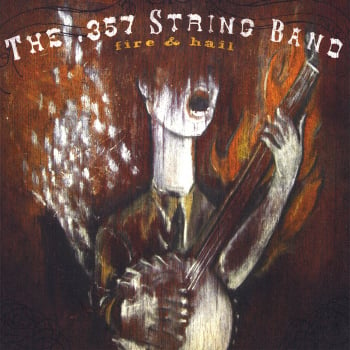
By 2008, the underground country movement had expanded geographically, with Milwaukee, Wisconsin, emerging as a surprising hub for "punk bluegrass." The .357 String Band’s Fire & Hail is frequently cited by critics as a landmark release in this movement. The album showcased a level of technical proficiency and compositional depth that moved the subgenre beyond mere shock value.
The band’s lineup—featuring banjoist Joseph Huber, mandolinist Jayke Orvis, guitarist Derek Dunn, and bassist Rick Ness—codified a sound that was both high-velocity and emotionally resonant. Huber’s songwriting, in particular, was noted for its "marksman first-class caliber," while Orvis contributed a haunting, melodic sensibility. The track "Hold Me Tight," a duet with Rachel Brooke, remains a definitive example of the "Gothic Roots" sound, blending heartbreak with a sense of impending doom.
The legacy of Fire & Hail is bolstered by the subsequent solo careers of its members, who have continued to influence the Americana and folk scenes. The album proved that the "dark side" of country could be as musically sophisticated as any mainstream production.
Collaborative Despair: The Intersection of Lonesome Wyatt and Rachel Brooke
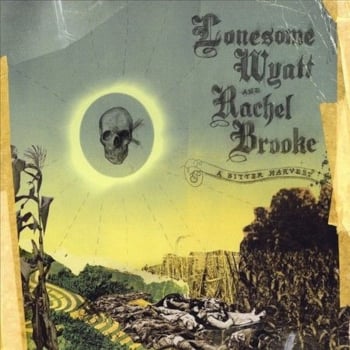
The 2009 collaboration A Bitter Harvest between Lonesome Wyatt (of Those Poor Bastards) and Rachel Brooke represents the more avant-garde, atmospheric side of Gothic Country. Lonesome Wyatt is often described as a "mad genius" of the genre, known for his ability to use unconventional sounds to evoke a sense of theological dread and rural decay.
A Bitter Harvest is less of a collection of songs and more of a cohesive soundtrack to human despair. By pairing Wyatt’s guttural, mournful delivery with Brooke’s pristine, classic-country vocals, the album created a jarring but effective juxtaposition. This record demonstrated how the genre could evolve by incorporating textural layers and experimental arrangements while remaining rooted in authentic country themes.
Critics have noted that A Bitter Harvest serves as an important educational tool for the genre, showing that "authentic" country does not have to be a static imitation of the past, but can be a vessel for a wide spectrum of human experience and sound.
The Denver Sound: Slim Cessna’s Auto Club and the Irony of Catchiness
The "Denver Sound" is a specific branch of Gothic Country characterized by its theatricality and obsession with religious fervor. Slim Cessna’s Auto Club is the primary progenitor of this style, and their 2011 album Unentitled is considered a masterpiece of the subgenre.
What makes Unentitled unique is its use of "catchiness" as a subversive tool. The album features upbeat arrangements, including elements of 1950s do-wop and mid-80s pop-style call-and-response vocals, yet these are layered over lyrics that explore profound darkness. Songs like "A Smashing Indictment of Character" and "Do You Know Thee Enemy" utilize infectious melodies to deliver unsettling narratives.
The use of nontraditional instruments for country—such as the autoharp and the "double-neck" guitar/banjo—further distinguished the band from their peers. Unentitled challenged the notion that dark music must be sonically abrasive, suggesting instead that the most effective way to explore the "dark side" is through the irony of accessible, engaging compositions.
The Avant-Garde Edge: The Bloody Jug Band’s Rhythmic Innovation
In 2012, the Bloody Jug Band released Coffin Up Blood, an album that revitalized the nearly extinct "jug band" format by infusing it with horror-themed narratives and modern rhythmic sensibilities. Unlike many novelty acts, the Bloody Jug Band utilized the washboard, washtub bass, and jug as the foundational core of their sound rather than as mere window dressing.
The album is characterized by its "wicked catchiness" and surprisingly deep composition. Critics have noted influences ranging from traditional roots to the art-pop sensibilities of David Byrne and Annie Lennox. While the album leans heavily into dark sarcasm and "death-infused" concepts, tracks like "Moon Bathing" and "The Pain" provide a serious emotional weight that elevates the project.
Coffin Up Blood proved that the underground country scene could still innovate within historical frameworks, using the most primitive instruments of the genre to create something that sounded entirely new and relevant to a modern audience.
Industry Impact and the Legacy of the "Two Guns Up" Era
The period during which these albums were released coincided with a broader fragmentation of the music industry. As digital distribution made it easier for independent artists to reach niche audiences, the "Underground Country" scene flourished outside the traditional gatekeeping of Nashville.
The "Two Guns Up" rating—a rare 10/10 distinction from critics at Saving Country Music—became a benchmark for quality within this community. These five albums are not merely historical curiosities; they are the "desert island" titles that defined a movement. They provided a blueprint for subsequent artists like The Goddamn Gallows, Bridge City Sinners, and Sons of Perdition to continue exploring the intersections of country, punk, and the Gothic.
In a modern context, the influence of these records can be seen in the rising popularity of "Dark Americana." The controversy surrounding the mixing of country with "satanic" or subversive imagery—most recently seen in the discourse surrounding artists like Twin Temple and Charley Crockett—is a reminder that this tension remains a vital part of the genre’s evolution. These five albums stand as a testament to the fact that when country music looks into the darkness, it often finds its most creative and enduring expressions.