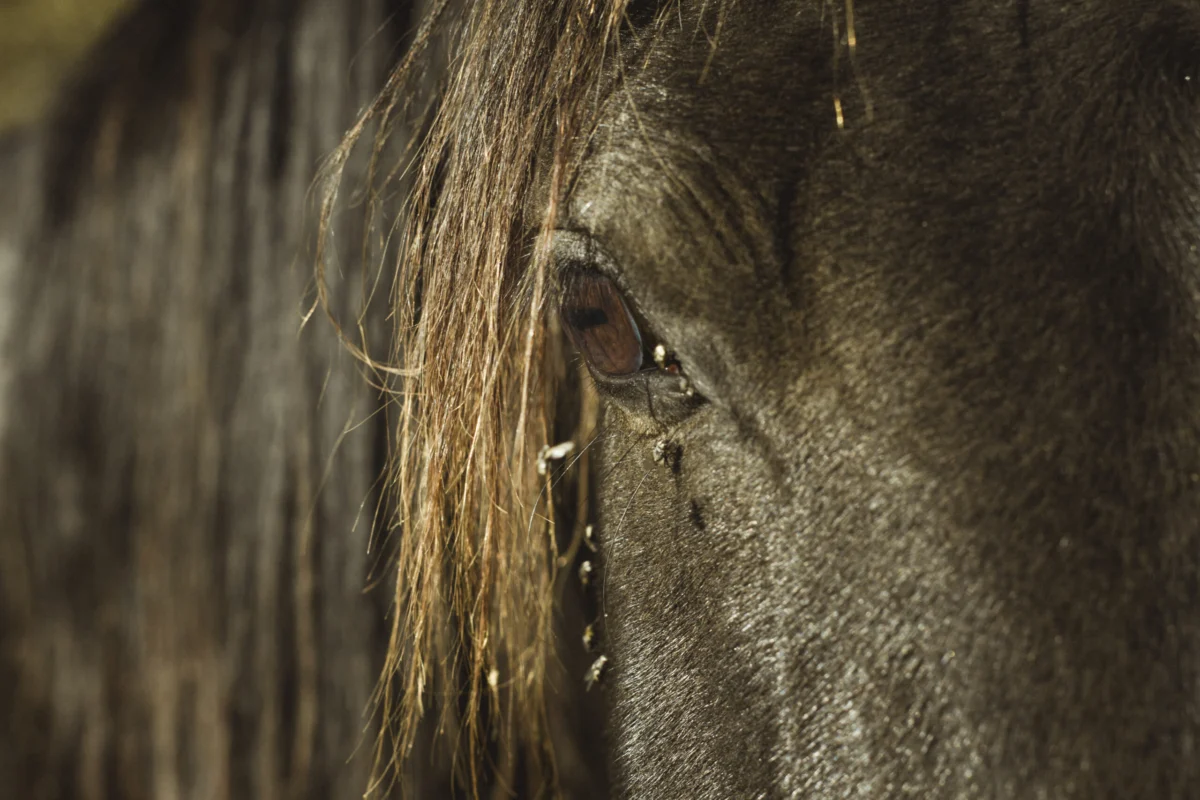
For an indeterminate period, the elderly mare, Star, had been trapped within the unforgiving embrace of a deep mud puddle. Her arthritic joints, already a daily challenge, had buckled under the treacherous conditions, leaving her mired and struggling. Each desperate attempt to regain her footing only served to deepen her entrapment, depleting her strength with alarming rapidity. Despite the diligent efforts of a highly trained large animal rescue team, the sheer depth of the viscous mud combined with the dangerously slick ground rendered conventional extraction methods too risky, bordering on impossible, without endangering both the mare and her rescuers. The situation was dire, casting a pall of despair over the scene as Star’s vital signs began to falter, signaling profound exhaustion and the onset of shock.
A Perilous Predicament: Star’s Struggle
The incident unfolded on a sprawling, privately-owned equestrian property nestled within the rolling hills of Willow Creek County, a region recently subjected to an unseasonable period of heavy rainfall. The saturated ground, particularly in low-lying pastures, had transformed previously firm soil into treacherous bogs and deep, waterlogged depressions. It was in one such unassuming, yet perilously deep, mud puddle that Star, a 28-year-old Quarter Horse mare, found herself immobilized. Star, a beloved companion animal and former trail horse, had been under veterinary care for advanced osteoarthritis, a degenerative joint disease common in older equines. Her owner, Mrs. Eleanor Vance, discovered Star at approximately 7:00 AM during her routine morning check, noticing the mare’s absence from her usual grazing spot. A frantic search led her to the edge of the large, murky depression, where Star lay, largely submerged, her head barely above the waterlogged earth, her eyes wide with a mixture of fear and exhaustion.
Mrs. Vance immediately contacted emergency services, initiating a chain of calls that brought local fire and rescue personnel, followed swiftly by the specialized Willow Creek Large Animal Rescue (WCLAR) team and Star’s long-time veterinarian, Dr. Aris Thorne. The initial assessment by the WCLAR team confirmed the severity of the entrapment. The puddle was estimated to be nearly four feet deep in places, with a thick, clay-heavy mud that exerted immense suction, effectively gluing Star to the earth. Her advanced age and arthritic condition meant that any sudden movements or excessive force during a rescue attempt could lead to catastrophic injuries, including fractures, severe muscle damage, or even spinal trauma. The team’s leader, Captain David Miller, a veteran of numerous animal rescues, described the scene as "one of the most challenging we’ve encountered, primarily due to the mare’s fragile condition and the sheer tenacity of the mud."
The Arrival of Specialized Aid: Initial Challenges
Upon their arrival, the WCLAR team, equipped with specialized slings, winches, and ground stabilization mats, quickly established a perimeter and began their methodical assessment. Their standard operating procedures for large animal entrapments typically involve constructing a stable pathway to the animal, administering sedatives to minimize panic and risk of injury, and then utilizing heavy-duty slings and a mechanical advantage system, often involving a tractor or winch, to carefully lift and extract the animal. However, this case presented immediate and formidable obstacles.
The ground surrounding the puddle was so waterlogged and unstable that deploying heavy machinery close enough to Star without risking further collapse or creating more hazards was deemed unsafe. Even manual attempts to dig trenches or place supportive materials under her proved futile; the mud immediately filled any excavated space, and the suction force was too powerful to allow the delicate placement of lifting slings without significant risk of injury to Star. Dr. Thorne, Star’s vet, was on hand, providing crucial medical oversight. He administered pain relief and a mild sedative to keep Star as calm as possible, constantly monitoring her vital signs – heart rate, respiration, and body temperature – which were steadily declining due to hypothermia and the sheer physical strain. "Every minute Star remained in that mud," Dr. Thorne later recounted, "her chances of survival diminished. We were fighting against the clock, and the elements."
The rescue team exhausted several conventional approaches. Attempts to slide a rescue glide or tarp beneath her were thwarted by the deep mud and the difficulty of maneuvering around her without causing further distress or injury. The sheer weight of the mud, estimated to be several hundred pounds pressing down on and around her, made any direct manual lift impossible. The team faced a critical juncture: continue with increasingly desperate and risky traditional methods, or concede defeat. It was at this moment, as the sun began to climb higher, casting long shadows and intensifying the feeling of urgency, that Dr. Thorne, having spent hours observing Star, meticulously evaluating the mud’s properties, and consulting with Captain Miller, had an unconventional, yet potentially game-changing, idea.
The Breakthrough: A Vet’s Ingenious Strategy
Dr. Thorne’s innovative concept stemmed from a deep understanding of fluid dynamics and an acute awareness of Star’s delicate physical state. He proposed a two-pronged approach that would address both the suction of the mud and the instability of the surrounding ground, while minimizing direct physical stress on Star. His idea involved leveraging local resources in an unexpected way.
The core of the strategy was to effectively "float" Star within the mud by reducing the density and suction of the surrounding material, rather than trying to brute-force her out. Dr. Thorne suggested utilizing a high-volume pump, typically used for irrigation or firefighting, to strategically inject water underneath and around Star. This process, he theorized, would liquefy the dense, clay-heavy mud, significantly reducing its suction and allowing Star’s own natural buoyancy, however slight, to become more effective. Simultaneously, this would create a more fluid medium through which rescue equipment could be maneuvered.
Once the mud’s viscosity was sufficiently reduced, the second phase of the plan would involve deploying specialized, heavy-duty inflatable rescue cushions or air bags. These industrial-grade inflatables, typically used in structural collapse rescues, could be carefully slid into the now-liquefied mud around Star’s flanks and under her chest and abdomen. Once positioned, they would be slowly and incrementally inflated using compressed air tanks, providing a gentle, controlled lift. This gradual elevation would not only further break the mud’s suction but also create a stable platform, preventing Star from sinking back down and allowing the rescue team to finally position the critical full-body rescue sling. The sling could then be attached to a portable gantry system, which could be set up on more stable ground further away, and then connected to a powerful, albeit carefully controlled, mechanical winch.
The rationale was clear: traditional pulling or lifting from above risked exacerbating her arthritis or causing further internal injuries as the mud exerted its resistance. By reducing the mud’s grip from below and simultaneously providing controlled upward pressure, the risk profile would be dramatically lowered. Captain Miller initially expressed skepticism regarding the logistics of controlling water flow and the stability of inflatable cushions in such a treacherous environment, but Dr. Thorne, with his veterinary expertise and a compelling argument based on similar, albeit smaller-scale, principles used in other animal rescues, convinced him of its potential. "We had tried everything else," Dr. Thorne later stated, "and Star was fading. We needed to think outside the traditional box, to use science and ingenuity to overcome what seemed insurmountable. The key was to make the environment work for us, not against us."
A Race Against Time: Executing the Plan
With the new plan approved, a flurry of activity ensued. Local fire department units were called upon to supply a powerful pump and several hundred feet of hose, along with a large water tender. Meanwhile, the WCLAR team began carefully clearing a wider perimeter, laying down a grid of interconnected composite ground mats to create a more stable, albeit temporary, pathway for personnel and equipment.
The operation began with the strategic injection of water. Firefighters meticulously directed powerful streams of water into the mud around Star, focusing on areas where her legs were most deeply embedded. The process was slow and deliberate, requiring constant monitoring by Dr. Thorne to ensure Star remained calm and did not panic from the sudden influx of water. The mud, initially thick and resistant, gradually began to liquefy, releasing its tenacious grip. The water, mixed with the displaced mud, created a swirling, soupy concoction, but crucially, the suction began to dissipate.
As the mud softened, the WCLAR team, donning specialized water rescue gear, carefully approached Star. Working with extreme caution, they managed to slide the deflated, heavy-duty air bags underneath her, a task made considerably easier by the now-fluid mud. This was a critical phase, requiring precise coordination and gentle handling to avoid startling the already exhausted mare. Once the bags were roughly in place, the team connected them to compressed air tanks. Slowly, incrementally, the bags began to inflate. Star, under the continued influence of sedation, stirred but remained relatively calm as she felt the subtle, upward pressure. The ground crew meticulously adjusted the inflation of each bag, ensuring even lift and preventing any sudden shifts that could cause injury.
Over the next hour, Star was gently raised several inches, enough to break the deep suction and create a narrow gap between her underside and the remaining dense mud. This allowed the rescue team to finally, and carefully, maneuver the wide, padded rescue sling beneath her. The sling, designed to distribute her weight evenly, was then secured around her torso and hindquarters. With the sling firmly in place, the team connected it to the portable gantry system, which had been erected on the more stable ground about 30 feet away. A powerful hydraulic winch, connected to a heavy-duty tractor, was then attached to the gantry.
Triumph Over Treachery: Star’s Freedom
The final phase of the rescue was a testament to the meticulous planning and precise execution. Captain Miller, communicating via headset with the winch operator and the ground team, gave the command for a slow, steady lift. Inch by agonizing inch, Star was raised from the mud. The tension in the air was palpable; every eye was fixed on the mare. The winch hummed, the gantry groaned softly, and the rescue team remained vigilant, guiding Star clear of any obstacles.
Finally, after nearly six hours since her discovery, Star was clear of the mud pit. She hung suspended for a few moments, the sling supporting her entire weight, before being gently lowered onto a pre-prepared, soft bed of straw and hay on solid ground. The collective sigh of relief from everyone present was almost audible.
Dr. Thorne immediately rushed to Star’s side, conducting a thorough post-rescue assessment. Miraculously, despite her ordeal, Star appeared to have no immediate life-threatening injuries beyond extreme exhaustion, mild hypothermia, and some superficial abrasions. She was immediately covered with warm blankets, and intravenous fluids were administered to combat dehydration and shock. Mrs. Vance, who had watched the entire grueling process with a mixture of terror and hope, collapsed in tears of relief beside her beloved mare, gently stroking Star’s muddy face. "I thought we had lost her," she whispered, her voice choked with emotion. "Dr. Thorne’s idea… it was nothing short of a miracle."
The Broader Context of Large Animal Rescues
Star’s rescue highlights the inherent complexities and dangers of large animal emergencies, particularly those involving entrapment. According to data compiled by the American Society for the Prevention of Cruelty to Animals (ASPCA) and various large animal rescue organizations, incidents involving horses, cattle, and other large livestock trapped in mud, swift water, or collapsed structures are surprisingly common. These events often pose significant risks not only to the animals but also to untrained rescuers. Statistics indicate that large animal rescues often require specialized equipment, extensive training, and inter-agency cooperation. The average cost of a complex large animal rescue, factoring in personnel, equipment, and veterinary care, can range from several thousand to tens of thousands of dollars, underscoring the financial burden and resource commitment required.
Mud entrapment is particularly perilous for equines. The immense suction force can cause severe muscle damage (rhabdomyolysis), crush injuries, and nerve damage from prolonged pressure. The cold, wet environment rapidly leads to hypothermia, while the constant struggle can induce profound exhaustion, metabolic acidosis, and aspiration pneumonia if the animal inhales mud or water. The longer an animal remains trapped, the higher the risk of irreversible physiological damage or death. The presence of a veterinarian on-site, as in Star’s case, is crucial not only for administering immediate medical aid and pain management but also for advising on the safest extraction methods, recognizing an animal’s limits, and making difficult ethical decisions if necessary.
Voices from the Scene: Reactions and Reflections
Mrs. Vance, still visibly shaken but overflowing with gratitude, praised the professionalism and dedication of the entire team. "To see them work, to see the care and the ingenuity, it was just incredible," she stated to reporters later that day. "Dr. Thorne’s quick thinking, Captain Miller’s leadership, and the tireless efforts of the rescue team saved my Star. They truly are heroes."
Dr. Thorne, reflecting on the challenging operation, emphasized the collaborative spirit. "This wasn’t just my idea; it was a team effort to implement it safely and effectively. Every member played a critical role. What this incident underscores is the need for continuous innovation in large animal rescue. Sometimes, the most effective solution isn’t the most obvious one, but one tailored to the specific circumstances and the individual animal’s needs. We had to respect Star’s age and her arthritis, which meant minimizing any forceful manipulation."
Captain Miller echoed the sentiment, highlighting the value of specialized training. "Our team undergoes rigorous training for scenarios exactly like this, but every situation presents unique variables. Dr. Thorne’s expertise was invaluable. This rescue will be a case study for future training sessions, demonstrating how interdisciplinary collaboration and adaptability can overcome seemingly impossible odds." Local animal welfare advocates also weighed in, praising the community’s response and the dedication of all involved. "This heartwarming rescue reminds us of the incredible bond between humans and animals," said Sarah Jenkins, director of the Willow Creek Humane Society. "It also emphasizes the vital role of specialized rescue services and the importance of supporting them through training and equipment."
Beyond the Puddle: Implications and Legacy
Star’s extraordinary rescue, set to be featured as the 100th episode of the popular series "Barn Stories," serves as a powerful testament to the unwavering dedication of those committed to animal welfare and the boundless capacity for human ingenuity. The innovative application of water dynamics and inflatable technology in a large animal entrapment scenario could potentially influence future rescue protocols, encouraging teams to consider unconventional solutions when traditional methods prove insufficient or too risky. It reinforces the critical role of veterinary medicine, showcasing how veterinarians are not just healers but also problem-solvers, capable of devising life-saving strategies under immense pressure.
The phrase "bolster your faith in horsepower" takes on a dual meaning in this context. It celebrates the sheer resilience of Star, who fought valiantly against her predicament, and the profound capacity of humans to apply their intellect and compassion to save a creature in distress, utilizing the "horsepower" of their minds and machinery. The story also highlights the invaluable resources available to horse owners. "My New Horse," a prominent online platform dedicated to guiding individuals through their horse ownership journey, frequently features articles and resources on emergency preparedness, veterinary care, and responsible horse management, underscoring the importance of being informed and prepared for unforeseen challenges.
As Star continues her recovery, resting comfortably in her stall, this narrative stands as a beacon of hope and a powerful reminder that even in the most desperate circumstances, ingenuity, collaboration, and an unwavering commitment to life can indeed triumph over adversity. Her story, to be shared with a global audience, is a heartwarming affirmation of the enduring bond between humans and horses, and a celebration of the extraordinary efforts undertaken to protect it.