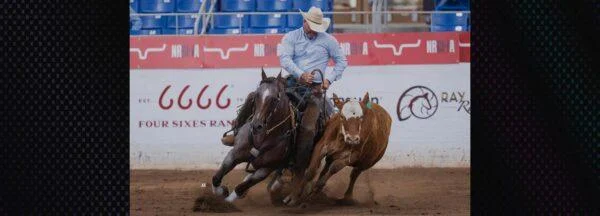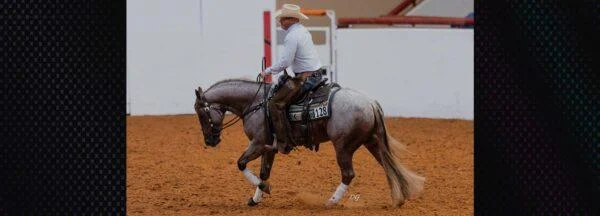
The nuanced skill of teaching a horse to pick up the correct lead is a cornerstone of advanced equestrian training, demanding precision, patience, and a deep understanding of equine behavior. As riders refine their techniques for collecting their mounts and shaping their bodies for a seamless departure into the lope, a common challenge emerges: the horse begins to anticipate the cue. This premature response, where the horse steps into the lead the moment it feels the rider’s subtle adjustments, can undermine the intended partnership and the clarity of communication. The goal, therefore, is to cultivate a horse that remains soft, relaxed, and responsive, waiting for the distinct vocal cue to initiate the desired gait. This article explores a refined training methodology designed to address this anticipatory behavior, drawing parallels to established practices in other equestrian disciplines and examining the broader implications for horse-rider communication.
The Challenge of Anticipation in Lead Departures
In the intricate dance between horse and rider, clear communication is paramount. When a horse consistently anticipates a cue, it signifies a disconnect in the training process. Specifically, in the context of lead departures, a horse that launches into the lope as soon as the rider initiates the preparatory steps – such as bridging the reins, applying outside hip pressure, or adjusting leg position – is not truly responding to the specific cue intended for the gait change. Instead, it is reacting to a sequence of actions that have become predictable. This can manifest as a loss of softness and relaxation in the horse, as it tenses in expectation rather than moving fluidly through the preparatory phase. The rider’s intention is to create a moment of deliberate stillness and responsiveness before the cue, ensuring the horse is mentally present and physically aligned for the requested lead.
The ideal scenario involves the rider setting up the horse for the lead departure, establishing a state of softness and attentiveness. Only when the horse is in this receptive state, and the rider offers a distinct cue—often a kiss or a specific vocalization—should the horse then initiate the lope. This methodical approach not only ensures the correct lead is picked up but also reinforces the horse’s understanding of its role in the partnership: to wait for and respond to the rider’s explicit commands.
Addressing Anticipation: A Methodical Training Strategy
To counteract this tendency for anticipation, trainers employ a strategy that mirrors established principles of desensitization and delayed gratification. When a horse begins to exhibit anticipatory behavior—making a lead departure without the specific vocal cue—the trainer must deliberately interrupt the expected sequence. The process involves setting the horse up for the lead departure as usual. This means gathering the horse, shaping its body appropriately, and creating the conditions for a smooth transition into the lope. However, at the precise moment the horse typically anticipates the cue, the rider intentionally releases the pressure and refrains from giving the vocal command. Instead, the horse is simply "turned loose," meaning the rider relaxes the aids that were preparing for the departure.
This deliberate withholding of the cue, even when the horse is perfectly positioned and ready, serves to break the associative link between the preparatory actions and the immediate lope. The horse learns that while its preparation might be correct, the ultimate cue to move forward into the lope is separate and distinct. This process may need to be repeated several times. Trainers often suggest setting the horse up for the departure three or four times, releasing the pressure each time without cueing the lope. This repetition is crucial for recalibrating the horse’s understanding.
The underlying principle here is analogous to how trainers prepare working horses for demanding tasks. Consider the example of steer roping. In this discipline, horses are trained to be calm and collected in the roping box. A common technique involves entering the box and making the motions of preparation, but then not actually pursuing the steer when it is released. This is done multiple times to prevent the horse from assuming that every trip into the box signifies an imminent chase. By not always following through with the expected action, the horse learns to relax and wait, rather than becoming anxious or over-eager. This approach prevents the horse from developing a conditioned response that could be detrimental in a real-time roping scenario.
The Psychology of Anticipation in Equine Learning
Horses are highly intelligent and observant creatures, capable of learning complex associations quickly. Their ability to anticipate cues stems from their innate drive to understand and please their handlers, coupled with a remarkable capacity for pattern recognition. When a specific set of actions consistently leads to a desired outcome—in this case, moving into a lope—the horse will naturally learn to predict that outcome. This predictive learning, while efficient in many training contexts, can become problematic when it bypasses the rider’s specific communication.
The challenge for the trainer is to leverage the horse’s learning capacity without allowing it to dictate the timing of the communication. Teaching a horse to wait for the kiss or vocal cue is not about suppressing its intelligence; rather, it is about refining the channel of communication. It is about establishing that while the preparatory aids indicate readiness, the definitive signal to proceed originates from a singular, unambiguous cue. This cultivates a higher level of responsiveness and a deeper understanding of the rider’s intent.
Data and Evidence in Equine Training
While specific empirical studies quantifying the prevalence of lead departure anticipation in a general horse population are scarce in readily accessible public domains, the principles guiding this training approach are well-established within the field of equine behavior and learning theory. The concept of operant conditioning, particularly the role of reinforcement and punishment (or the withholding of reinforcement), is directly applicable. When a horse anticipates and is immediately rewarded with the lope, it reinforces the anticipatory behavior. By withholding the reward (the lope) when the horse anticipates, and only delivering it upon the correct cue, the trainer is effectively extinguishing the anticipatory response and reinforcing the desired cue-response association.
Anecdotal evidence from seasoned trainers across various disciplines, including Western pleasure, reining, and cutting, consistently highlights the importance of teaching horses to "wait on the rider." Many professionals emphasize that a horse that rushes its cues is less likely to perform optimally under pressure. The ability of a horse to remain soft and responsive, even when faced with complex maneuvers or demanding environments, is often attributed to a strong foundation of clear communication and disciplined training.
Historical Context and Evolution of Training Methods
The approach to teaching lead departures has evolved significantly over time. Earlier methods might have relied more on brute force or forceful cues to achieve the desired outcome. However, with advancements in understanding equine psychology and the development of positive reinforcement techniques, training has become more sophisticated. The emphasis has shifted from simply achieving a result to fostering a willing partnership built on mutual respect and clear communication.
The development of disciplines like Western horsemanship, which place a high value on precise maneuvers and smooth transitions, has driven the refinement of techniques like those discussed. The ability to consistently and accurately pick up the correct lead is not just about aesthetics; it is fundamental to executing patterns smoothly and efficiently. This has led to a deeper exploration of how to achieve these results without relying on the horse’s guesswork.
Implications for Horse-Rider Partnership and Performance
The ability to master the lead departure has far-reaching implications for the overall horse-rider partnership. A horse that waits for cues, rather than anticipating them, demonstrates a higher level of submission and trust. This allows for a more harmonious and fluid ride, where the horse is not just performing tasks but is actively engaged in a dialogue with its rider.
For competitive riders, this precision is crucial. In disciplines judged on accuracy and smoothness, a horse that anticipates can incur penalties or receive lower scores. A horse that reliably responds to the intended cue, demonstrating softness and attentiveness throughout the preparatory phase, is invariably a stronger performer.
Beyond competition, this refined communication enhances the safety and enjoyment of recreational riding. A horse that is attuned to its rider’s subtle signals is less likely to be startled or to react unpredictably. This creates a more confident and enjoyable experience for both horse and rider.
Expert Perspectives and Future Directions
While the article focuses on a specific training technique, the broader philosophical underpinnings resonate with many leading equine educators. Many trainers advocate for a "thinking horse" rather than a "reacting horse." This means developing a horse that understands the ‘why’ behind a cue, not just the ‘what.’
The continued evolution of equine training will likely see further integration of scientific understanding of learning and behavior. As more research becomes available on equine cognition and stress responses, training methodologies will continue to adapt, prioritizing the well-being and mental engagement of the horse. The pursuit of a seamless lead departure is not merely a technical exercise; it is a testament to the ongoing journey of understanding and refining the partnership between humans and horses. The reward is a horse that not only performs with precision but does so with a willing spirit, a testament to the power of clear, consistent, and patient communication.