

The highly anticipated Michigan Senate debate on Thursday, October 8, 2026, in Grand Rapids, saw Democratic candidate Abdul El-Sayed and his Republican rival Mike Rogers engage in a sharp exchange over their respective residency qualifications and international connections, just weeks before Michiganders head to the polls to decide a critical race for the upper chamber of Congress. The debate, widely seen as a pivotal moment in a tightly contested election, quickly veered into personal attacks regarding the candidates’ property holdings and perceived allegiances, drawing significant attention to the often-complex interplay between political rhetoric, legal requirements, and voter perception.
The Stakes: A Critical Michigan Senate Race
The 2026 Michigan Senate race is proving to be one of the most closely watched contests in the nation, with both national parties pouring resources into the state. The outcome could significantly influence the balance of power in the U.S. Senate, making every debate and public appearance crucial. Michigan, a traditional swing state, has seen shifting political demographics and priorities in recent election cycles, rendering this particular contest unpredictable. Voters are grappling with a range of issues from economic stability and healthcare to foreign policy and social values, making the candidates’ perceived connections to their constituents and their understanding of local concerns paramount.
Mike Rogers, a former U.S. Representative with a background in intelligence and the military, is campaigning on a platform emphasizing national security, economic growth, and a strong, traditional American identity. His supporters often highlight his experience in Washington and his commitment to conservative principles. Abdul El-Sayed, a physician and former Detroit Health Director, represents a progressive wing of the Democratic Party, advocating for universal healthcare, environmental protection, and social justice. His campaign has focused on addressing systemic inequalities and bringing a new perspective to Washington. Both candidates have established strong bases of support, but the large bloc of independent and undecided voters in Michigan means that perceived missteps or compelling arguments in debates can have a disproportionate impact.
A Fiery Exchange on the Debate Stage
The Grand Rapids debate, broadcast statewide, commenced with a discussion of policy issues but quickly escalated when Rogers launched into a series of pointed criticisms against El-Sayed. "He can’t condemn Hamas, he can’t condemn the Muslim Brotherhood, he says his home is Egypt," Rogers asserted, linking El-Sayed to controversial foreign entities and questioning his primary allegiance. These accusations, made against the backdrop of ongoing geopolitical tensions in the Middle East, aimed to portray El-Sayed as out of step with mainstream American foreign policy and potentially disengaged from Michigan’s interests.
El-Sayed, an Egyptian-American, immediately interjected, attempting to deflect the attack and turn it back on his opponent. "His home is in Florida; my home is in Michigan," El-Sayed retorted, aiming to paint Rogers as an outsider whose primary residence lies outside the state he seeks to represent. As the moderator attempted to regain control and transition to another topic, El-Sayed pressed his point further, stating, "He does have a home in Florida. He took it off the market. I don’t know why." This implied that Rogers might be attempting to obscure his non-Michigan residency.
Rogers, however, was quick to counter, delivering a sharp rebuttal that resonated with many observers. "He has a home in the United Arab Emirates. At least Florida is in the United States," Rogers declared, reportedly also mentioning a property in Pakistan, drawing a clear distinction between owning property in another U.S. state versus owning property in foreign nations. The implicit argument was that while a home in Florida might raise questions about local ties, property in the Middle East raised more fundamental questions about a candidate’s focus and allegiances, especially given Rogers’ earlier accusations regarding Hamas and the Muslim Brotherhood.
Fact-Checking the Claims: Residency and Property Holdings
Following the debate, both campaigns and independent media outlets moved to verify the claims made on stage. The information available confirms the factual basis of several of the candidates’ assertions, though the political implications of these facts remain subject to interpretation.
-
Abdul El-Sayed’s International Ties:
- Egypt as "Home": Reports from RedState, citing an October 2025 podcast appearance, corroborated Rogers’ claim that El-Sayed had referred to Egypt as "back home." While this statement could be interpreted as an acknowledgment of his cultural heritage and family roots, Rogers’ campaign sought to frame it as evidence of divided loyalty, particularly when juxtaposed with his policy positions.
- United Arab Emirates Property: The Washington Free Beacon reported in July 2026 that El-Sayed indeed owns a rental property in Dubai, United Arab Emirates. The report further detailed that this property was associated with outstanding debt to a luxury developer involved in a resort-style community, adding another layer to the financial scrutiny. This revelation provided tangible evidence supporting Rogers’ claim about El-Sayed’s foreign property holdings. The specific nature of the property, a rental, suggests an investment rather than a primary residence, but its location in a foreign country became a point of contention in the debate.
- Pakistan Property: While Rogers explicitly mentioned Pakistan in the debate, subsequent verification from the sources cited by the original article (RedState, Washington Free Beacon) only confirmed the UAE property. The claim regarding Pakistan might be part of Rogers’ broader rhetorical strategy to emphasize El-Sayed’s international connections, but concrete public records or journalistic reports supporting this specific claim were not detailed in the immediate aftermath of the debate.
-
Mike Rogers’ Florida Property:
- Cape Coral Residence: The American Vanguard confirmed that Mike Rogers and his wife purchased a property in Cape Coral, Florida, in 2022. This fact supported El-Sayed’s counter-accusation regarding Rogers’ out-of-state property. The implication from El-Sayed that Rogers "took it off the market" suggested an attempt to downplay or conceal the Florida residence, though the specific reason for any market status change was not immediately clear.
- Michigan Residency: Despite owning property in Florida, American Vanguard also noted that Rogers maintains a Michigan residence and meets the legal requirements for holding office in the state. U.S. Senate candidates must be inhabitants of the state they represent at the time of their election. The legal definition of residency often differs from the political or emotional interpretation of "home," allowing for individuals to own multiple properties while maintaining a primary domicile for electoral purposes. Rogers’ campaign would likely emphasize his long-standing ties to Michigan through his previous congressional service and current residence.
Chronology of Key Events
The debate exchange was the culmination of several developments regarding the candidates’ personal and financial disclosures:
- 2022: Mike Rogers and his wife acquire a property in Cape Coral, Florida, establishing a connection to the Sunshine State.
- October 2025: Abdul El-Sayed makes a podcast appearance where he refers to Egypt as "back home," a statement later seized upon by his political opponents.
- July 2026: The Washington Free Beacon publishes an investigative report detailing Abdul El-Sayed’s ownership of a rental property in Dubai, United Arab Emirates, along with associated financial obligations.
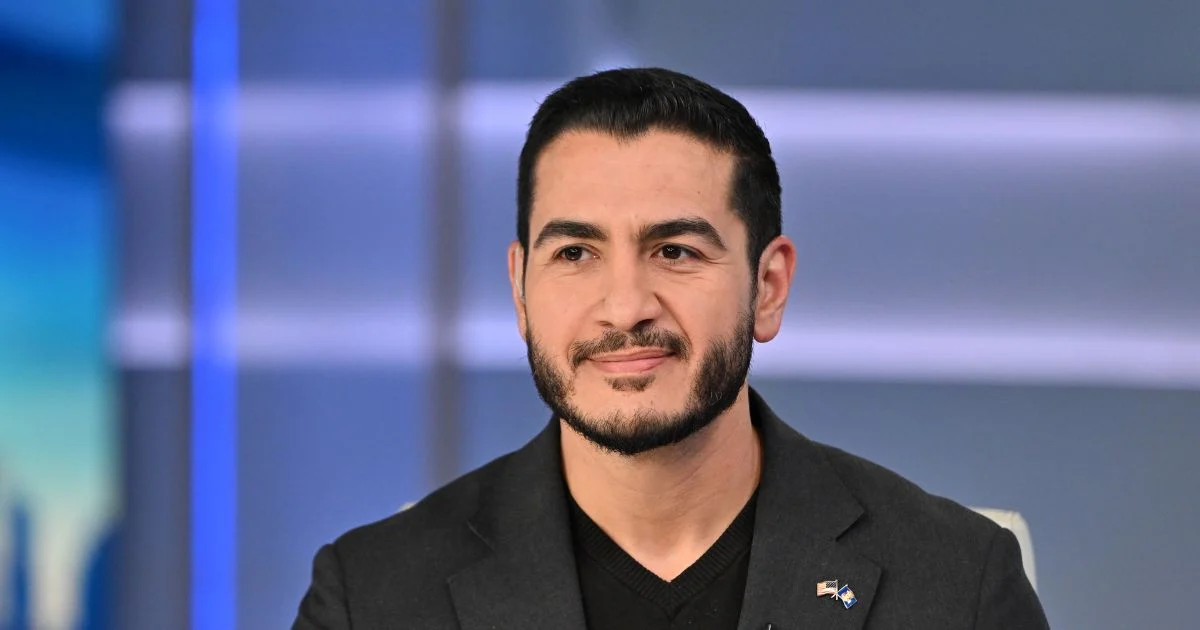
- October 5, 2026: Abdul El-Sayed appears on "The Story With Martha MacCallum" at Fox News Channel Studios in New York City, participating in national media outreach as the election nears.
- October 8, 2026 (Thursday): The highly anticipated Michigan Senate debate takes place in Grand Rapids, featuring the contentious exchange over residency and foreign ties.
- October 9, 2026: News outlets begin to analyze and fact-check the claims made during the debate, highlighting the implications for the ongoing campaign.
- Early November 2026: Election Day, when Michigan voters will cast their ballots for their next U.S. Senator.
Broader Impact and Campaign Trajectory
The debate exchange on residency and foreign ties is expected to significantly influence the final weeks of the Michigan Senate race. Political analysts suggest that Rogers’ argument, differentiating between property in another U.S. state (Florida) and property in foreign nations (UAE, Egypt as "home"), proved more strategically effective. For many voters, a candidate’s connection to "America" versus perceived ties to foreign countries, particularly those in politically sensitive regions, can be a potent electoral issue. Rogers’ framing of the issue tapped into concerns about national identity and security, which often resonate with a segment of the electorate.
Conversely, El-Sayed’s attempt to highlight Rogers’ Florida property, while factually correct, appeared to backfire by opening the door for Rogers to introduce El-Sayed’s more distant international assets. This tactical misstep could force El-Sayed’s campaign to spend valuable time and resources explaining his foreign property holdings and reaffirming his commitment to Michigan, potentially diverting attention from his core policy messages.
Campaign strategists for Mike Rogers are likely to amplify the debate’s "at least Florida is in the USA" soundbite, using it in digital ads, mailers, and campaign speeches to question El-Sayed’s rootedness in Michigan and his alignment with American interests. They will aim to solidify the narrative that El-Sayed’s international connections are a liability.
On the other side, El-Sayed’s campaign will likely double down on portraying Rogers as a carpetbagger from Florida, arguing that his out-of-state property demonstrates a lack of genuine commitment to Michigan. They might also seek to reframe El-Sayed’s international background as a strength, highlighting his global perspective and diverse experience, rather than a weakness. However, navigating the "Egypt as home" and UAE property issues without appearing defensive will be a challenge.
Pollsters will be closely monitoring any shifts in voter sentiment in the days and weeks following the debate. In a race projected to be decided by a narrow margin, even a slight shift among undecided voters could prove decisive. The debate’s focus on personal connections and residency, rather than purely policy discussions, may appeal to voters looking for a candidate who genuinely understands and represents their local interests. This contentious exchange underscores the intensity and often personal nature of modern political campaigns, especially in high-stakes races where every detail of a candidate’s background can become a point of contention. The battle for Michigan’s Senate seat will undoubtedly continue to be fought on multiple fronts, with the question of "home" now firmly at its center.









