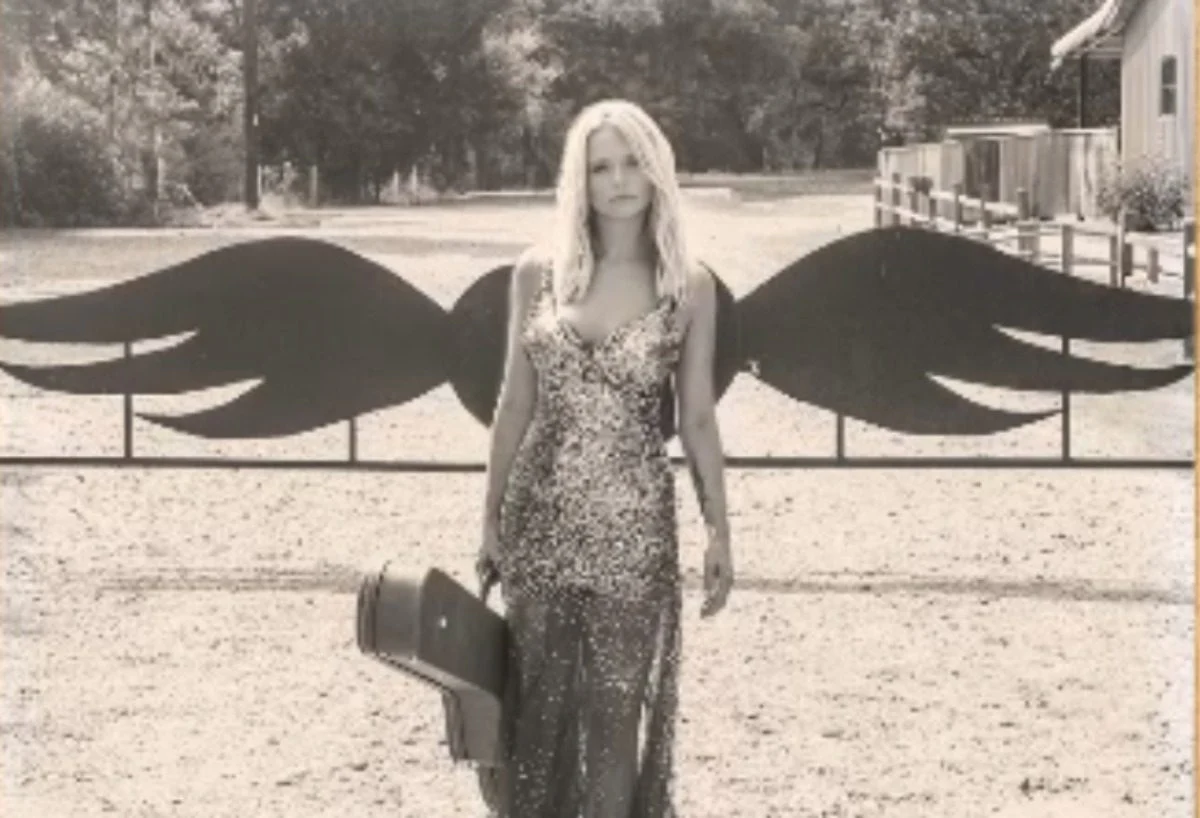
The landscape of modern country music changed significantly on November 18, 2016, with the release of Miranda Lambert’s sixth studio album, The Weight of These Wings. Nearly a decade later, the project remains a cornerstone of her discography and a pivotal moment in the genre’s history. As a double album released well before the format became a contemporary industry trend, the record served as a raw, unfiltered documentation of personal upheaval, artistic maturation, and the complexities of human resilience. In a recent retrospective discussion on The Kelleigh Bannen Show on Apple Music, Lambert provided new insights into the creation of the album, the physical changes in her voice during that period, and the surprising reactions from her current husband, Brendan McLoughlin.
The Genesis of a Country Music Landmark
The release of The Weight of These Wings was preceded by one of the most highly publicized events in Nashville history: the 2015 divorce of Miranda Lambert and fellow country superstar Blake Shelton. The dissolution of their four-year marriage and decade-long relationship placed Lambert under an intense media microscope. While many artists might have retreated from the public eye or released a standard collection of radio-friendly tracks, Lambert opted for a more ambitious and vulnerable path.
Clocking in at 24 tracks divided into two discs—titled "The Nerve" and "The Heart"—the album was an immediate departure from the "firebrand" persona Lambert had cultivated with hits like "Kerosene" and "Gunpowder & Lead." Instead of outward aggression, the album turned inward. It was produced by Frank Liddell, Glenn Worf, and Eric Masse, who helped craft a sonic landscape that was atmospheric, melancholic, and deeply rooted in traditional country and Americana sensibilities.
The album was a massive commercial and critical success. It debuted at number one on the U.S. Billboard Top Country Albums chart and peaked at number three on the Billboard 200. Furthermore, it earned the Album of the Year trophy at the 2017 ACM Awards, marking Lambert’s fifth consecutive win in that category—a record-breaking achievement for any artist in the history of the Academy of Country Music.
Reflections on The Kelleigh Bannen Show: "Bleeding on Paper"
In her recent interview with Kelleigh Bannen, Lambert looked back at the era of The Weight of These Wings with a sense of perspective that only time can provide. She described the songwriting process for the double album as an act of survival and radical honesty. Lambert noted that while some songs are held back for years—citing the track "Run" as one she kept for a decade before feeling ready to release it—The Weight of These Wings was a different experience entirely.
"The Weight of These Wings was just bleeding on paper the whole entire double album," Lambert told Bannen. She emphasized that the project captured the "good, bad, and ugly" of her life at that moment, leaving nothing hidden from the listener. For Lambert, the act of recording these songs was cathartic. She explained that the album helped her process her grief and move forward, stating, "Did it, lived that, felt that, wrote about it, put it on tape, next. Move on, can’t live in that."
This "bleeding on paper" approach is what critics believe gave the album its timeless quality. Unlike many "divorce albums" that can feel bitter or one-sided, Lambert’s work explored the nuances of self-reflection, the lure of self-destructive habits (as seen in the lead single "Vice"), and the quiet dignity of starting over.
The Physical and Artistic Transformation of Voice
One of the most striking revelations from Lambert’s recent interview was her observation of how emotional trauma physically altered her voice. As she has been working to organize her extensive catalog of over 300 songs, Lambert has revisited her early recordings. She noted a distinct shift in her vocal quality that occurred during the mid-2010s.
"I realized when I go back and listen to all that stuff, I realized when my voice switched, and it was during extreme pain," Lambert shared. She described this period as her "first real, hard struggle" or "adult struggle bus." According to Lambert, the pain changed her voice not just physically, but also her "writing voice"—the way she chose to express her thoughts and the vocabulary she used to describe her world.
The transition from the youthful, defiant tone of her debut Kerosene (2005) to the weathered, soulful resonance found in The Weight of These Wings is audible to the artist herself. This evolution marked her transition from a country-rock star to a sophisticated singer-songwriter capable of carrying the weight of heavy, introspective narratives.
The Brendan McLoughlin Reaction: A Modern Perspective on a Past Chapter
In a lighter moment of the interview, Lambert shared a humorous anecdote regarding her husband, Brendan McLoughlin, whom she married in 2019. Despite Lambert’s status as a global superstar, it appears McLoughlin was not entirely familiar with the depth of her back catalog—specifically the album that defined her career a few years before they met.
Lambert recounted a recent evening on their porch where her friend and backup singer, Gwen Sebastian, played songs from The Weight of These Wings for McLoughlin. To Lambert’s amusement, McLoughlin was brutally honest about his opinions on the tracks.
"He knew a couple of songs, a couple of them he hated, which he was very vocal about, which I love," Lambert laughed. She noted the irony of her current husband critiquing an album written about the aftermath of her marriage to another man. This transparency in their relationship highlights Lambert’s ability to separate her past artistic expressions from her current personal happiness.
Lessons in Empathy and Artistic Growth
Beyond the music, Lambert credits the era of The Weight of These Wings with teaching her profound life lessons, particularly regarding empathy. Before experiencing her own public and personal "adult struggle," Lambert admitted she didn’t always provide others with the "grace and space" to be sad.
"I didn’t give people enough time and grace and space to sit in their sadness until I was living in some of my own," she explained. The support she received from others who had walked similar paths changed her perspective. She realized that overcoming hardship isn’t always about "pulling yourself up by your bootstraps" immediately; sometimes, it requires living in the feeling for a while to truly understand it.
This newfound empathy translated into her songwriting. During that season, Lambert pushed herself to write more than ever before. While not every song was about her divorce, the period of heightened emotional awareness allowed her to use her craft more effectively, learning how to channel complex emotions into relatable art.
The Enduring Impact of The Weight of These Wings
As the tenth anniversary of the album approaches, its influence on the country music industry remains evident. In 2016, the idea of a female country artist releasing a 24-track double album was considered a significant professional risk. Today, the "mega-album" format is common, but few have matched the cohesive emotional narrative that Lambert achieved.
The album produced several of Lambert’s most enduring works. "Tin Man," a stark ballad co-written with Jack Ingram and Jon Randall, became a modern classic, earning a nomination for Song of the Year at the Grammy Awards. Its lyrics—"Hey there, Mr. Tin Man / You don’t know how lucky you are / You shouldn’t spend your whole life wishin’ / For a hollow pan of tin / ‘Cause if you ever felt one breakin’ / You’d never want a heart"—summarized the album’s central theme of the burden of feeling.
Other tracks like "Runnin’ Just in Case," "To Learn Her," and "We Should Be Friends" showcased the breadth of the project, ranging from traditional honky-tonk to poetic Americana. The album didn’t just win awards; it shifted the conversation about what a female artist in Nashville could achieve. It proved that vulnerability was not a weakness but a profound source of strength and connection with an audience.
Conclusion: A Masterpiece Born of Resilience
Miranda Lambert’s reflections on The Weight of These Wings serve as a reminder of the transformative power of art. By choosing to "bleed on paper" rather than retreat, she created a musical masterpiece that resonated with millions of listeners facing their own struggles. The album documented a woman in transition—moving from the "adult struggle bus" toward a place of empathy and renewed self-assurance.
While Lambert has moved on to new chapters in her life and career, including the recent release of her album Postcards from Texas, the legacy of her 2016 double album remains unshakable. It stands as a testament to the fact that extreme pain, when processed through the lens of honest songwriting, can result in a timeless contribution to the American songbook. For Lambert, the album was a necessary weight to carry, ultimately providing the wings she needed to fly toward her next artistic evolution.