As Halloween approaches, the quest for the perfect soundtrack to accompany trick-or-treaters and festive gatherings often leads to predictable playlists dominated by pop culture mainstays. However, a deeper dive into the rich tapestry of American music reveals a trove of country classics that, while not explicitly "Halloween songs," deliver a chilling atmosphere, tales of the supernatural, and somber reflections on mortality that are perfectly suited for the spooky season. These selections, often rooted in folklore and cautionary narratives, offer a unique blend of artistry and eerie charm, proving that the genre’s storytelling prowess extends far beyond traditional themes of love and heartbreak.
The Enduring Allure of Country’s Dark Narratives
Country music, with its deep roots in folk traditions and oral storytelling, has long been a conduit for narratives that explore the full spectrum of human experience, including its darker, more mysterious facets. From murder ballads to ghost stories and tales of supernatural encounters, the genre has consistently embraced themes that resonate with the spirit of Halloween. This tradition stems from the genre’s origins in Appalachian folk music, Western ballads, and blues, where stories were often passed down through generations, serving as both entertainment and moral instruction. The stark realities of frontier life, the vast, often unforgiving landscapes, and the deeply held spiritual beliefs of rural communities provided fertile ground for legends of the unexplained, spectral encounters, and the haunting presence of death.
Unlike overtly ghoulish novelty songs, these country tracks evoke a sense of unease through lyrical depth, atmospheric instrumentation, and the gravitas of their performers. They tap into universal human fascinations with the unknown, the afterlife, and the consequences of one’s actions, making them "boo-tiful" additions to any Halloween playlist for those seeking more than just jump scares. These songs often feature protagonists grappling with existential dread, encountering spectral figures, or facing grim fates, all delivered with the authentic, often raw emotion characteristic of country music.
Johnny Cash: The Man in Black and the Phantom Stampede
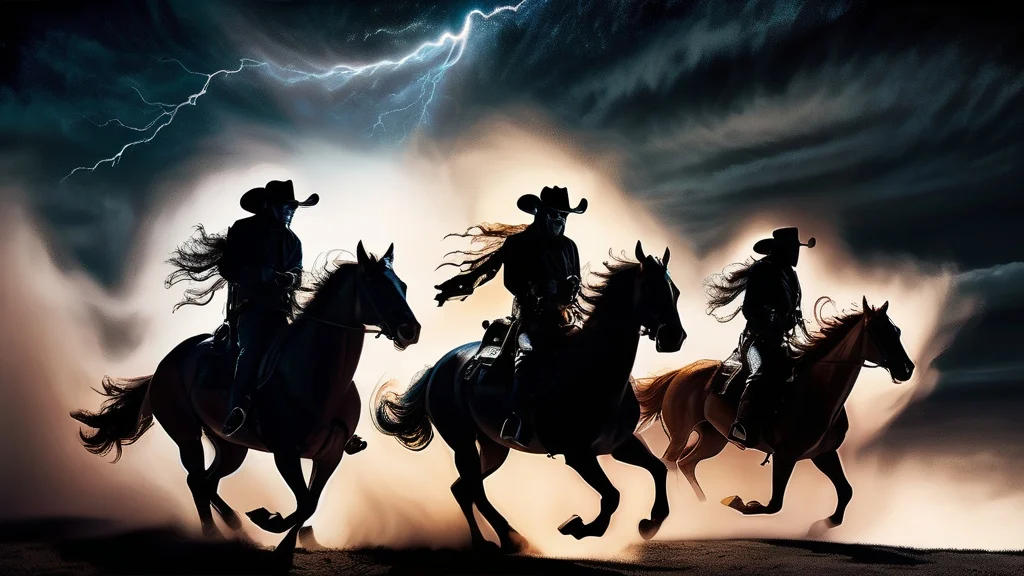
One of the most iconic figures in country music, Johnny Cash, lent his formidable presence to a track that perfectly encapsulates the eerie spirit: "Ghost Riders in the Sky." While not an original composition by Cash, his 1979 rendition, featured on his album Silver, is arguably the most unsettling and definitive version for its profound impact and chilling delivery. The song itself, formally titled "(Ghost) Riders in the Sky: A Cowboy Legend," was written by Stan Jones in 1948 and has been covered by numerous artists across various genres, including Vaughn Monroe, Bing Crosby, and The Blues Brothers.
The legend underpinning "Ghost Riders in the Sky" is a fusion of classic European folklore, specifically the Wild Hunt motif, and American cowboy mythology. The Wild Hunt, a supernatural chase led by a mythical figure with a retinue of ghosts or supernatural beings, has roots in Germanic, Norse, and Celtic paganism. Jones adapted this ancient legend to the American West, envisioning a herd of red-eyed, steel-hoofed cattle stampeding across the sky, pursued by damned cowboys. The lyrics describe a cowboy witnessing this spectral procession, hearing a rider warn him that he, too, will join the cursed herd if he doesn’t change his ways.
Cash’s interpretation is particularly potent due to his established persona as "The Man in Black"—a figure often associated with darkness, redemption, and a profound understanding of human suffering and sin. His deep, resonant baritone, combined with a sparse, almost stark musical arrangement, imbues the song with an unparalleled sense of foreboding. He doesn’t just sing the story; he embodies the weary, perhaps even complicit, observer who understands the weight of the warning. The sense that Cash himself might one day "saddle up with the spooks" is palpable in his delivery, turning a cautionary tale into a deeply personal, almost prophetic, reflection on mortality and eternal damnation. The song reached number two on the Billboard Hot Country Singles chart, a testament to its enduring appeal and Cash’s powerful rendition, solidifying its place as a haunting classic.
Marty Robbins: A Somber Conversation in Laredo
Marty Robbins, celebrated for his smooth vocal delivery and his mastery of narrative ballads, particularly those steeped in Western lore, contributed another haunting piece to the country canon with "Streets of Laredo." Released in 1959 on his seminal album Gunfighter Ballads and Trail Songs, this track is not overtly supernatural but delves deeply into themes of death, regret, and the harsh realities of the American frontier, making it a profoundly somber and reflective choice for a Halloween playlist.
The song is a traditional cowboy ballad, with roots stretching back to 18th-century Europe. It is a variant of "The Unfortunate Rake," an Irish folk song that evolved into numerous versions across Britain and America, including "The Bad Girl’s Lament" and "St. James Infirmary Blues." In its American cowboy iteration, the narrative typically involves a young cowboy encountering another, often younger, cowboy who is dying from a gunshot wound or disease. The dying man recounts his life of debauchery and warns the listener to avoid his fate, requesting a proper burial.
Robbins’ rendition of "Streets of Laredo" captures the poignant tragedy of this tale with exquisite detail and emotional depth. His clear, melodic voice conveys both the empathy of the narrator and the profound sorrow of the dying cowboy. The conversation between the two characters, though brief, is impactful, sketching a vivid picture of a life cut short and the bleak inevitability of death on the frontier. The lyrics, "Oh, beat the drum slowly and play the fife lowly / And play the dead march as you carry me on / Put bunches of roses all over my coffin / Put roses to deaden the clods as they fall," are a direct plea for a dignified farewell, underscoring the pathos of the situation.
Gunfighter Ballads and Trail Songs is widely regarded as one of the most influential concept albums in country music history, showcasing Robbins’ dedication to preserving and popularizing Western narratives. "Streets of Laredo," while lacking overt ghosts, evokes a powerful sense of the spectral presence of death and the echoes of past tragedies, making it a chillingly beautiful addition to any collection of eerie tunes. It reminds listeners that some of the most profound fears are rooted not in fantastical monsters, but in the stark reality of human mortality and the choices that lead to a lonely end.
Michael Martin Murphey: The Haunting Ballad of Wildfire
Michael Martin Murphey’s "Wildfire," released in 1975 from his album Blue Sky – Night Thunder, is a quintessential example of a folk-country song that weaves a deeply melancholic and ambiguous ghost story. The song became a massive crossover hit, reaching number three on the Billboard Hot 100 and solidifying Murphey’s reputation as a masterful storyteller. Its enduring popularity is a testament to its haunting melody and the powerful, evocative narrative that continues to give listeners "goosebumps."
The song tells the tragic tale of a woman named Wildfire and her pony, who vanish during a brutal snowstorm in Colorado. The narrative, delivered with Murphey’s tender yet sorrowful vocals, builds a sense of yearning and mystery. The lyrics suggest that Wildfire, a figure of beauty and wild spirit, either perished in the storm or, as local legend has it, continues to ride as a spectral entity. The opening lines immediately set a somber tone: "Oh, Wildfire, Wildfire, you’re a wonder to behold / I wish you could be mine, I wish you could be mine, as the story’s told." The narrator, a stable hand, yearns for her return, holding onto the hope, or perhaps the delusion, that she might reappear.
The ambiguity is key to the song’s haunting quality. Is Wildfire a lost soul, a ghost eternally searching for her pony, or merely a memory embellished by folklore? The line "She ran calling Wildfire, but the snow was too deep / So they say that she died, when the winter came to sleep" hints at her physical demise, but the refrain "Wildfire, Wildfire, you’re a wonder to behold / Will we ever ride together, like the stories told?" keeps the spectral possibility alive. This blend of tragic reality and local myth creates a powerful emotional resonance, making the listener question the boundaries between life and death, and memory and apparition.
Murphey’s musical arrangement, characterized by its gentle acoustic guitar, piano, and string instrumentation, enhances the song’s atmospheric quality. It’s a ballad that feels both intimate and expansive, like a whispered legend passed around a campfire on a cold, isolated night. "Wildfire" taps into the universal human experience of loss and the enduring hope for reunion, even with those who have passed into the unknown. Its ability to conjure vivid imagery and evoke strong emotions, particularly when heard alone on a quiet night, firmly places it among the most subtly chilling country classics for Halloween.
The Charlie Daniels Band: Southern Gothic in Wooley Swamp
When considering the Charlie Daniels Band for a spooky playlist, many might immediately think of "The Devil Went Down to Georgia." However, for a genuinely supernatural and eerie experience, "The Legend of Wooley Swamp," released in 1980 on their album Full Moon, is the more fitting and profoundly chilling choice. This song is a masterclass in Southern Gothic storytelling, blending vivid imagery, moralistic undertones, and undeniable supernatural elements.
The narrative centers around old man Wooley, a reclusive figure living in a shack deep within the eponymous swamp, rumored to possess a hidden fortune. Three greedy brothers—the Gatlin boys—decide to rob and murder him. They succeed in their nefarious deed, but as they attempt to escape with the loot, the swamp itself seems to turn against them. One by one, they meet gruesome ends, pulled under the murky waters by unseen forces. The swamp, personified as a vengeful entity, becomes an active participant in their demise, ensuring that justice, albeit a supernatural one, is served.
Charlie Daniels’ gravelly voice, combined with the band’s signature blend of country, rock, and Southern rock, provides the perfect sonic backdrop for this dark tale. The fiddle, often used for joyous jigs in other Daniels’ tracks, here takes on a sinister, wailing quality, enhancing the eerie atmosphere. The lyrics paint a vivid picture of the treacherous swamp and the brothers’ growing terror: "The oldest one said ‘Boys, let’s turn around / I hear somethin’ movin’ in the marshy ground’ / The youngest one said ‘Don’t you be a fool / It’s only the wind in the cypress trees, movin’ cool.’" The tension builds inexorably until the supernatural retribution is complete.
The song’s core message, encapsulated by the line "There’s some things in this world you just can’t explain," is precisely why it’s so effective for Halloween. It embraces the inexplicable, the idea that certain places or actions can invoke forces beyond human comprehension. While "The Devil Went Down to Georgia" involves a supernatural contest, "Wooley Swamp" presents a raw, inescapable supernatural judgment, making it far more unsettling. It taps into the rich tradition of Southern folklore, where swamps are often seen as mysterious, dangerous places, ripe for ghostly encounters and dark legends. The song was a modest hit, reaching number 80 on the Billboard Hot Country Singles chart, but its cultural impact as a spooky narrative endures, serving as a cautionary tale against greed and a testament to the mysterious power of nature.
Broader Implications: Why These Tales Endure
The selection of these country classics for a Halloween playlist underscores the profound power of narrative in music, especially within the country genre. These songs transcend simple entertainment, delving into themes that resonate with universal human fears and fascinations: death, the unknown, moral retribution, and the lingering presence of the past. They serve as musical artifacts that preserve folklore, historical context, and the collective anxieties of various communities.
The enduring appeal of these tracks during Halloween or any occasion calling for a touch of the eerie lies in their ability to evoke powerful imagery and emotional responses without resorting to cheap scares. Instead, they rely on psychological tension, lyrical depth, and the skilled craftsmanship of their artists. Johnny Cash’s "Ghost Riders" connects to ancient myths of cosmic judgment; Marty Robbins’ "Streets of Laredo" confronts the stark reality of mortality; Michael Martin Murphey’s "Wildfire" explores the sorrow of loss and the ambiguity of spectral presence; and The Charlie Daniels Band’s "Wooley Swamp" delivers a potent dose of Southern Gothic vengeance.
These artists, through their unique voices and storytelling abilities, elevate these narratives from mere songs to cultural touchstones. They remind us that the human fascination with the macabre, the mysterious, and the supernatural is a timeless one, and that country music, often perceived as a genre focused on everyday life, possesses a rich and sophisticated dark side perfectly suited for the chilling atmosphere of Halloween. As the leaves fall and shadows lengthen, these "boo-tiful" country classics offer a sophisticated, often chilling, alternative to typical holiday playlists, proving that the genre’s depth extends far beyond simple love songs or party anthems. They invite listeners to ponder the mysteries that lie just beyond the veil, making them an essential part of any discerning spooky season soundtrack.