

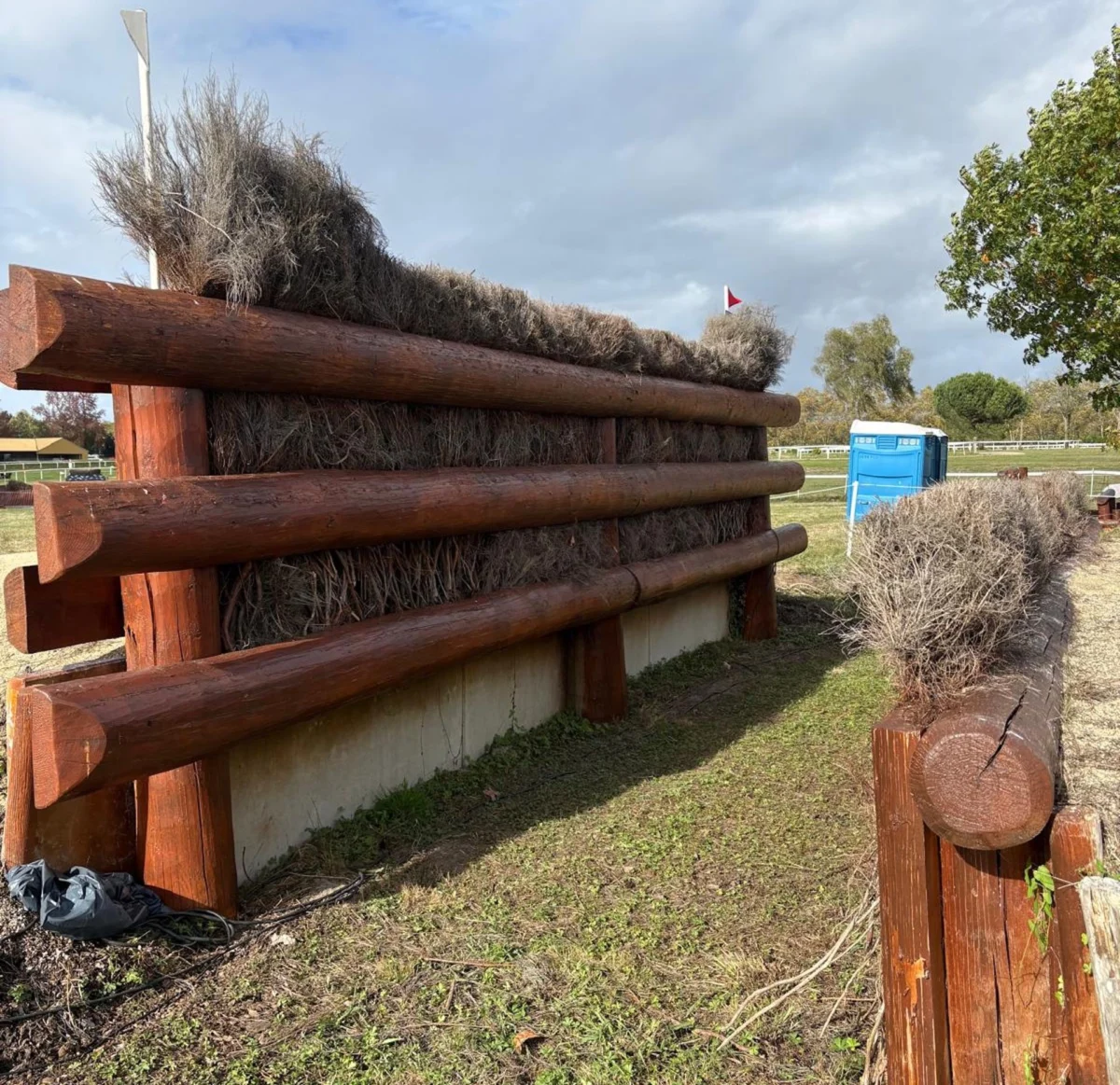
The 50 horses and their riders assembling at the Pau Horse Trials are set to confront a cross-country course meticulously crafted by the renowned designer Pierre Michelet, presenting what is widely anticipated as a quintessential "Michelet the Menace" challenge. The course, known for its characteristic blend of speed, forward-thinking lines, and intricate twists, promises to be a rigorous test of equestrian skill, courage, and partnership, a hallmark of France’s premier five-star event.
The Architect of Challenge: Pierre Michelet’s Enduring Legacy
At 77 years old, Pierre Michelet stands as a titan in the world of eventing course design, having served as the guiding hand behind the Pau Horse Trials’ cross-country track for an impressive three decades. His tenure began long before the event achieved its current five-star status, a significant upgrade that occurred in 2007 under his continued design leadership. Michelet’s reputation precedes him; his courses are celebrated and, at times, feared, for their ability to push the boundaries of horse and rider performance while maintaining a fundamental commitment to fairness and safety. Riders often describe his designs as demanding a specific kind of mental agility and physical prowess, requiring quick decision-making and absolute trust between horse and rider. His philosophy centers on creating a flowing yet technical track that encourages bold, attacking riding, rewarding accuracy and bravery. The term "Michelet the Menace" is not a pejorative but rather an acknowledgement of the exacting standards he sets, forcing competitors to be at their absolute best. He is known for integrating natural terrain seamlessly with man-made obstacles, making each element feel organic yet strategically placed to test every aspect of eventing. This includes clever use of inclines, declines, and varied ground conditions that demand supreme fitness and rideability.
Pau Horse Trials: A Premier Five-Star Event
The Pau Horse Trials, officially known as Les Etoiles de Pau, holds a distinguished position as one of only seven five-star events globally sanctioned by the Fédération Équestre Internationale (FEI). These elite competitions represent the pinnacle of eventing, demanding the highest level of proficiency across three distinct phases: dressage, cross-country, and show jumping. Established in 1990, Pau quickly ascended the ranks of international eventing, evolving from a national competition to a four-star event and finally achieving its coveted five-star status in 2007. The event is held annually in the picturesque region of Béarn, in southwestern France, drawing thousands of spectators and some of the world’s most accomplished equestrian athletes. Its strategic timing in the autumn calendar often makes it a crucial event for riders vying for end-of-season accolades, Olympic qualifications, or simply testing their top horses at the highest level.
The dressage phase, typically held on the first one or two days, assesses the horse’s obedience, suppleness, and athleticism through a prescribed series of movements. It demands harmony and precision, with judges evaluating the horse’s gaits, impulsion, and the rider’s ability to communicate subtly. While cross-country is often seen as the most thrilling phase, a strong dressage performance lays the groundwork for a competitive score.
The cross-country phase, which is the focus of Michelet’s design, is the ultimate test of bravery, stamina, and jumping ability over natural and artificial obstacles spread across several miles of varied terrain. Penalties are incurred for refusals, run-outs, falls, and exceeding the optimum time. This phase is often the most influential in determining the final outcome, as clear rounds within the time can significantly propel a pair up the leaderboard, while errors can be costly.
Finally, the show jumping phase, held on the concluding day, tests the horse’s agility, athleticism, and the rider’s precision over a course of knock-down fences in an arena. Penalties are given for knocking down rails, refusals, and exceeding the time allowed. This phase often creates nail-biting finishes, as minor errors can dramatically alter standings. The cumulative scores from all three phases determine the overall winner, highlighting the versatility required to excel in eventing.
Navigating the Cross-Country Masterpiece
Michelet’s cross-country course at Pau is a sprawling canvas of meticulously designed challenges, each element contributing to a cohesive and demanding ride. A typical five-star cross-country course spans approximately 6-7 kilometers (3.7-4.3 miles) and features 40-45 obstacles, often incorporating multiple efforts within a single numbered "combination." These obstacles are not merely individual jumps but strategic components designed to test specific skills.
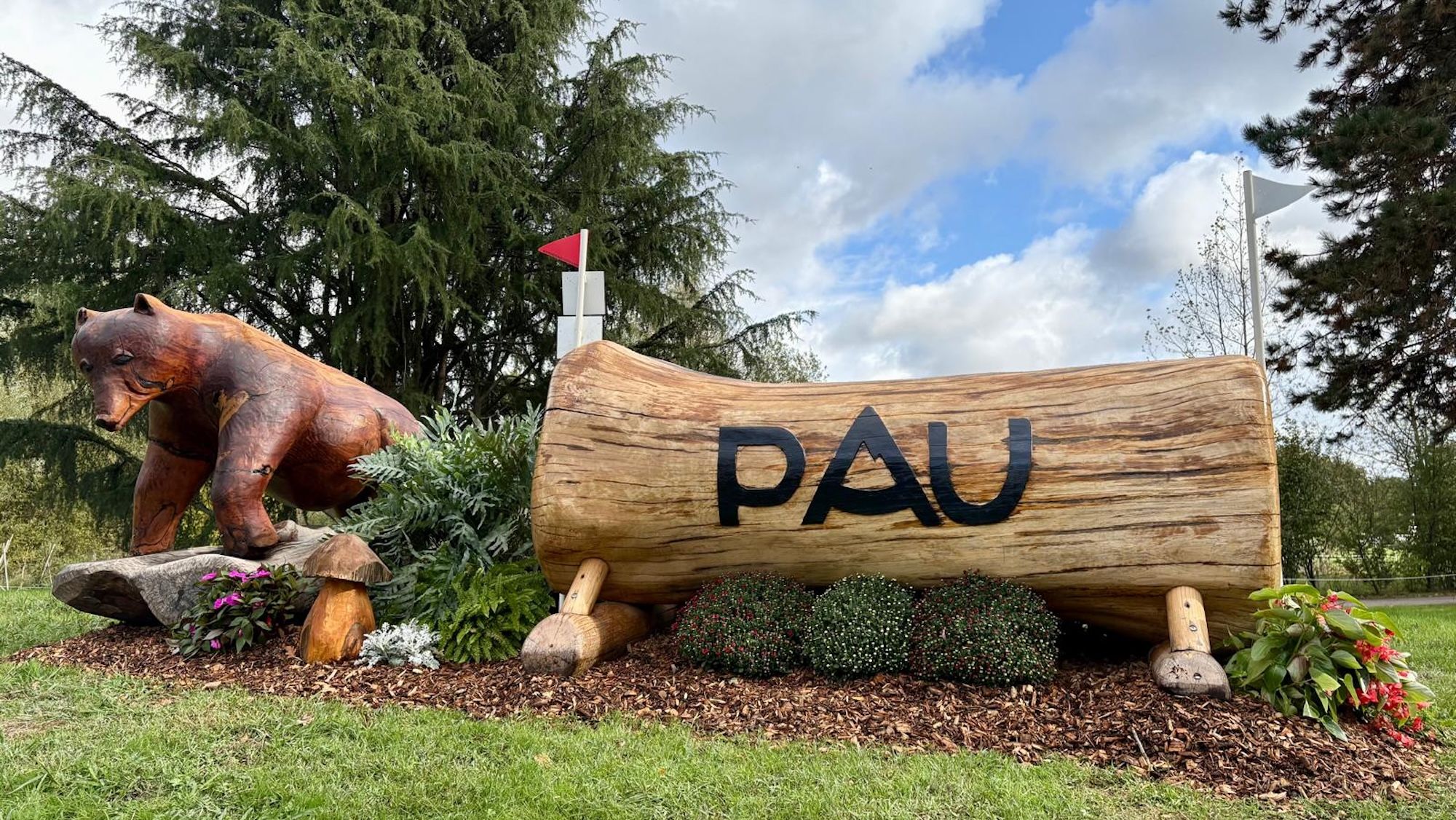
Key features frequently found on a Michelet course, and expected at Pau, include:
- Water Complexes: These are central to eventing, demanding confident jumping into, through, and out of water, often with banks, drops, or fences placed within the water itself. The image provided shows the log drop at 25A, marking the beginning of the fourth and final water combination. This specific obstacle, like many on Michelet’s courses, is not just a jump but an artistic statement, featuring beautifully carved animals and insects, adding a unique aesthetic flair to the intense challenge. This attention to detail reflects a broader appreciation for the natural environment and local culture that often characterizes European courses.
- Ditches and Banks: These require precise riding, demanding horses to ascend and descend steep inclines and clear wide ditches with commitment.
- Corners and Skinnies: These narrow, angled fences test accuracy and obedience, requiring the horse to be perfectly straight and responsive to the rider’s aids.
- Brush Fences: Often imposing in appearance, these fences are designed to be jumped through, not over, and demand a bold approach.
- Trakehners and Coffins: Complex combinations involving ditches, fences, and often a mound or bank, requiring careful planning and execution.
The technical demands extend beyond merely clearing obstacles. Riders must maintain an optimum pace to avoid time penalties, which are accrued at 0.4 points per second over the optimum time. This necessitates exceptional fitness from both horse and rider, as well as strategic planning to conserve energy where possible while attacking challenging sections. Michelet is known for incorporating subtle changes in terrain and direction that require quick adjustments and unwavering focus. The relationship between horse and rider is paramount; the course serves as a testament to months, if not years, of training, building trust, and refining communication. The course-building team works tirelessly leading up to the event, ensuring every jump is precisely constructed and ground conditions are as optimal as possible, sometimes involving extensive irrigation or drainage efforts to ensure fairness and safety regardless of weather.
Modern cross-country design also places significant emphasis on safety innovations. Frangible pins and MIM clips are now standard features on many fences, designed to collapse or release when subjected to sufficient force, thereby reducing the severity of falls for both horse and rider. These advancements reflect a continuous effort by the FEI and event organizers to mitigate risks while preserving the integrity and challenge of the sport. Medical and veterinary teams are also strategically positioned around the course, ready to respond instantly to any incident.
The Elite Field: Horse and Rider Preparation
The 50 horse-and-rider combinations competing at Pau represent the elite tier of global eventing. These athletes, hailing from various nations, have typically campaigned successfully at national and international four-star events, demonstrating consistent performance and a deep understanding of their equine partners. Preparation for a five-star event like Pau is a year-round commitment, involving a meticulous training regimen that balances fitness, skill development, and horse welfare.
Horses undergo rigorous conditioning programs to build the stamina, strength, and agility required for the cross-country phase, which is physically equivalent to running a middle-distance race while simultaneously performing complex gymnastic movements. Riders, too, maintain peak physical condition and spend countless hours in the saddle, refining their technique, balance, and communication with their horses. Mental preparation is equally crucial; riders must possess unwavering focus, courage, and the ability to make split-second decisions under immense pressure. The partnership between horse and rider is paramount in eventing, and a Michelet course specifically tests the depth of that bond.
The stakes at Pau are high. Competitors are not only vying for significant prize money and the prestige of winning a five-star event but also crucial FEI ranking points. For many, Pau serves as a vital qualifier or a benchmark event for selection to national teams for major championships like the World Championships or the Olympic Games. A strong performance here can significantly elevate a combination’s international profile and career trajectory.
Perspectives from the Course
While direct statements are not available, logical inferences can be made regarding the perspectives of key stakeholders:
Course Designer’s Insight (Inferred from Pierre Michelet’s philosophy):
"My aim has always been to create a course that asks serious questions of both horse and rider, but always with fairness and safety in mind. I want to see bold, confident riding, and horses that are fit and well-schooled. The ‘fast, forward, and twisty’ nature encourages a certain rhythm and engagement that separates the truly prepared from the merely hopeful. The aesthetic details, like the carved animals at the water complex, are my small tribute to the beauty of the sport and the landscape we are fortunate to use. Pau has been my canvas for 30 years, and each year I strive to present a fresh challenge that respects the tradition of this magnificent sport while adapting to modern equestrianism."
Rider’s Perspective (Inferred from common sentiments of top eventers):
"A Michelet course at Pau is always a highlight of the season. You know it’s going to be a proper five-star test – demanding, technical, and requiring absolute focus from start to finish. My horse and I have trained extensively for this, building up our fitness and confidence over smaller tracks. The key will be to ride with conviction, maintain our rhythm, and trust each other implicitly through every combination, especially the water. It’s exhilarating to tackle a course designed by someone with such a deep understanding of the sport, and to measure ourselves against the best in the world."
Organizer’s View (Inferred from event management objectives):
"Hosting a five-star event like Les Etoiles de Pau is a tremendous undertaking, and Pierre Michelet’s genius is central to its success. His ability to craft courses that are both challenging for the world’s best and visually stunning enhances the experience for spectators and participants alike. We are committed to upholding the highest standards of competition, safety, and hospitality, ensuring that Pau remains a pivotal event on the international eventing calendar. The economic and cultural impact on our region is significant, and we take immense pride in showcasing the pinnacle of equestrian sport."
Chronology of Eventing’s Evolution and Pau’s Growth
Eventing itself has a rich history, evolving from military tests of cavalry horses in the early 20th century. The sport was first introduced to the Olympic Games in 1912, initially known as the "military," reflecting its origins. Over the decades, the format has undergone significant changes, particularly concerning the cross-country phase. The lengthy roads and tracks and steeplechase elements were phased out in the early 2000s, streamlining the competition to focus on the three core disciplines. This change was largely driven by concerns for horse welfare and spectator engagement, making the sport more accessible and sustainable.
Pau’s journey mirrors this evolution. Starting as a local competition, its potential was quickly recognized.
- 1990: Inaugural event, establishing a presence on the French equestrian scene.
- Late 1990s – Early 2000s: Gained international recognition, becoming a FEI-sanctioned event.
- 2007: Achieved prestigious five-star status, a testament to the quality of its organization, facilities, and crucially, Pierre Michelet’s course design. This elevation placed Pau alongside revered events like Badminton, Burghley, Kentucky, Luhmühlen, Adelaide, and latterly, Maryland.
- Present: Continues to innovate, adapting to new FEI regulations and safety standards, while maintaining its unique character and challenging reputation.
Broader Implications and Impact
The Pau Horse Trials, and indeed Michelet’s distinctive course designs, play a crucial role in the broader landscape of equestrian sport. Such challenging courses are essential for identifying and developing top-tier talent, pushing both horse and rider combinations to reach their full potential. They serve as crucibles where true champions are forged, demonstrating the mental fortitude, physical prowess, and deep partnership required to excel at the highest level.
Furthermore, events of this magnitude have a significant economic impact on the host region. Pau attracts thousands of visitors, including competitors, support staff, owners, sponsors, and spectators, generating revenue for local businesses through accommodation, dining, retail, and tourism. It enhances the region’s profile on an international stage, fostering a sense of community pride and engagement.
The constant balance between tradition, challenge, and safety remains a critical discussion point in modern eventing. Course designers like Michelet are at the forefront of this, continuously seeking to create courses that are true tests of horsemanship without compromising the welfare of the athletes. The integration of frangible technology and rigorous veterinary oversight are tangible examples of this commitment, ensuring the sport evolves responsibly.
In conclusion, the Pau Horse Trials, with its iconic cross-country course designed by Pierre Michelet, stands as a beacon of excellence in the eventing world. It is a competition that demands the utmost from its participants, celebrates the enduring partnership between horse and rider, and contributes significantly to the sport’s global narrative, showcasing the thrilling blend of athleticism, artistry, and courage that defines eventing. As the 50 elite combinations prepare to embark on Michelet’s meticulously crafted challenge, the equestrian world watches, eager to witness another chapter unfold in the storied history of this magnificent sport.







