

The journey of middle age presents unique challenges for women, and for equestrian athletes, these changes can feel particularly significant as they strive to maintain peak performance in a sport that demands both physical prowess and a deep connection with their equine partners. As bodies inevitably shift during perimenopause and menopause, riders are increasingly exploring strategies to adapt their training, nutrition, and overall wellness routines to continue pursuing their equestrian ambitions with vigor and success. This evolving landscape highlights the remarkable longevity and adaptability of women in equestrian sports, demonstrating that age is no barrier to achieving one’s highest goals in the saddle.
The equestrian world offers a unique environment where age and experience often go hand-in-hand, fostering a remarkable level of performance longevity among its athletes. Unlike many sports that see a sharp decline in participation and competitive ability after a certain age, equestrian disciplines frequently witness athletes continuing to excel well into their later years. This phenomenon is exemplified by several high-profile figures. At 66, Australian dressage rider Mary Hanna was the oldest Olympian at the 2021 Tokyo Summer Games, a testament to her enduring skill and dedication. Similarly, Japan’s Hiroshi Hoketsu, at 80, was poised to be the oldest Olympian in history had his horse been able to compete in Tokyo. In the realm of show jumping, American Olympians Laura Kraut, 60, and Margie Engle, 68, continue to compete at the highest levels, showcasing the sport’s potential for sustained athletic careers.
Margie Engle, a seasoned competitor, emphasizes the critical role of physical fitness in maintaining a long and successful equestrian career. "If you can stay physically fit enough and don’t have too many injuries, you can keep going for as long as possible in our sport," Engle stated. "The horses do a lot of the work, but riders still have to be very fit to ride correctly. That’s why we definitely have to do a lot more working out than when we were younger." This sentiment underscores a crucial point: while the horse provides the power and athleticism, the rider’s fitness is paramount for control, balance, and effective communication, especially as physical demands evolve with age.
The physical and hormonal shifts experienced during perimenopause and menopause, such as hot flashes, sleep disturbances, mood swings, bone density loss, and joint stiffness, can significantly impact an athlete’s training and competitive readiness. However, these challenges are not insurmountable. For elite athletes competing under international equestrian federation (FEI) rules, certain medical interventions are permissible. Standard hormone replacement therapy (HRT), involving estrogen and progesterone, is not listed on the World Anti-Doping Agency’s (WADA) Prohibited List, making it available for use in and out of competition without special exemption.
Testosterone therapy, however, is treated differently. As an anabolic agent, it is banned by WADA. Riders requiring testosterone therapy must obtain a Therapeutic Use Exemption (TUE) from their national anti-doping agency before competing under FEI rules. For the majority of women navigating menopause, conventional HRT does not necessitate such exemptions, offering a viable pathway to manage symptoms and maintain physical well-being.
While some athletes, like Margie Engle, experience relatively mild menopausal symptoms, others face more pronounced effects. Engle proactively addresses potential bone density loss, a common concern for women as they age, by taking supplements. "As women get older, we’re at greater risk of osteopenia, so I’m on different supplements for bone density and strength," she explained. "With riding, you definitely want your bones as strong as possible as you get older." This focus on bone health is critical for preventing fractures, which can have devastating consequences for riders.
Tamie Smith, a celebrated 52-year-old eventer who made history as the first woman to win the Kentucky Three-Day Event CCI5* since 2011 in 2023, acknowledges the inherent physical differences between male and female athletes. While she emphasizes that equestrianism is unique in allowing men and women to compete equally due to its reliance on skill and experience over brute strength, she notes the necessity of a rigorous training regimen. "No matter how much we work out as women, we have to face the fact that men are naturally physically stronger than we are," Smith remarked. "And if you’re galloping around a five-star cross-country track and aren’t on a Thoroughbred, strength matters." This candid observation highlights the dedication required for female athletes to match or surpass the physical demands of the sport, often necessitating more intensive training than their male counterparts.
Adapting Fitness Regimens for Peak Performance
The key to sustained equestrian success in middle age lies in intelligently adapting fitness routines to meet evolving physical needs. This involves a multifaceted approach that goes beyond simply riding. Grand Prix dressage rider Lauren Chumley, in her early 40s, dedicates three to four days a week to gym training, often with a personal trainer, to complement her time in the saddle. "Don’t get me wrong, I don’t like to get up at the crack of dawn and drag my sleepy self to the gym. But I just get up and do it," Chumley shared. "I go to the gym and work with a trainer. She kicks my butt, but I love her."
Chumley’s training focuses on maintaining flexibility, stamina, and range of motion. She emphasizes that relying solely on riding for exercise can lead to muscle imbalances. "If riding is the only exercise you do, you’ll start to get overdeveloped muscle groups, so I find it’s important to do other things physically, too," she explained. "With the exercise I do now outside of my time in the saddle, I can keep riding horses well into the evening without being overly tired." Her proactive fitness regimen has been instrumental in her recovery from past injuries and her ability to handle the demanding movements of FEI-level dressage.
Margie Engle’s approach to fitness is equally comprehensive, incorporating a variety of exercises to sustain stamina, muscle strength, and flexibility. Having sustained multiple injuries throughout her career, including fractures to her collarbone, neck, and back, Engle diligently adheres to the exercises prescribed by her physical therapists. "They gave me exercises to work on at home and to do when I’m on the road showing," Engle said. "That makes it easy to stick to a routine because I don’t have to go to a specific gym. I can do them pretty much anywhere." Her routine includes weight training, utilizing free weights and exercise bands for both strength and stretching, along with regular walking and stationary cycling. "I for sure work out a lot more now than I did when I was younger," she admitted.
Engle also advocates for swimming as an excellent low-impact exercise for riders. "A lot of my doctors had me do swimming exercises to come back from my injuries," she noted. "It takes the weight off any injured joints or soft tissues, promotes circulation and keeps you moving without making anything worse."
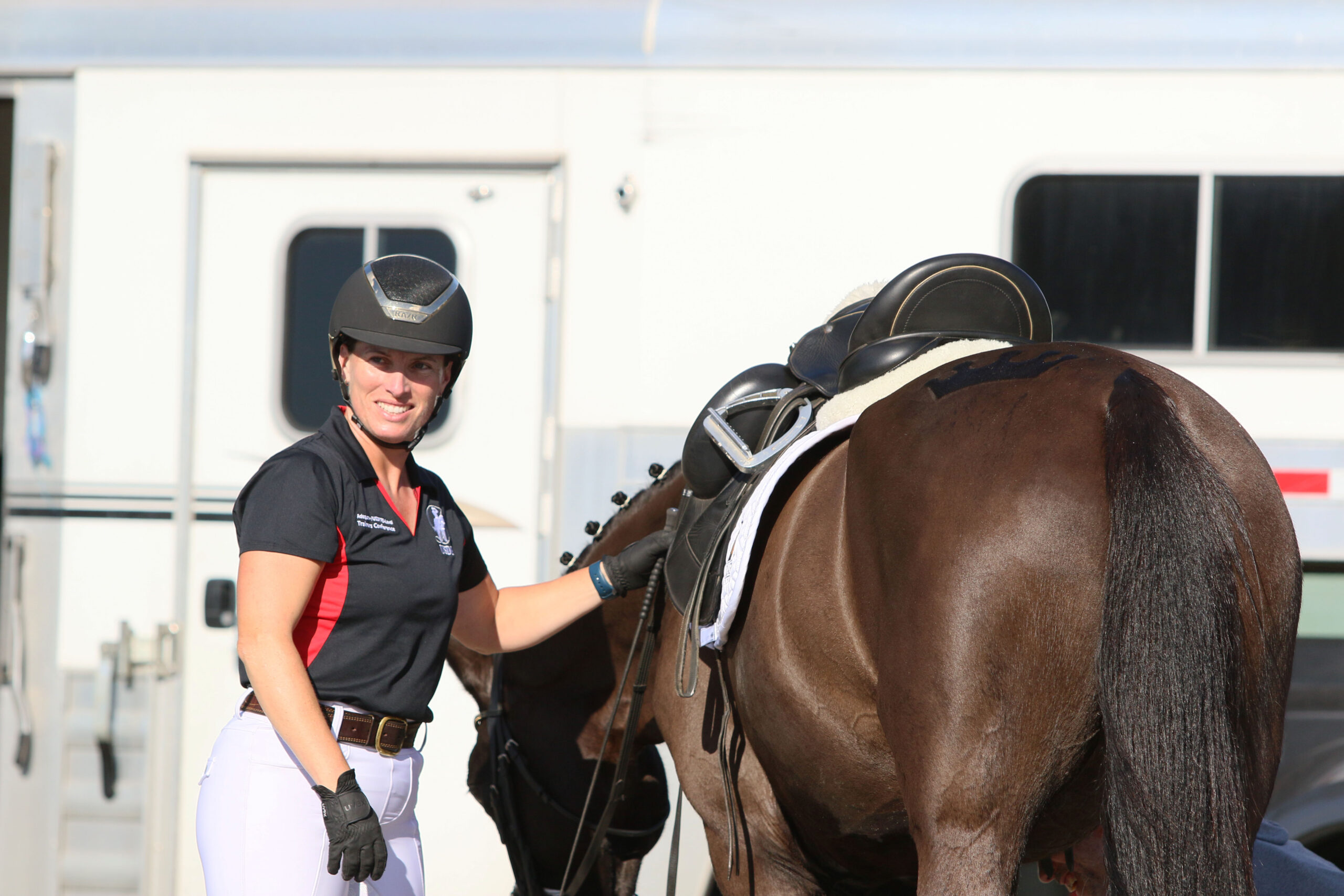
Laine Ashker, a 42-year-old Grand Prix dressage rider and five-star eventer, has found high-intensity interval training programs like Orangetheory to be highly beneficial. This 1-hour workout combines heart rate-based interval strength and cardio training, aiming for significant time spent at elevated heart rates. "It’s an incredible workout, especially for riders because it combines a lot of core work with endurance and strength training," Ashker stated. "When I started my mare Lottie at the Intermediate level, I noticed I was collapsing forward over the jumps because she has such a crazy hind end. But since I’ve been doing Orangetheory, I feel a lot stronger."
Ashker, who has competed at the highest levels in both dressage and eventing, understands the physical toll equestrian sports can take. "That’s why I find it so important to stay physically fit and strong in my core, especially because at this level, there’s not a lot of room for error," she commented regarding upper-level eventing. To counteract stiffness from long hours in the saddle, she incorporates hot vinyasa yoga and yoga nidra, a guided meditation practice. "Yoga originated in India to help young warriors mentally prepare themselves for battle. So, it’s a great practice that’s been very beneficial for me," Ashker reflected. "It’s helped me learn how to put myself in states of discomfort and mentally work through that to push myself as a person." She strongly advocates for rider fitness at all levels, asserting, "Whether you’re a competitive adult amateur or simply ride for fun, there’s a responsibility of being fit for your horse and as an athlete who participates in a sport."
Allison Springer, a 52-year-old five-star eventer, has also increased her focus on strength training to maintain muscle mass, which is crucial for the demanding nature of eventing. While she enjoys her Peloton bike, stretching, and yoga, she recognizes the growing importance of strength work. "When I started to feel fatigued after riding a lot of my upper-level horses every day, it was more my strength than cardio," Springer observed. "You have to be fit and strong to stay focused. If you can’t focus, it’s almost impossible to do your job for your horse."
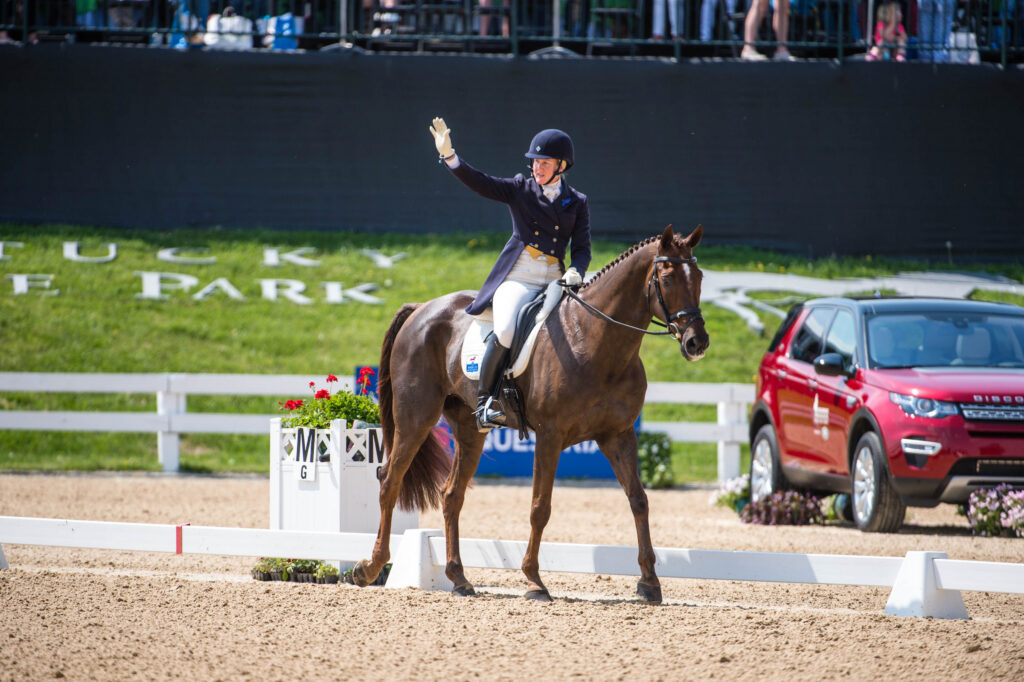
Paralympian Rebecca Hart, 41, who has familial spastic paraplegia, a condition causing progressive leg weakness and stiffness, finds maintaining her fitness a constant priority. "This means that if I let my own physicality slip, it’s harder for me to build back any muscle I’ve lost," Hart explained. "So, it’s easiest to try and maintain my fitness. But like anyone, that was considerably easier to do at 20 than it is at 40. I enjoy swimming as a way to keep myself fit off the horses, but I am also blessed to be in a situation where I can ride multiple horses a day, so that’s also a big part of my fitness, too." Her dedication underscores the importance of consistent physical activity, especially for individuals managing chronic conditions.
Embracing a Holistic Approach to Wellness
Beyond targeted exercise, a comprehensive approach to wellness is integral for equestrian athletes navigating middle age. This includes prioritizing nutrition, hydration, and sleep. Margie Engle, for instance, has become more mindful of her diet and emphasizes increased water intake and adequate sleep, influenced by her husband, an equine veterinarian with a highly disciplined lifestyle. "It’s made me more health conscious, and I kind of follow along with what he does," she said. Engle also manages chronic active Epstein-Barr virus (CAEBV), a condition that can cause extreme fatigue and requires careful stress management and sufficient sleep. "When it hits me, it really knocks me out. So, I have to be very aware of my stress and make sure I’m getting as much sleep as much as possible," she noted.
The inherent lifestyle of working with horses naturally promotes physical activity. Grooming, tacking up, feeding, and barn chores provide consistent, low-intensity exercise. "Moving as much as possible is the key ingredient as you age," Engle advised. "If you stay still for too long everything kind of seizes up much faster when you’re older." She utilizes an Oura Ring to monitor her activity levels and alert her to periods of prolonged sitting, encouraging movement and stretching throughout the day. This mirrors the approach often taken with older horses, where regular movement is crucial for joint health, circulation, and overall fitness.
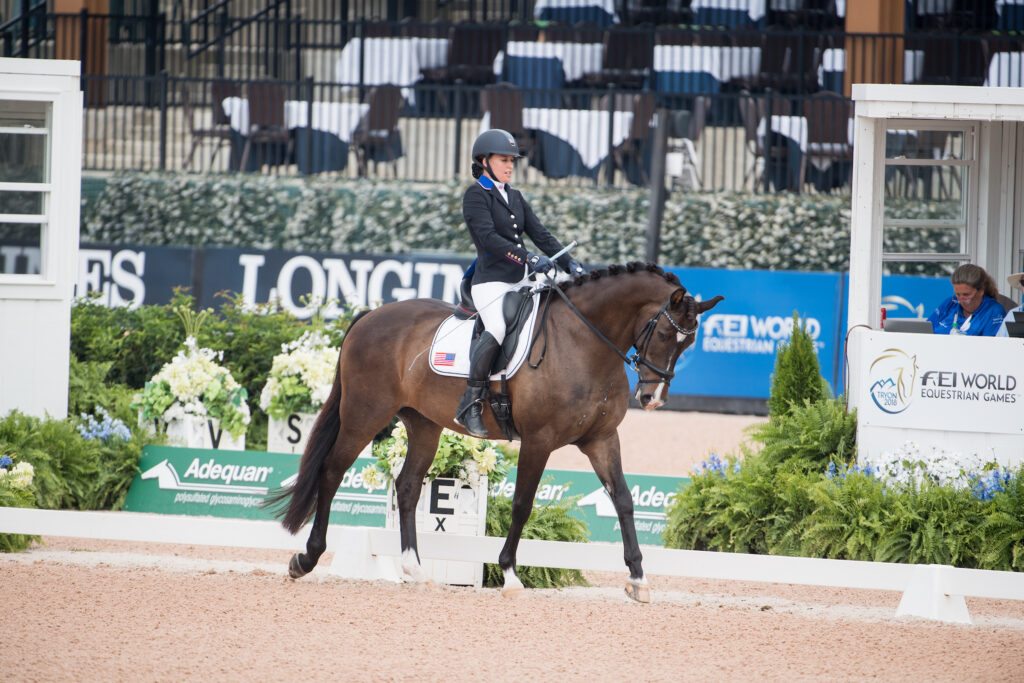
Engle also integrates recovery therapies into her routine, including PEMF (Pulsed Electromagnetic Field) therapy for muscle soreness and circulation, hot Epsom salt baths, and arnica for relaxation and muscle relief. She and her husband also use ultrasound therapy with their physical therapist and a specialized back brace with heat and vibration, recognizing the cumulative impact of riding on the spine.
Aviva Nebesky, a dressage trainer and cohost of the Dressage Today Podcast, at 68, embraces the evolution of her equestrian journey. "I’m just muddling along and accepting that some things are more challenging as we age—and also accepting that I no longer have the drive to achieve what I used to want," Nebesky shared. "I didn’t power through middle age. I’m not at the top of my game anymore, and I’m alright with that." Her perspective highlights the importance of adapting goals and finding continued joy in horses as one ages, rather than rigidly adhering to past ambitions.
Key Strategies for Navigating Middle Age as an Equestrian
Several actionable tips emerge for equestrians seeking to thrive during middle age and beyond:
-
Prioritize Movement Throughout the Day: Prolonged sitting, whether at a desk or in a car, can tighten key riding muscles like hip flexors, hamstrings, and quadriceps, leading to reduced hip mobility and increased lower back stress. Grand Prix dressage rider Shannon Peters emphasizes incorporating "exercise snacks" – short bursts of activity – throughout the day. This can involve simply standing up and walking for a few minutes every hour, or incorporating more movement into daily tasks like barn chores.
-
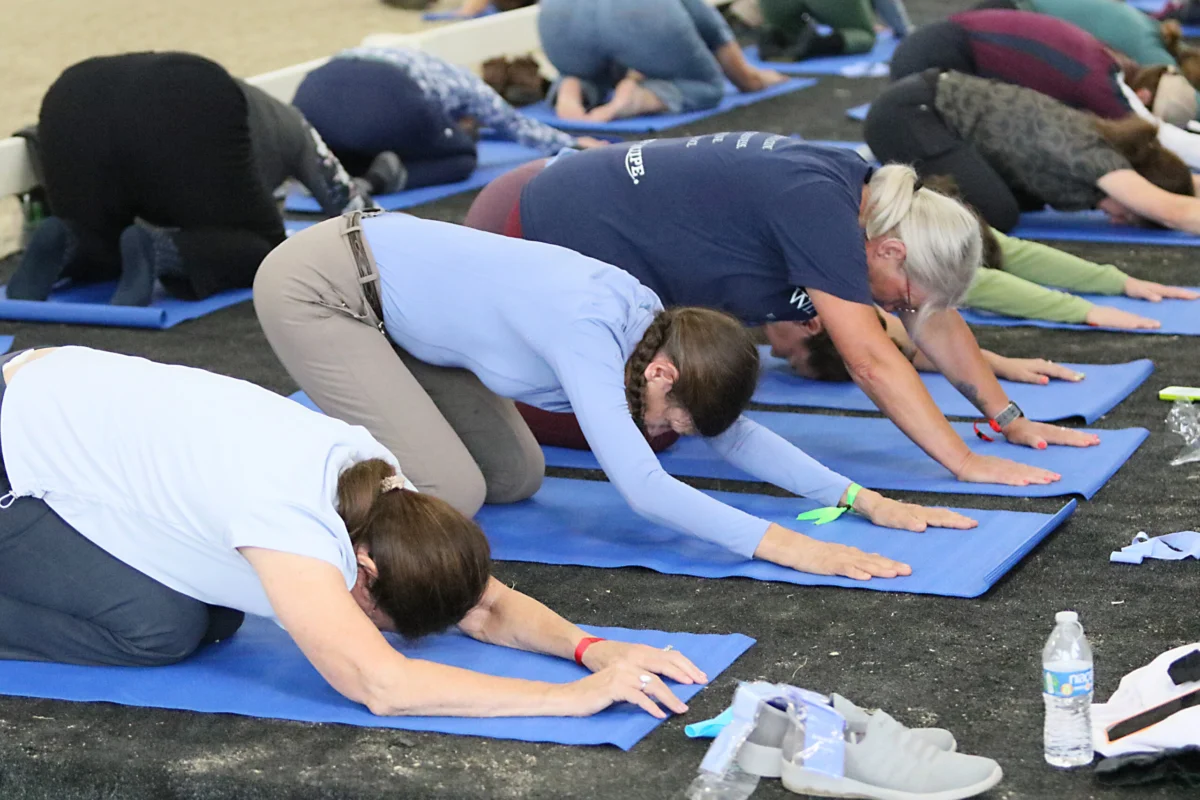
Embrace Stretching and Flexibility Work: As flexibility naturally decreases with age, consistent stretching becomes vital for maintaining suppleness in the saddle. Biz Magarity, yoga instructor to eventer Boyd Martin, explains that the hip flexion inherent in riding leads to stiffness. Practices like yoga and Pilates are highly effective in counteracting this tension, opening deep muscles in the hips and back, and balancing overused or underused muscle groups.
-
Manage Chronic Stress Effectively: The demands of careers, family, and equestrian pursuits can lead to chronic stress, which negatively impacts physical and hormonal health. Jade Teta, an integrative physician, recommends stress-reduction techniques such as slow-paced walking, particularly in nature (known as "forest bathing" or shirinyoku). This practice helps lower cortisol levels and complements other forms of exercise. Warm baths and saunas are also beneficial for stress management. Scheduling dedicated relaxation time is as crucial as scheduling training sessions.

-
Be Adaptable and Reassess Routines: While routines are important, it’s essential to recognize when they are no longer serving you, especially during significant hormonal shifts. Magarity advises reassessing and modifying fitness programs every few years as the body’s needs change. What worked in one’s 40s may need adjustment in the 50s and beyond. This flexibility ensures that training remains effective and aligned with current physical capabilities.
The experiences of these accomplished equestrian athletes underscore a powerful message: middle age and menopause do not signal an end to riding ambitions. By embracing proactive health strategies, adapting fitness routines, and fostering a holistic approach to well-being, women can continue to enjoy the profound connection with horses and excel in their equestrian pursuits for many years to come. The sport’s inherent ability to accommodate riders of all ages, coupled with the growing awareness of tailored fitness and wellness practices, ensures a vibrant future for female equestrians at every level.







