

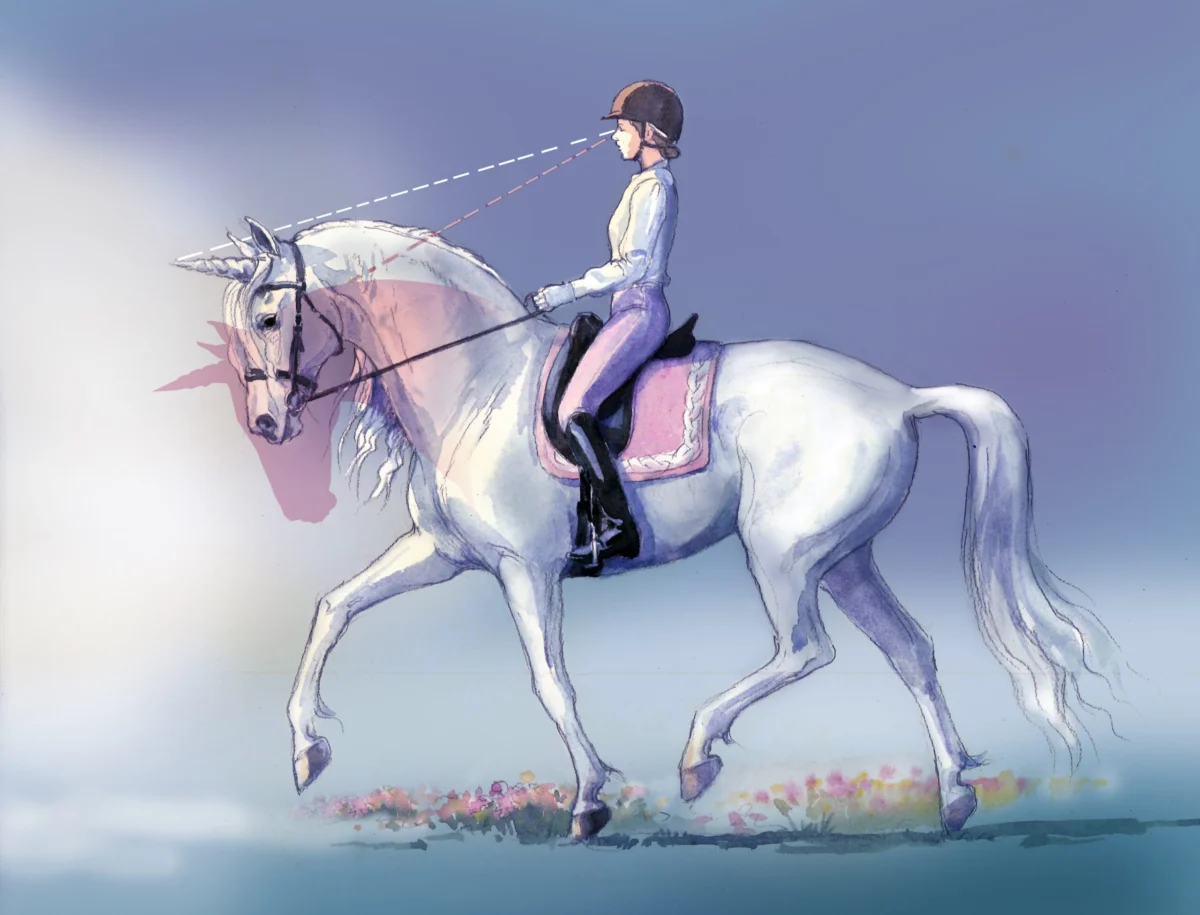
The pursuit of perfect form in equestrian dressage is a lifelong endeavor for riders and trainers, demanding precision, understanding, and a keen eye for subtle biomechanical cues. One fundamental aspect of a horse’s performance and the rider’s skill lies in achieving the correct "vertical" head position. This refers to the alignment of the horse’s head and neck relative to its body, a critical element for balance, collection, and ultimately, successful execution of advanced dressage movements. Endel Ots, a distinguished figure in the dressage world and a seasoned competitor, offers a memorable and effective analogy to help riders visualize and achieve this crucial alignment: the "unicorn horn."
Ots, who served as the alternate for the U.S. Dressage Team at the 2024 Paris Olympic Games and achieved success at the 2011 Pan American Games, based in Wellington, Florida, shared this insightful tip, emphasizing its practical application for riders aiming to refine their horse’s carriage. The "unicorn horn" concept provides a simple yet powerful mental image, transforming a potentially abstract concept into a tangible goal. By imagining the horse possesses a single, spiral horn emerging directly from its forehead, riders can assess their horse’s head position relative to the vertical line.
The Unicorn Horn: A Visual Guide to Verticality
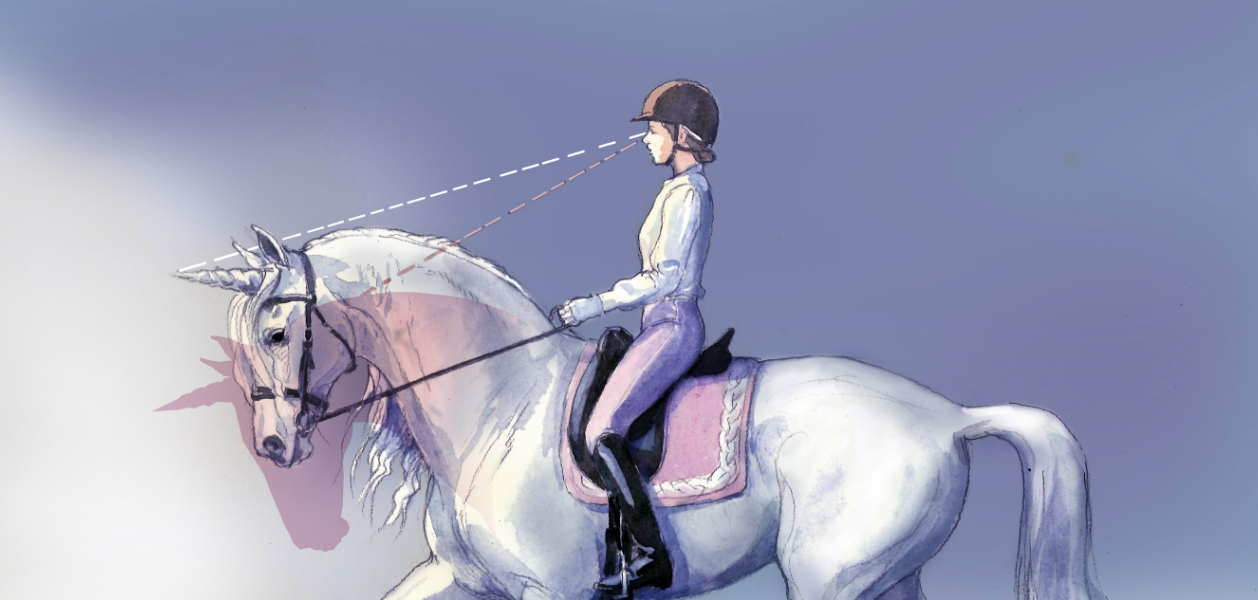
The core of Ots’s analogy lies in visualizing this hypothetical unicorn horn. "Imagine he is a unicorn and has a spiral horn coming straight out of his forehead," Ots explains. "If you can see the tip of that horn between his ears, you have perfect in-front-of-the-vertical placement." This means the horse’s poll—the highest point of its head behind the ears—is at the apex of the curve, and the nose is aligned with or slightly in front of this vertical line extending downwards from the poll. This position signifies that the horse is "on the vertical," indicating engagement of the hindquarters, suppleness through the topline, and a balanced frame.
Conversely, Ots highlights the consequence of the nose falling behind this imaginary line: "If his nose is behind the vertical, the horn will not be visible." This scenario indicates that the horse is "behind the vertical," a common issue that compromises balance, inhibits proper collection, and can lead to a lack of engagement and a hollow topline. The nose being behind the vertical often suggests the rider is overbending the neck or applying too much rein pressure, forcing the horse’s head into an unnatural and unsustainable position.
The Significance of the Vertical in Dressage
The concept of "the vertical" is not merely an aesthetic consideration in dressage; it is deeply rooted in the biomechanics of the horse and the principles of classical training. Achieving and maintaining this position is fundamental for several reasons:
- Balance and Collection: When a horse is on the vertical, its weight distribution is optimized. The hindquarters are engaged, stepping underneath the body, which lifts the forehand and creates a more uphill balance. This is the foundation of collection, where the horse carries more weight on its hindquarters, shortening its frame while maintaining impulsion and responsiveness.
- Suppleness and Freedom of Movement: A horse on the vertical is typically more supple through its entire topline, from the poll to the tail. This suppleness allows for greater freedom of movement in all gaits, enabling the horse to move with elasticity and engagement. A tight or hollow topline, often associated with being behind the vertical, restricts this freedom.
- Responsiveness to Aids: A horse that is correctly engaged and balanced is more receptive to the rider’s aids. The subtle cues of the rider’s seat, legs, and hands can be effectively transmitted and understood, leading to a more harmonious partnership.
- Foundation for Advanced Movements: All advanced dressage movements, such as piaffe, passage, pirouettes, and tempi changes, are built upon the foundation of a correctly ridden and balanced horse. Without consistent verticality, the execution of these complex maneuvers becomes significantly more challenging and often results in a loss of quality.
Endel Ots: A Career Dedicated to Dressage Excellence
Endel Ots’s background provides significant credibility to his training insights. His role as an alternate for the U.S. Dressage Team for the 2024 Paris Olympic Games underscores his standing among the nation’s elite riders. The Olympic Games represent the pinnacle of equestrian competition, requiring years of dedication, exceptional talent, and a deep understanding of horse training. Being selected as an alternate signifies that Ots and his mount were among the top pairings in the country, capable of stepping in at a moment’s notice to represent the United States on the world stage.
Furthermore, his participation in the 2011 Pan American Games in Mexico demonstrates a consistent track record of international success. The Pan American Games, a major multi-sport event for the Americas, features highly competitive dressage disciplines, showcasing the highest levels of equestrianism in the region. These experiences have undoubtedly honed Ots’s ability to analyze and articulate the fine points of dressage training.
Based in Wellington, Florida, a globally recognized hub for equestrian sport, particularly dressage, Ots operates within an environment that fosters high-level training and competition. The winter circuit in Wellington attracts top riders, trainers, and horses from around the world, creating a competitive and educational atmosphere. His website, otsdressage.com, likely serves as a platform to share his expertise, connect with clients, and showcase his training philosophy.
The Training Implications of the Unicorn Analogy
The "unicorn horn" analogy is particularly valuable because it provides riders with a clear, immediate, and easily visualizable benchmark. Many riders struggle with the abstract nature of "verticality," often relying on feel alone, which can be subjective and prone to error. By translating this into a visual cue, Ots empowers riders to:
- Self-Assess During Training: Riders can use this mental image during their rides to constantly check their horse’s head position. This proactive approach allows for immediate adjustments rather than waiting for feedback from a coach.
- Communicate Effectively with Trainers: When discussing their horse’s frame with a trainer, riders can use the analogy to articulate their observations and challenges, fostering a more precise dialogue.
- Improve Rein Management: The analogy indirectly guides riders toward better rein use. A nose behind the vertical often stems from pulling back on the reins. By focusing on seeing the horn, riders are encouraged to use their hands in a more supportive and less obstructive manner, allowing the horse to seek the bit and come into a self-carriage.
- Enhance Horse Comfort and Performance: By striving for the correct vertical alignment, riders are promoting the horse’s natural balance and engagement, leading to a more comfortable and enjoyable experience for the equine athlete and ultimately, improved performance.
Supporting Data and the Science of Equine Biomechanics
While Ots’s analogy is a pedagogical tool, it is grounded in established principles of equine biomechanics. Scientific studies have long explored the optimal head and neck carriage of the horse for athletic performance. Research in equine locomotion and biomechanics often analyzes joint angles, muscle engagement, and weight distribution to understand the efficiency and athleticism of different postures.
For instance, studies on the biomechanics of the trot have shown that a horse carrying itself in a collected frame, with a correctly rounded topline and poll at the highest point, exhibits greater impulsion, a more elastic stride, and reduced strain on the forelimbs. Conversely, a horse with its nose behind the vertical, often described as "on the forehand," is characterized by a dropped back, a hollow topline, and increased pressure on the front legs, which can lead to lameness and decreased athletic potential.
Data from gait analysis systems, which measure forces and movement patterns, can quantitatively demonstrate the benefits of correct postural alignment. These systems reveal that when a horse is on the vertical, the hind legs are more actively engaged, providing propulsion and lifting the body. The back muscles work efficiently to maintain the topline, and the forelegs are able to swing freely with less weight bearing down.
Broader Impact and Implications for the Sport
Endel Ots’s "unicorn horn" analogy is more than just a helpful tip; it represents a dedication to clear and effective communication in equestrian education. In a sport that often involves intricate technicalities, simple yet profound analogies can bridge the gap between theory and practice, making advanced concepts accessible to a wider range of riders.
The widespread adoption of such effective teaching methods can have a significant impact on the overall quality of dressage training. By equipping riders with better tools to understand and achieve correct form, it contributes to:
- Improved Horse Welfare: A deeper understanding of biomechanics and correct training leads to horses that are ridden in a manner that respects their physical capabilities, minimizing the risk of injury and promoting long-term soundness.
- Elevated Competitive Standards: As more riders master fundamental principles like verticality, the general standard of dressage performance can rise, leading to more impressive and harmonious displays of equestrian art.
- Stronger Rider-Horse Partnerships: When riders can effectively communicate with their horses through precise aids and appropriate body positioning, the bond and understanding between horse and rider are strengthened, leading to a more fulfilling partnership.
In conclusion, Endel Ots’s "unicorn horn" analogy serves as a testament to the power of creative and clear instruction in equestrianism. By offering a vivid and easily graspable image, he empowers riders to achieve a critical element of dressage—the correct head position—thereby enhancing their horse’s balance, suppleness, and overall performance. This simple yet effective tool, rooted in sound biomechanical principles and informed by a distinguished career, contributes to the ongoing pursuit of excellence in the art of dressage.







