

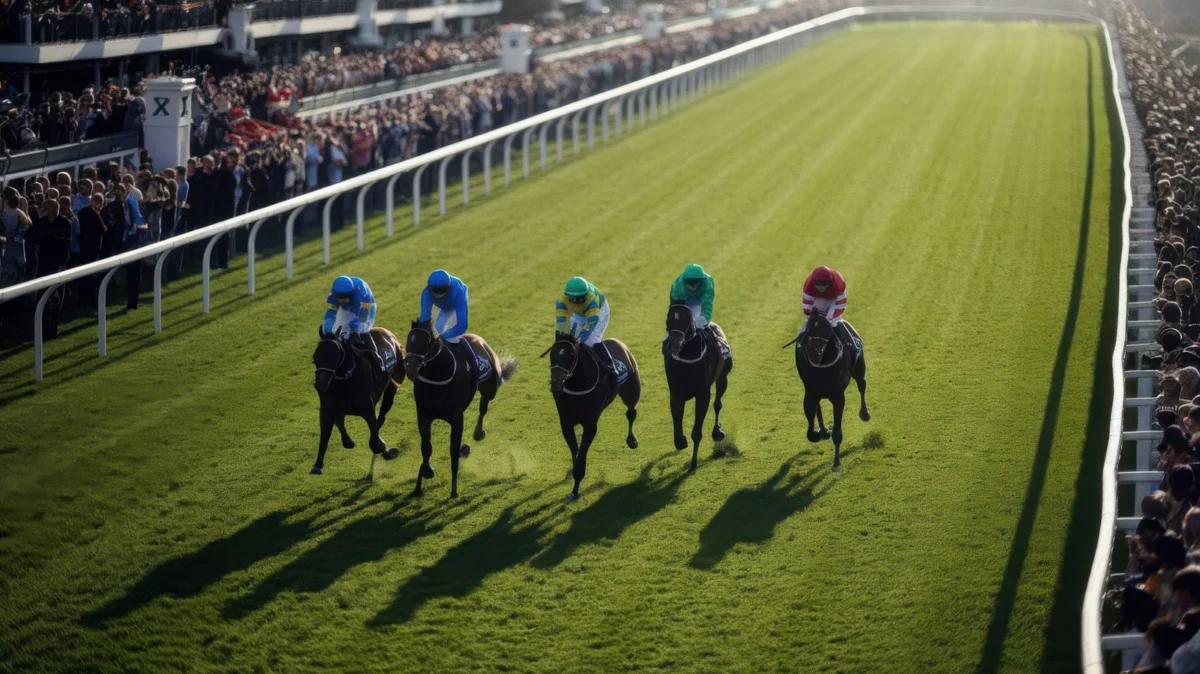
The pre-dawn alarm, piercing the stillness at 3:45 AM, signals the commencement of a demanding day for a thoroughbred claiming trainer. Far from a mere suggestion, it is the initial call to action in a relentless pursuit of equine excellence and economic viability within the challenging landscape of horse racing. While most of the world remains in slumber, these dedicated professionals are already in their vehicles, fortified by caffeine, en route to the backstretch—a vibrant, self-contained village that awakens under the cloak of stars. This is the authentic crucible of horse racing, a world defined by the aroma of hay and leather, the ceaseless hum of activity, and a pragmatic hustle. Here, success transcends the glitz of mint juleps and elaborate hats; it is meticulously measured by the soundness and performance of the horses, the satisfaction of owners, and the critical ability to meet payroll. Welcome to the shedrow, where the raw, unvarnished work of racing unfolds daily.
The Genesis and Economics of Claiming Races
To fully comprehend the claiming trainer’s role, it is essential to understand the unique structure of claiming races. These races form the backbone of American thoroughbred racing, providing competitive opportunities for horses whose value is often dictated by their past performance, age, and physical condition. In a claiming race, every horse entered is essentially for sale at a predetermined price. Any licensed owner or trainer can "claim" a horse from another owner by submitting a claim form and the specified claiming price before the race. Should multiple claims be submitted for the same horse, a lottery system determines the new owner. The transaction occurs regardless of the horse’s finish in the race, though the new owner typically assumes ownership after the race, contingent on the horse emerging sound.
This system, which dates back to the early 20th century, serves several critical functions. It acts as a natural handicapping mechanism, encouraging trainers to place their horses where they are competitive but also vulnerable. Owners can acquire horses without the significant upfront investment of sales, while trainers can perpetually seek out animals they believe they can improve. Financially, claiming races represent a significant portion of the racing calendar. According to industry statistics, claiming races often comprise over 50% of races run at many tracks, offering purses that, while modest compared to graded stakes, are vital for sustaining the ecosystem of owners, trainers, and backstretch workers. Claiming prices can range from a few thousand dollars to upwards of $100,000, reflecting the diverse tiers of competition and the perceived value of the horses involved.
The Backstretch Ballet: A Symphony of Early Mornings and Management
By 4:30 AM, the barn, or "shedrow," is a hive of purposeful activity. The night watchman delivers his crucial report – "All quiet, boss. Number five cleaned up his grain," a small but significant piece of good news that sets a positive tone for the day. The head groom, often a seasoned veteran like Maria, has already begun distributing the morning hay, a critical first step in the horses’ nutritional regimen. The trainer’s initial order of business is the meticulous "look"—a comprehensive, intuitive inspection of each horse. This is far more than passive observation; it is an active diagnostic process. The trainer scrutinizes each animal for bright eyes, alert ears, and their characteristic greeting, seeking any subtle deviation from the norm. Is there a new scrape on a hip? Is a horse standing unusually? Has any hay been left untouched in the net, signaling a potential appetite issue? This early morning assessment is paramount, as early detection of issues can prevent minor problems from escalating into serious injuries or illnesses.
As the morning progresses, the backstretch transforms into a collaborative medical and athletic hub. Hotwalkers, typically young and strong, begin cooling out horses returning from their morning jogs, a critical step in muscle recovery and preventing stiffness. Simultaneously, the veterinarian and blacksmith arrive, bringing with them a specialized set of skills and an immediate reminder of the economic realities of the claiming game. Every service, from a routine hoof trim to a complex diagnostic procedure, is a line item on a meticulously managed budget. For a seasoned warrior exhibiting signs of joint discomfort, a targeted joint injection might be deemed a necessary investment to maintain performance. However, for a younger filly with a minor swelling, the approach might be more conservative: cold hosing, a poultice application, and careful hand-walking.
This strategic allocation of resources is not about compromising welfare but about applying the most effective and economically sensible solution. The claiming trainer, therefore, must be a master of triage, possessing the acute judgment to discern when a "gold-standard" treatment is imperative and when good, old-fashioned tender loving care (TLC) will suffice. This nuanced decision-making ensures that horses receive appropriate care while keeping owners’ costs manageable, a delicate balance vital for sustainability in the claiming sector.
Training Philosophy: Beyond the Stopwatch
The conventional perception of thoroughbred training often fixates on blistering speeds and record-breaking times. However, at the claiming level, the training philosophy often prioritizes durability and mental soundness over raw pace. The primary objective for a claiming trainer is to maintain the horse’s physical and mental well-being, fostering a resilient athlete capable of consistent performance. The training regimen is meticulously built on principles of rhythm, repetition, and progressive conditioning, tailored to each horse’s individual needs and limitations.
A typical week for a claiming horse might be structured to ensure a balanced approach to fitness and recovery:
- Monday: Jogging (1 mile) – Light exercise to loosen muscles and promote circulation.
- Tuesday: Galloping (1 ½ miles) – Moderate-speed exercise to build stamina and cardiovascular fitness.
- Wednesday: Walking/Hand-walking – Active recovery day, perhaps with a trip to the equine spa or paddock time.
- Thursday: Jogging (1 mile) or light Gallop – Further conditioning or a warm-up for a more strenuous day.
- Friday: Breeze (3/8 or 1/2 mile) – A controlled, timed workout at racing speed to sharpen fitness and assess readiness.
- Saturday: Walking/Paddock – Rest and relaxation.
- Sunday: Galloping (1 ¼ miles) – Building endurance.
This schedule is adaptable, with variations depending on the horse’s age, fitness level, and proximity to a race. The goal is not to produce a Secretariat, a legendary, once-in-a-lifetime champion, but rather to cultivate a durable, reliable athlete who understands its role and arrives on race day feeling energetic and confident, regardless of its modest $16,000 price tag. The stopwatch, while a useful tool, is not the ultimate arbiter of success. Trainers are often more concerned with the horse’s movement and demeanor at the conclusion of a workout: Did it switch leads smoothly? Was its stride consistent? Did it pull up cleanly, breathing easily, without signs of undue stress? These qualitative observations are often more indicative of a horse’s well-being and readiness than a mere clocking.
The Claiming Game: Chess with Hooves and Financial Stakes
The claiming game represents the strategic heart of this segment of racing. It is a sophisticated, multi-layered chess match where every entry is a calculated risk, as each horse effectively carries a price tag. The decision-making process is complex, involving constant calculations of horse condition, owner objectives, and the composition of the competition. For instance, a trainer might have a horse performing admirably at the $10,000 claiming level but showing subtle signs of fatigue. The dilemma then arises: Should the horse be entered at $12,500, hoping for another win but risking it being claimed by a rival? Or should it be dropped to $8,000, where a win is highly probable but the loss of the horse to another barn is almost guaranteed? These are not merely tactical decisions but financial ones, impacting both the owner’s investment and the trainer’s reputation and stable roster.
Afternoons are often spent in deep analytical study, poring over past performance charts—not just of one’s own horses, but of every potential rival. Trainers meticulously analyze patterns: Is a competitor dropping a horse sharply in class, potentially signaling an underlying issue? Is another horse returning from a long layoff, suggesting it might need a race to regain peak fitness? This intricate puzzle requires a blend of horsemanship, statistical analysis, and a keen understanding of human behavior within the racing community. The overarching objective is to identify a race where one’s horse can be genuinely competitive, maximizing its chances of winning or earning a check, while simultaneously mitigating the inherent risk of losing the horse to a claim. Losing a horse that has been carefully nurtured and improved is, undeniably, a "gut-punch" for any trainer and their crew. Yet, it is an accepted and understood rule of the game. Conversely, the claiming box also presents opportunities—the constant scanning for that "diamond in the rough," a horse that another trainer might have overlooked or given up on, represents the flip side of this high-stakes strategic game.
The Human Element: Jockeys, Owners, and the Unsung Crew
While the majestic thoroughbreds are undoubtedly the stars of the show, horse racing is unequivocally a team sport. The relationship between a claiming trainer and their jockeys is founded on a bedrock of brutal honesty and clear, concise communication. In the paddock before a race, instructions are not vague platitudes but concrete, actionable directives: "Break sharp, take back to fourth, save ground on the rail, and make one sustained run at the three-sixteenths pole." Or, for a different horse, "This horse needs to be on the lead. If someone else wants to go crazy early, let them. You set the fractions you can sustain." There is no room for ambiguity; the jockey is an extension of the trainer’s strategy on the track.
Then there are the owners. The claiming owner is a distinct breed: deeply invested emotionally and financially, yet typically pragmatic and understanding of the inherent risks and rewards. Transparent and consistent communication is paramount. Trainers are on the phone daily, providing updates—both good and bad. "His bloodwork came back great, we’re targeting next week’s allowance race." Or, "He’s a little off behind today; we’re going to scratch him from the entry and re-evaluate." Trust is the ultimate currency in this relationship, built through honesty, expertise, and a shared passion for the horses.
Crucially, none of this intricate machinery would function without the unsung heroes of the backstretch—the grooms, hotwalkers, and exercise riders. These dedicated individuals pour their hearts, souls, and countless hours into caring for these magnificent animals, often for modest pay. Their intimate knowledge of each horse’s quirks, moods, and physical condition makes them an invaluable early-warning system for the trainer. They are the eyes and hands that constantly monitor, comfort, and prepare the horses, forming the essential foundation of any successful racing operation. Their dedication underscores the deep bond between humans and horses that defines the sport.
The Real Win: Beyond the Finish Line
So, what truly constitutes a "victory" on the shedrow? Certainly, it is the exhilarating moment of a photo finish, when the stable’s number flashes on the tote board, signaling a hard-fought win. The roar of the crowd, the congratulatory handshakes, and the satisfaction of a well-executed plan are undeniably sweet. However, for a claiming trainer, success encompasses a broader, more profound spectrum. It is the quiet triumph of a claiming horse that arrived nervous, underweight, or unsound, and leaves a year later transformed—sound, confident, and thriving, even if it wins its next race for a new barn. This demonstrates the trainer’s skill in horsemanship and rehabilitation.
It is the palpable pride radiating from a groom when "their" horse runs exceptionally well, a testament to their tireless care and dedication. It is the owner, perhaps cashing a modest check, but already dreaming with renewed enthusiasm of the next race, their passion for the sport reignited. And often, the most significant win is the quiet, contented munching heard at 10 PM, a symphony of well-being, knowing that every horse in the barn is fed, watered, comfortable, and resting soundly.
The demanding day of a claiming trainer concludes as it began: with a final, quiet walk down the shedrow. A gentle pat on a horse’s neck, a shared moment of tranquility in the dim light, and the enduring hope that tomorrow, the relentless work, the meticulous planning, and the profound dedication will yield further dividends. The alarm will undoubtedly sound early again, signaling the start of another cycle. And the claiming trainer, alongside their dedicated crew, will be there, ready to embrace another day of honest, arduous work with these incredible, resilient animals, perpetuating a vital tradition within the world of thoroughbred racing.







