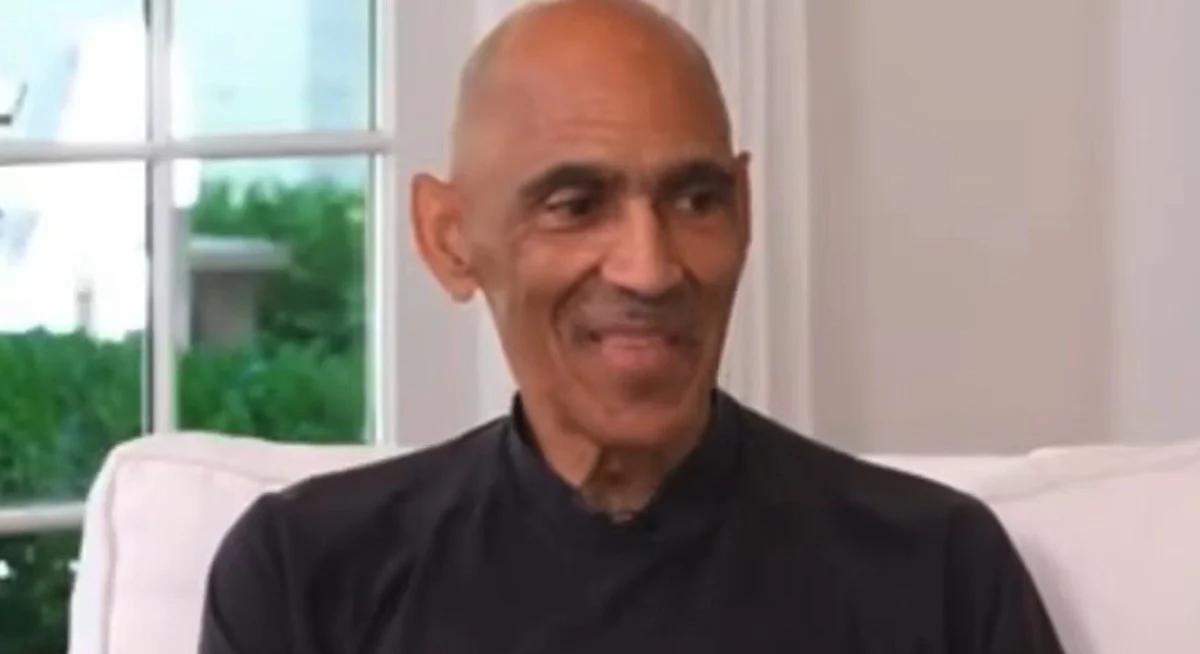
Tony Dungy, the Hall of Fame head coach and a cornerstone of NBC’s Sunday night NFL coverage for nearly two decades, has broken his silence regarding his departure from the network’s flagship pregame show, Football Night in America. In a wide-ranging interview with media personality Sage Steele, Dungy provided a candid look at the circumstances surrounding his exit, suggesting that while the network publicly characterized the move as a strategic "youthful revamp," his personal convictions and outspoken religious views may have played a significant role in the decision-making process.
For 17 years, Dungy was a steadying presence on the most-watched show in sports television. Alongside host Maria Taylor and fellow analysts, Dungy provided the technical expertise of a Super Bowl-winning coach and the measured temperament that defined his career on the sidelines with the Tampa Bay Buccaneers and the Indianapolis Colts. However, as the 2026-2027 NFL season approached, Dungy was informed that his time at the network had come to an end, marking the conclusion of one of the longest-running tenures in modern sports broadcasting.
The Official Narrative: A Strategic Pivot Toward Youth
The official explanation provided by NBC executives centered on a desire to refresh the broadcast. As television audiences fluctuate and digital engagement becomes a priority, networks often seek to integrate younger voices who can resonate with a broader, more diverse demographic. This "youthful revamp" saw the departure of not only the 68-year-old Dungy but also veteran analyst Rodney Harrison, a three-time All-Pro safety who had been a fixture on the program since 2009.
During the interview with Steele, Dungy acknowledged that he saw the transition coming. "I kind of knew that was going to be the case," Dungy remarked, recalling the conversation where network officials explained their desire to "change the voices" and "reshape the show." He noted that while the news was difficult to receive, his long career in the NFL—a business defined by sudden changes and roster turnovers—had prepared him for the reality of professional transitions.
The restructuring of Football Night in America follows a broader trend in sports media where legacy broadcasters are being replaced by recently retired players. This shift is intended to provide viewers with more contemporary insights into the modern game, which has seen significant rule changes and tactical evolutions since Dungy last coached in 2008.
The Intersection of Faith and Corporate Culture
Despite the network’s stated goals, the conversation between Steele and Dungy quickly turned toward the potential underlying factors of his dismissal. Dungy has never been shy about his Christian faith or his conservative social values, particularly his pro-life stance. Steele asked directly if Dungy believed his personal views and his public testimony of faith contributed to the network’s decision to move on.
Dungy’s response was nuanced but pointed. He suggested that while NBC was aware of his identity from the beginning of his tenure, the climate of sports media has shifted in a way that makes outspoken religious expression increasingly complicated for major corporations.
"There are some things that in TV especially, they want you to be careful because they want to attract everybody," Dungy explained. "They want to have an audience of everyone. They don’t always appreciate you speaking about your faith."
He emphasized that while he always sought to share his beliefs respectfully, he was unwilling to compromise his identity to fit a corporate mold. "For me, I’m always going to do that [speak about faith]… people are going to know that I’m a Christian. So that part is never going to leave. I am pro-life, and I’m not going to be ashamed to say that."
A Timeline of Recent Controversies
To understand the tension Dungy describes, it is necessary to look at the timeline of events leading up to his departure. While Dungy was largely praised for his analysis, his off-field activities occasionally drew scrutiny and sparked internal discussions at NBC.
In January 2023, Dungy faced significant backlash on social media after he tweeted about a debunked rumor regarding litter boxes in schools, a topic often used in political debates surrounding gender identity. Although Dungy deleted the tweet and issued an apology, the incident created a firestorm that NBC had to navigate. Shortly thereafter, Dungy appeared at the March for Life in Washington, D.C., where he spoke passionately about his pro-life convictions.
While NBC defended Dungy’s right to personal expression at the time, industry analysts noted that the cumulative effect of these public controversies might have made him a "lightning rod" for a network that strives for broad-market neutrality. The intersection of sports, politics, and religion has become a minefield for broadcasters, with networks like ESPN and NBC frequently adjusting their internal policies to manage how talent engages with sensitive social issues.
Supporting Data: The Business of Sunday Night Football
The stakes for NBC’s NFL coverage are incredibly high. Sunday Night Football has been the number-one primetime show on television for an unprecedented 13 consecutive years. According to Nielsen data, the program averages over 21 million viewers per week. For NBC, the pregame show, Football Night in America, serves as the critical lead-in that captures and holds this massive audience.
From a business perspective, the "youthful revamp" aligns with advertiser demands. Advertisers in the 18-49 demographic are the most coveted, and networks often feel pressure to ensure their on-air talent reflects a younger sensibility. The replacement of Dungy and Harrison with younger former players like Jason Garrett and Devin McCourty reflects a move toward a more "active" and "high-energy" broadcast style that networks believe appeals to younger viewers.
However, the loss of Dungy also represents a loss of institutional knowledge. Dungy’s coaching tree—which includes prominent figures like Mike Tomlin and Jim Caldwell—gave him a unique level of access and insight into the inner workings of NFL front offices and locker rooms.
Industry Reactions and the Question of Viewpoint Diversity
The departure of a figure as prominent as Tony Dungy has reignited a debate regarding viewpoint diversity in mainstream media. Critics of the network’s decision argue that by phasing out voices like Dungy’s, media outlets risk alienating a significant portion of the audience that shares his values. Conversely, supporters of the network’s move argue that sports broadcasts should remain focused strictly on the game, avoiding the polarization that often accompanies religious or political commentary.
While NBC has not issued a specific rebuttal to Dungy’s comments in the Steele interview, the network has consistently maintained that its talent decisions are based on the evolving needs of the production. In previous statements regarding talent changes, NBC Sports executives have emphasized the need to stay "fresh and relevant" in a hyper-competitive media environment.
Dungy, for his part, appears at peace with the transition. He told Steele that he views the end of his NBC career as part of a larger divine plan. "The Lord has something different," he stated. "I was pretty sure it was, you know, that there were things that they didn’t want me to talk about, and we had a good understanding. They knew who I was when I got hired, and it is what it is."
Analysis of Broader Implications
The situation involving Tony Dungy is emblematic of a larger shift in the American cultural and corporate landscape. For decades, sports were often viewed as a "neutral zone" where fans of all backgrounds could congregate. However, as social media has collapsed the wall between a broadcaster’s professional duties and their private opinions, maintaining that neutrality has become nearly impossible.
Dungy’s exit highlights the "brand safety" concerns that dominate modern broadcasting. When an analyst’s personal brand becomes more associated with social advocacy than with the sport they cover, networks often calculate that the potential for controversy outweighs the value of the analyst’s expertise.
Furthermore, Dungy’s departure marks the end of an era for a specific type of sports analyst—the "elder statesman." As the NFL moves faster and the media cycle becomes more frantic, the deliberate, professorial style that Dungy championed is being replaced by faster-paced, more entertainment-focused delivery.
The Legacy of Tony Dungy
Regardless of the circumstances of his exit, Tony Dungy’s legacy in the NFL and sports media remains secure. He was the first Black head coach to win a Super Bowl, a feat he achieved with the Indianapolis Colts in 2007. His "Tampa 2" defensive scheme revolutionized how the game was played in the late 1990s and early 2000s.
Off the field, Dungy has been a tireless advocate for fatherhood through his organization, All Pro Dad, and has authored several best-selling books on leadership and character. His 17-year run at NBC will be remembered for its professionalism and the calm, insightful perspective he brought to millions of homes every Sunday night.
As Dungy moves into this new chapter, he remains a highly sought-after speaker and a mentor to coaches across the league. While he may no longer have the platform of Football Night in America, his influence on the game of football and his commitment to his faith continue to resonate far beyond the television studio. For Dungy, the "youthful revamp" of NBC is merely a closing chapter in a long and storied career, leaving him free to pursue a path he believes is guided by higher principles than network ratings.