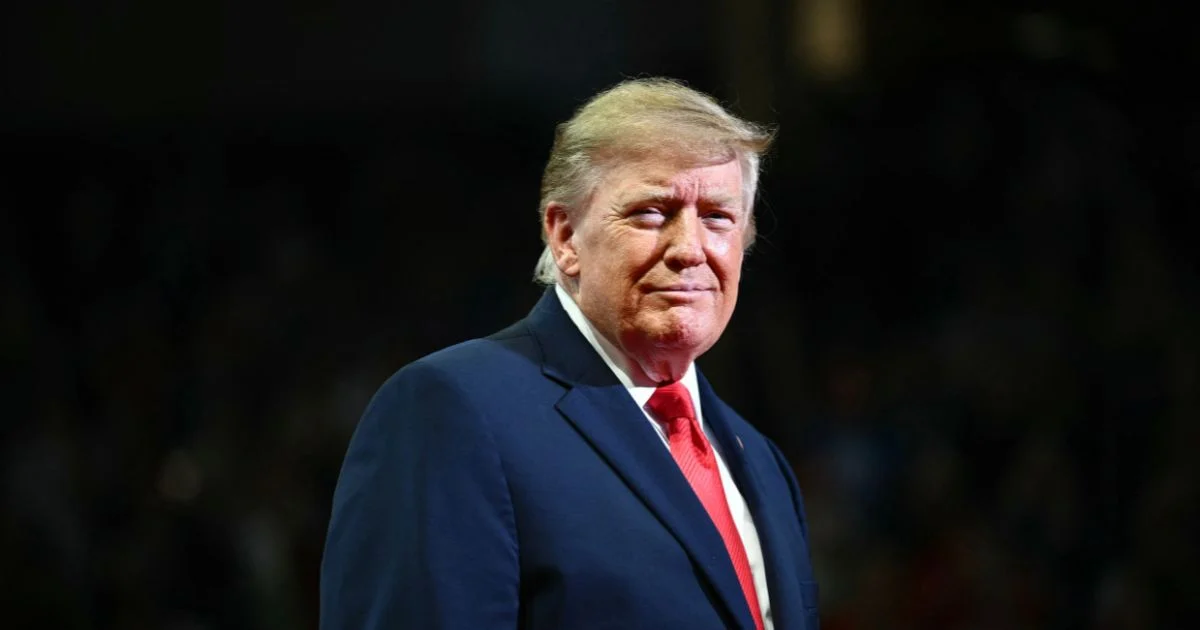
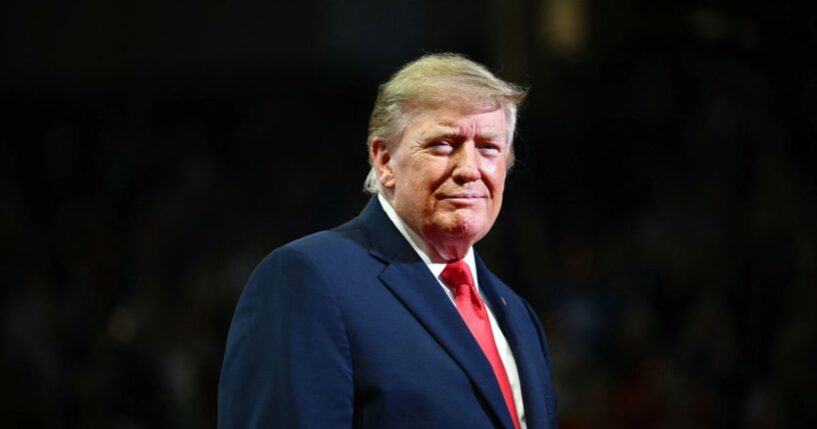
Youngstown, Ohio – Former President Donald Trump delivered a potent and often provocative address at a campaign rally in Youngstown, Ohio, on October 12, 2026, where he sought to rally support for Republican midterm candidates while making immigration a central and contentious issue. Speaking to a large crowd at the Covelli Centre, Trump explicitly warned Ohio voters against what he described as the potential "plunder, ransacking, and destruction" of their state, drawing direct parallels to the situation he claimed was unfolding in Minnesota due to immigration policies. The former president was in Ohio to endorse Republican candidates Jon Husted for Senate and Vivek Ramaswamy for Governor, positioning the upcoming 2026 elections as a critical juncture for the state’s future. His remarks, which included controversial statements regarding immigrant communities, immediately garnered significant media attention and reignited debates surrounding immigration policy and political rhetoric.
The Ohio Political Landscape and the 2026 Midterms
Ohio, historically a crucial swing state, holds significant sway in national political contests. The 2026 midterm elections are anticipated to be closely watched, with both the Senate and Gubernatorial races projected to be highly competitive. The Republican Party aims to consolidate its power and potentially flip the Senate seat, while securing the governorship is vital for future electoral strategies. Jon Husted, the endorsed Republican candidate for Senate, brings a background as a former Ohio Secretary of State and Lieutenant Governor, positioning himself as a seasoned political figure. Vivek Ramaswamy, endorsed for Governor, has gained national prominence as a businessman and author, often aligning with a populist, America First agenda. Trump’s visit aimed to energize his base and swing voters, framing the election not merely as a choice between candidates but as a referendum on fundamental issues, with immigration at the forefront. The strategy highlights the Republican Party’s continued focus on border security and immigration enforcement as a key motivator for its electorate, particularly in purple states where voter turnout is often decisive.
Immigration as a Campaign Cornerstone
During his Youngstown speech, Trump reiterated a core message that has defined much of his political career: a hardline stance on immigration. He directly linked the future of Ohio to its choices in the upcoming election, suggesting that voting Democratic would lead the state down a path similar to Minnesota. His rhetoric centered on the idea that unchecked immigration, particularly under Democratic administrations, leads to societal and economic strain. This narrative, while criticized by opponents as xenophobic, resonates with a segment of the electorate concerned about border security, the rule of law, and the perceived impact of immigration on local communities and resources. The former president’s emphasis on these themes reflects a broader Republican strategy to leverage anxieties about immigration as a powerful campaign tool, particularly in battleground states where the demographic and economic impacts of migration are often hotly debated.
Recalling the 2024 Campaign: Springfield, Ohio
A significant portion of Trump’s address revisited a major flashpoint from his 2024 presidential campaign: the situation in Springfield, Ohio. During that campaign, Trump had drawn national attention to Springfield, claiming it had been "overrun by Haitian migrants." He notoriously cited concerns from residents about the burden placed on their community by what were estimated to be up to 20,000 Haitian immigrants who had arrived during the preceding Biden administration years. The controversy escalated during a presidential debate with then-Vice President Kamala Harris, where Trump made the widely publicized, and often ridiculed, claim that migrants in Springfield were "eating the dogs… they’re eating the cats… they’re eating the pets of the people that live there."
While the "eating pets" claim was largely dismissed by fact-checkers and local authorities as unfounded sensationalism, the underlying concerns about the influx of migrants and the strain on local resources were a real issue for some Springfield residents. Local officials in Springfield and Clark County had indeed reported an increase in Haitian migrants seeking asylum and settlement, leading to discussions about housing, social services, and educational needs. The rapid arrival of a large number of individuals, often with limited resources and language barriers, can present challenges for smaller communities unprepared for such an influx. Trump’s invocation of Springfield in his 2026 rally served to remind voters of his prior commitment to addressing immigration issues and to reinforce his argument that Democratic policies exacerbate these problems, despite the factual disputes surrounding some of his specific claims.

The Minnesota Narrative: Ilhan Omar and Fraud Allegations
Central to Trump’s argument against Democratic immigration policies was his portrayal of Minnesota, particularly its large Somali immigrant community, as a cautionary tale. He alleged that Minnesota had been "plundered, ransacked, and destroyed" by "unfettered immigration and the swarming of public services." A key component of this narrative involved accusations of widespread fraud, particularly referencing what he described as "billions in various forms of fraud, largely from the state’s large Somali immigrant community."
These claims are not new and have been a recurring feature in conservative media and political discourse. Minnesota has indeed seen several high-profile cases of alleged fraud involving individuals from its Somali community, most notably in areas such as childcare assistance and Medicaid. One prominent case involved multiple individuals charged in a massive Medicaid fraud scheme, where millions of dollars were allegedly diverted from programs intended to feed underprivileged children. These incidents, while prosecuted as individual criminal acts, have sometimes been generalized by critics to cast a negative light on the entire immigrant community.
Trump directly linked these allegations to Democratic Representative Ilhan Omar, who was born in Somalia and represents a Minnesota congressional district with a significant Somali population. On the same day as Trump’s Ohio rally, news broke that Omar’s Washington D.C. home had reportedly been raided by immigration officials. While details of the raid remained scarce, the incident immediately fueled speculation and provided Trump with a timely talking point. Representative Omar has long been a target of conservative criticism, facing numerous allegations regarding her immigration status, marital history, and financial dealings. These include claims of immigration fraud related to her marriage and questions about her financial disclosures. Omar has consistently denied these allegations, often characterizing them as politically motivated attacks. The raid, irrespective of its outcome, served to amplify Trump’s narrative that Democratic figures, particularly those from immigrant backgrounds, are implicated in or enable fraudulent activities related to immigration and public services.
Controversial Rhetoric and Public Reaction
The former president’s address was marked by several highly controversial statements that quickly drew widespread condemnation. Referring to the alleged prosperity of some immigrants in Minnesota, Trump stated, "They come in, they have nothing, and they’re the number one buyers of Mercedes Benz and BMWs in the state of Minnesota." He then added, "The whole thing is crazy. They’re low-IQ people!" This particular remark, singling out a specific ethnic group and labeling them as "low-IQ," immediately sparked outrage from civil rights groups, Democratic politicians, and many commentators who denounced it as racist and xenophobic.
The immediate media reaction to Trump’s comments was swift and critical, as predicted by the original article’s author. The Associated Press reported, "Trump attacks immigrants from Somalia and Haiti while rallying in Ohio for Republican candidates," highlighting the inflammatory nature of his remarks. The Hill similarly ran a headline stating, "Trump repeatedly attacks Minnesota, Omar during Ohio campaign stop," focusing on the personal nature of some of his criticisms. These headlines reflect a common pattern in reporting on Trump’s rallies, where his unscripted and often provocative statements frequently become the primary news story, overshadowing other campaign messages. Critics argue that such language demonizes immigrant communities, fosters division, and contributes to a climate of intolerance. Supporters, however, often view these statements as Trump’s unfiltered expression of concerns they share, believing he is speaking "the facts" that mainstream media and politicians are unwilling to address.
Broader Immigration Policy Debate
Trump’s rhetoric in Ohio underscores the profound ideological chasm in the United States regarding immigration policy. Republicans, generally aligned with Trump’s stance, advocate for stricter border enforcement, increased deportations, and a merit-based immigration system. They often prioritize national security and economic protectionism, arguing that uncontrolled immigration strains social services, depresses wages for native-born workers, and poses security risks. The former president and his allies frequently criticize Democratic administrations for what they perceive as lax border policies, often using terms like "open borders" to describe their opponents’ approach. They advocate for empowering agencies like Immigration and Customs Enforcement (ICE) and enhancing their capabilities to detain and deport undocumented immigrants.
Conversely, Democrats generally advocate for comprehensive immigration reform that includes pathways to citizenship for undocumented immigrants, increased legal immigration channels, and more humane treatment of asylum seekers. While acknowledging the need for border security, they often emphasize the economic and cultural contributions of immigrants, the humanitarian aspects of asylum, and the importance of addressing the root causes of migration. Many Democrats have been critical of ICE’s enforcement tactics and have called for reforms, with some progressive factions even advocating for its abolition. This divergence was highlighted in Trump’s speech, where he accused Democrats of resisting ICE and stoking "anti-ICE riots," implying a deliberate undermining of federal law enforcement. This reflects the ongoing political battle over the role and scope of immigration enforcement in the U.S.
Economic and Social Implications of Immigration
The debate over immigration often involves complex economic and social implications, which Trump’s rally brought to the forefront, albeit with a highly critical lens. From an economic perspective, immigrants contribute significantly to the U.S. economy, filling labor shortages, starting businesses, and paying taxes. Studies from various institutions, including the National Academies of Sciences, Engineering, and Medicine, have generally concluded that immigrants are a net positive for the U.S. economy over the long term, contributing more in taxes than they consume in public services. However, rapid influxes of migrants, particularly those without legal work authorization or significant financial resources, can place immediate strain on local public services such as schools, healthcare, and emergency housing in specific communities. These localized pressures are often the basis for arguments about immigrants "burdening" public coffers.
Socially, immigration leads to demographic shifts and cultural enrichment, but also sometimes to integration challenges. The establishment of large immigrant communities, such as the Somali community in Minnesota, can create vibrant cultural centers but also raise questions about cultural assimilation, language barriers, and access to resources. Allegations of fraud, such as those cited by Trump, while specific to individuals, can unfortunately be generalized, fostering mistrust and prejudice against entire communities. The former president’s focus on alleged luxury car purchases by immigrants in Minnesota, juxtaposed with claims of public service strain, aims to create a perception of illicit enrichment at taxpayer expense, even without concrete evidence linking such purchases directly to fraudulent activities or public funds.
The 2026 Midterm Stakes
As the 2026 midterm elections approach, the Ohio races for Senate and Governor are poised to be bellwethers for national political sentiment. Trump’s rally underscores the Republican strategy to nationalize these elections, making them a referendum on immigration and broader cultural issues rather than solely on state-specific concerns. By framing the choice starkly – between electing Republicans to "stop" the alleged "destruction" seen in Minnesota, or risking Ohio facing a similar fate – Trump aims to mobilize conservative voters and appeal to those concerned about border security and the perceived costs of immigration.
The effectiveness of this strategy will depend on various factors, including the actual situation at the U.S. border leading up to the elections, the economic climate, and the ability of Democratic candidates to counter the narrative with their own vision for immigration and state governance. The rhetoric employed by Trump and its reception highlight the deep divisions within the American electorate and the continued potency of immigration as a defining issue in contemporary U.S. politics. The outcome in Ohio, and other battleground states, will not only determine the balance of power in Washington and state capitals but also shape the national discourse on immigration for years to come.