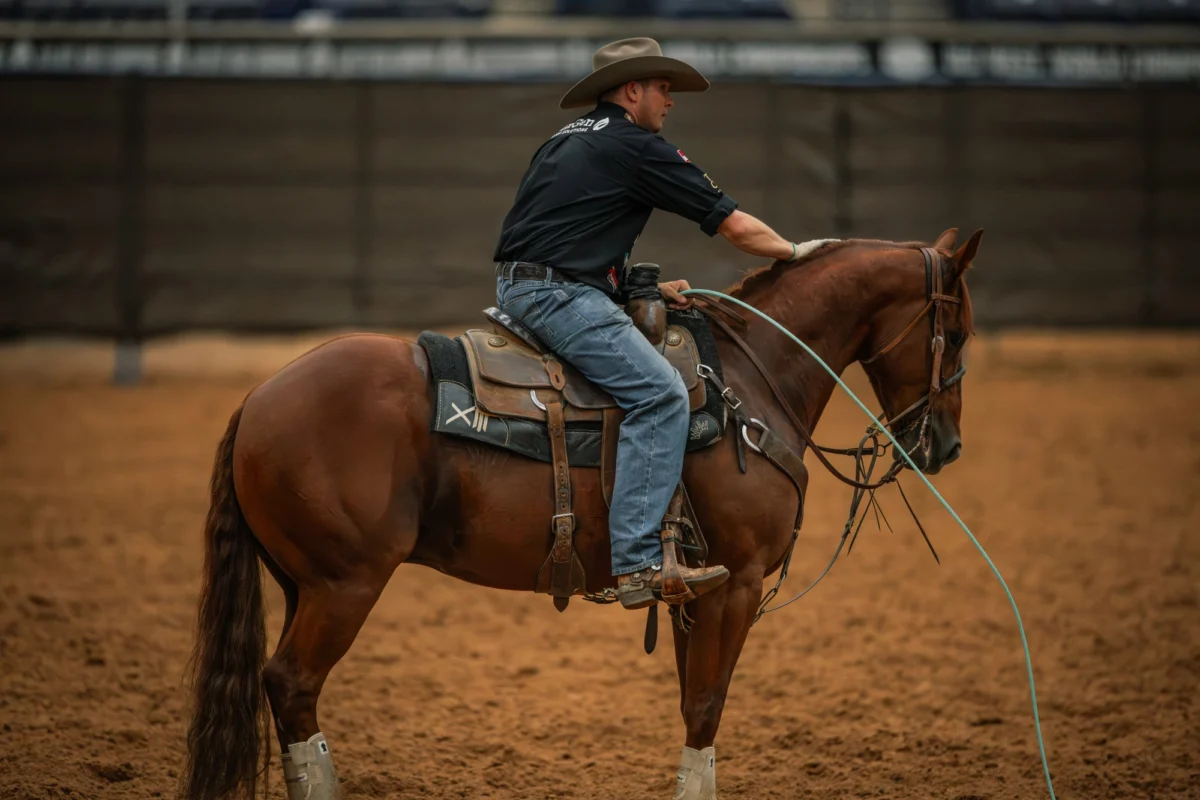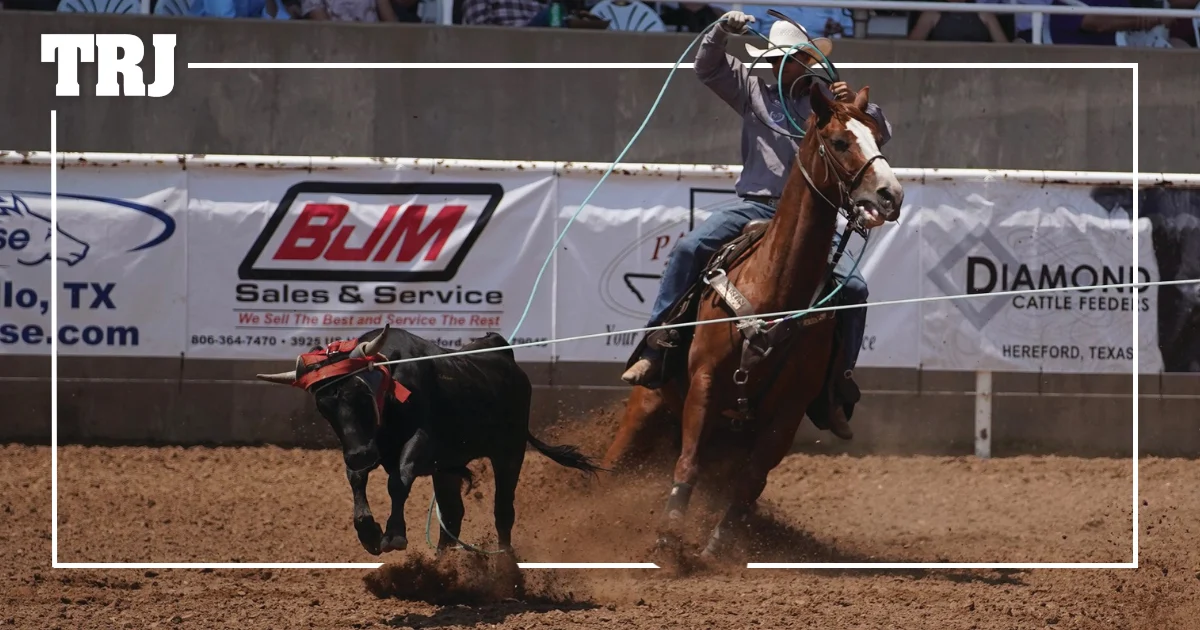
In the high-stakes world of professional team roping, where milliseconds dictate fortunes and consistency is the ultimate currency, Will Woodfin’s philosophy stands out for its profound simplicity: identify what works and relentlessly make it repeatable. This approach, while seemingly straightforward, underpins a sophisticated understanding of the sport’s inherent complexities, offering a timeless blueprint for success that transcends fleeting trends and adapts to the unpredictable nature of live animal competition. Woodfin’s insights delve into the core responsibilities of a heeler, emphasizing a disciplined, reactive, and fundamentally sound strategy designed to maximize catch rates under diverse conditions. His perspective offers a refreshing counter-narrative to the often-overanalyzed nuances of technique, instead championing a return to foundational principles that empower ropers to perform their best when it matters most.
The Bedrock Principle: Catching All the Time
At the heart of Woodfin’s heeling doctrine is an unwavering commitment to "catch all the time." This isn’t merely an aspiration; it is posited as the heeler’s singular, unequivocal job. While it may sound deceptively simple, the emphasis underscores a critical performance metric in team roping. Unlike many other rodeo events where style points or intricate maneuvers might factor into judging, team roping is fundamentally about efficiency and execution – specifically, catching two feet. A missed loop or an illegal catch means a no-time, instantly negating all prior effort and investment. In a sport where entry fees for major rodeos and jackpots can range from hundreds to thousands of dollars per team, and prizes can reach six or even seven figures, the financial implications of a missed catch are astronomical. Industry analyses often highlight that even a slight increase in a heeler’s consistent catch rate can translate into significant earnings over a competitive season, potentially adding tens of thousands of dollars to a professional’s income. For example, if a roper competes in 100 runs per month, and improves their catch rate by just 5% (from, say, 75% to 80%), this means five additional qualified runs. In a sport where each qualified run carries the potential for a payout, this marginal gain compounds rapidly.
Woodfin’s steadfast belief in simplicity is evident in his assertion that team roping "is not rocket science." He cautions against the temptation to "reinvent the wheel," a pitfall many competitors succumb to when facing performance plateaus or seeking a competitive edge. This often leads to overcomplicating techniques, chasing new equipment, or adopting faddish strategies that ultimately detract from fundamental effectiveness. Woodfin argues that the core mechanics of heeling have been refined over decades, and true mastery lies not in innovation for innovation’s sake, but in perfecting the proven methods through relentless repetition and unwavering discipline. This philosophy resonates with sports psychologists who advocate for a "less is more" approach, particularly in high-pressure environments, where cognitive overload can impair decision-making and execution.
Navigating Varied Conditions: The Unchanged Approach
Professional team ropers frequently encounter a spectrum of competitive environments, from the adrenaline-fueled atmospheres of large-scale rodeos to the more localized, often higher-run-count jackpots. Each setting presents its unique challenges: rodeo horses, accustomed to fast-paced action, might exhibit heightened energy levels, while jackpot steers, especially "fresh" ones (those not previously roped), can be unpredictable in their movements. Despite these variables, Woodfin advocates for a consistent, unchanging approach. "I don’t try to change a whole lot. You just rope the roping," he states, emphasizing adaptability within a fixed framework.
This adaptability isn’t about altering one’s fundamental technique but rather about maintaining mental composure and relying on ingrained responses. When horses are quicker, or steers behave erratically, the temptation to rush or force a throw can be overwhelming. Woodfin’s philosophy counters this by promoting a reactive mindset. As a heeler, he believes, one cannot control the initial dynamics of the run – the steer’s exit, the header’s catch, or the turn. Instead, the heeler’s primary role is to observe, anticipate, and react precisely to the unfolding scenario. This is a crucial distinction from proactive strategizing; while pre-run planning is essential, the execution moment demands an almost instinctual response honed through thousands of repetitions. This mental discipline helps filter out distractions and prevent overthinking, allowing the roper to focus solely on the immediate task: positioning and throwing.
The Synergy of Roles: The Header’s Control, The Heeler’s Responsibility
Team roping, by its very definition, is a collaborative effort. Woodfin acknowledges the profound influence of the header, particularly in runs involving fresh steers or in the high-stakes environment of a rodeo. "The header has so much control of everything," he concedes, recognizing that a well-executed header’s catch and turn are prerequisites for a successful heeler’s throw. The header dictates the steer’s trajectory, speed, and the angle at which it turns, all of which directly impact the heeler’s window of opportunity. A header who consistently delivers a smooth, controlled turn effectively "sets up" the heeler for an optimal throw, significantly increasing the team’s chances of a qualified time.
However, Woodfin is quick to pivot back to the heeler’s individual accountability. Even with a perfect setup, the heeler "still got to do the same thing and do your job and catch two feet." This highlights the critical balance between interdependence and individual responsibility. While the header creates the opportunity, the heeler must seize it. This dynamic underscores why successful roping teams often exhibit a deep understanding and trust in each other’s abilities, built through countless hours of practice and competition. A heeler who understands Woodfin’s philosophy implicitly trusts their header to do their part, allowing them to focus entirely on their own execution without second-guessing or trying to compensate for potential header errors. This mutual trust fosters a more fluid and efficient performance, reducing mental friction and optimizing reaction times.
The Crucial Moment: Mastering the Turn
The turn is arguably the most critical juncture for the heeler. It is the moment when the steer, having been caught by the header, changes direction, presenting the heeler with the ideal angle for a throw. Woodfin describes a delicate balance during this phase: "I try to ride the line of letting the steer start through the turn where I’m not running them over, but at the same time, I’m not being late." This nuanced approach speaks to the profound experience required to consistently execute a high-percentage throw.
Being "late" means missing the prime window of opportunity, forcing a more difficult, lower-percentage throw from a less advantageous position. Conversely, "running them over" implies being too aggressive, getting too close to the steer prematurely, which can obstruct the swing, spook the steer, or cause the horse to be out of position. The ideal scenario involves the heeler maintaining a precise distance and angle, allowing the steer to complete the initial phase of its turn before initiating the throw. This allows the steer’s hind legs to become fully exposed and stable for a clean catch. Woodfin’s goal is to "let the steer leave when he starts through the turn," signifying that moment of optimal separation and alignment. Yet, he also cautions against "passing up throws when I could have been throwing," indicating that while patience is key, hesitation can be equally detrimental. This "riding the line" is a continuous, dynamic assessment based on the steer’s speed, the header’s turn, and the heeler’s horse position, demanding instantaneous judgment and impeccable timing. It is the art of being both conservative enough to ensure a good shot and aggressive enough to capitalize on the earliest viable opportunity.
The Pursuit of Repeatability: The Ultimate Metric of Skill
Ultimately, Woodfin circles back to his core tenet: "That’s the tricky part about heeling—doing it on a consistent basis." This consistency, or repeatability, is the hallmark of true mastery in any performance-based sport. It differentiates a lucky catch from a skilled execution, a sporadic win from a championship season. For Woodfin, achieving this means "just got to do your thing and just make it repeatable and just do it over and over."
This emphasis on repetition is foundational to skill acquisition. In neurological terms, consistent practice builds and strengthens neural pathways, transforming conscious effort into subconscious competence. This muscle memory allows a roper to execute complex actions without deliberate thought, freeing up cognitive resources for real-time adjustments and decision-making. Training for repeatability involves disciplined practice sessions, breaking down the heeling process into its constituent parts – swing, delivery, follow-through – and performing each with meticulous attention to detail. It also involves consistent horsemanship, ensuring the roping horse is equally trained to perform its role predictably and reliably. A horse that anticipates the turn, maintains optimal speed, and stops smoothly contributes immensely to the heeler’s ability to execute repeatably.
Broader Implications: A Blueprint for Excellence Beyond the Arena
Woodfin’s philosophy, while rooted in the specific demands of team roping, offers a universal blueprint for excellence applicable across various competitive and professional domains. The principles of simplicity, consistency, and repeatability are cornerstones of success in sports, business, and personal development.
- Focus on Fundamentals: In an age of constant innovation, Woodfin’s approach reminds us of the enduring power of mastering core skills. Whether it’s a heeler catching two feet, a sales professional closing a deal, or a software engineer writing clean code, proficiency in the basics forms the strongest foundation. Over-complication often leads to inefficiency and error.
- Adaptability within Structure: The ability to "rope the roping" – to adapt to changing conditions without abandoning core principles – is a critical leadership and strategic skill. It encourages flexibility in execution while maintaining fidelity to a proven methodology, ensuring resilience in dynamic environments.
- The Power of Collaboration and Individual Accountability: Woodfin’s articulation of the header’s control and the heeler’s ultimate responsibility mirrors the dynamics of successful teams everywhere. Each member has a distinct role, but collective success hinges on individual excellence and mutual trust. Recognizing and respecting these interdependencies, while maintaining personal standards, maximizes team output.
- The Pursuit of Consistency: In a world that often rewards spectacular but sporadic achievements, Woodfin champions the unsung hero of consistency. Reliable performance, even if not always flashy, builds sustained success and trust. This commitment to doing "your thing over and over" underpins long-term achievement and distinguishes true professionals.
- Mental Fortitude: The ability to stick to a plan, avoid overthinking, and react calmly under pressure is a significant psychological advantage. Woodfin’s simple mantra helps cultivate this mental toughness, allowing ropers to perform optimally when stakes are highest.
In conclusion, Will Woodfin’s approach to heeling is far more than a set of technical instructions; it is a profound philosophy distilled from years of experience in the competitive arena. By advocating for simplicity, consistent execution, and an unwavering focus on the heeler’s core job, he offers a powerful model for achieving repeatable excellence. His insights serve not only as invaluable guidance for aspiring and professional ropers but also as a compelling reminder of the timeless principles that drive success in any challenging endeavor. In a sport where fractions of a second and inches of position make all the difference, Woodfin’s commitment to "doing your thing" ensures that when the chute gate opens, the path to a winning catch is clear, consistent, and above all, repeatable.