 rifanmuazin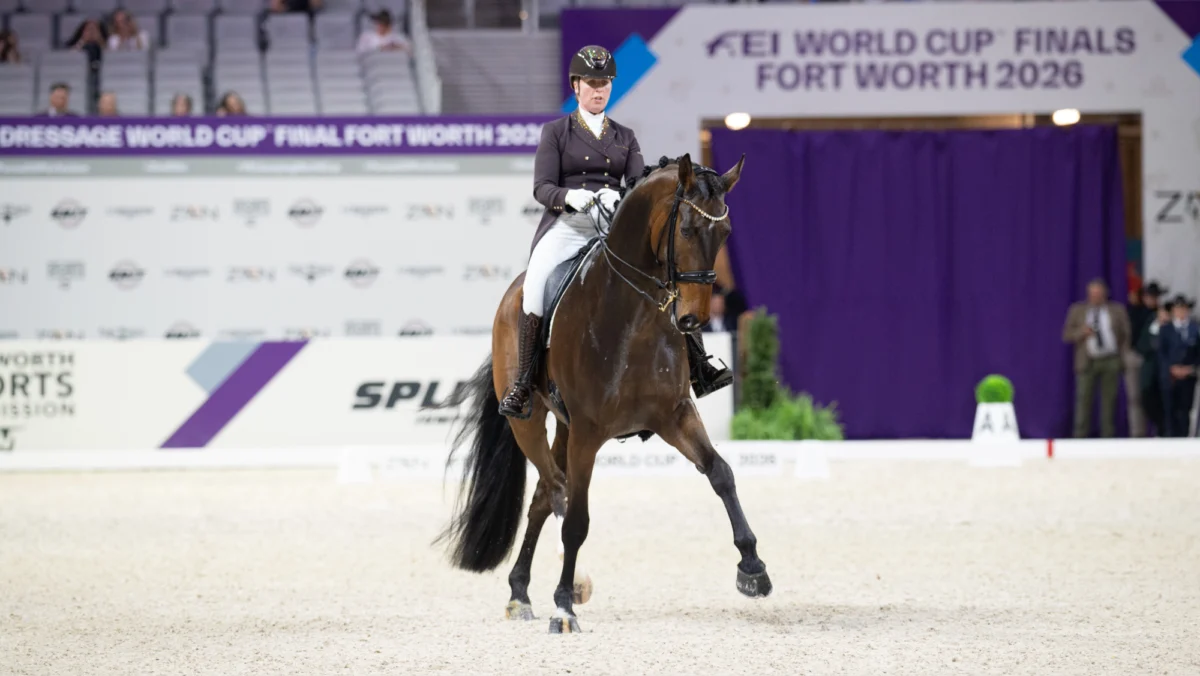
Becky Moody and Jagerbomb made an immediate and powerful statement on their debut at the Zen Elite FEI Dressage World Cup Final, securing the top spot in the Grand Prix held on April 9th at Dickies Arena in Fort Worth, Texas. The pre-competition favourites delivered a performance that resonated with the packed Texan audience, earning a commanding score of 76.76%. This triumph marks a significant milestone for the European team silver medallists as they embark on their quest for the World Cup title.
A Masterclass in Harmony and Energy
From the moment they entered the expansive arena, Moody and Jagerbomb showcased a remarkable partnership, settling into their rhythm with evident ease. The combination exuded a palpable balance of controlled energy and relaxed confidence, a testament to their extensive training and deep understanding. "I had that nice balance of energy, but with relaxation as well," Moody commented after her victory, expressing satisfaction with a performance that closely aligned with her aspirations.
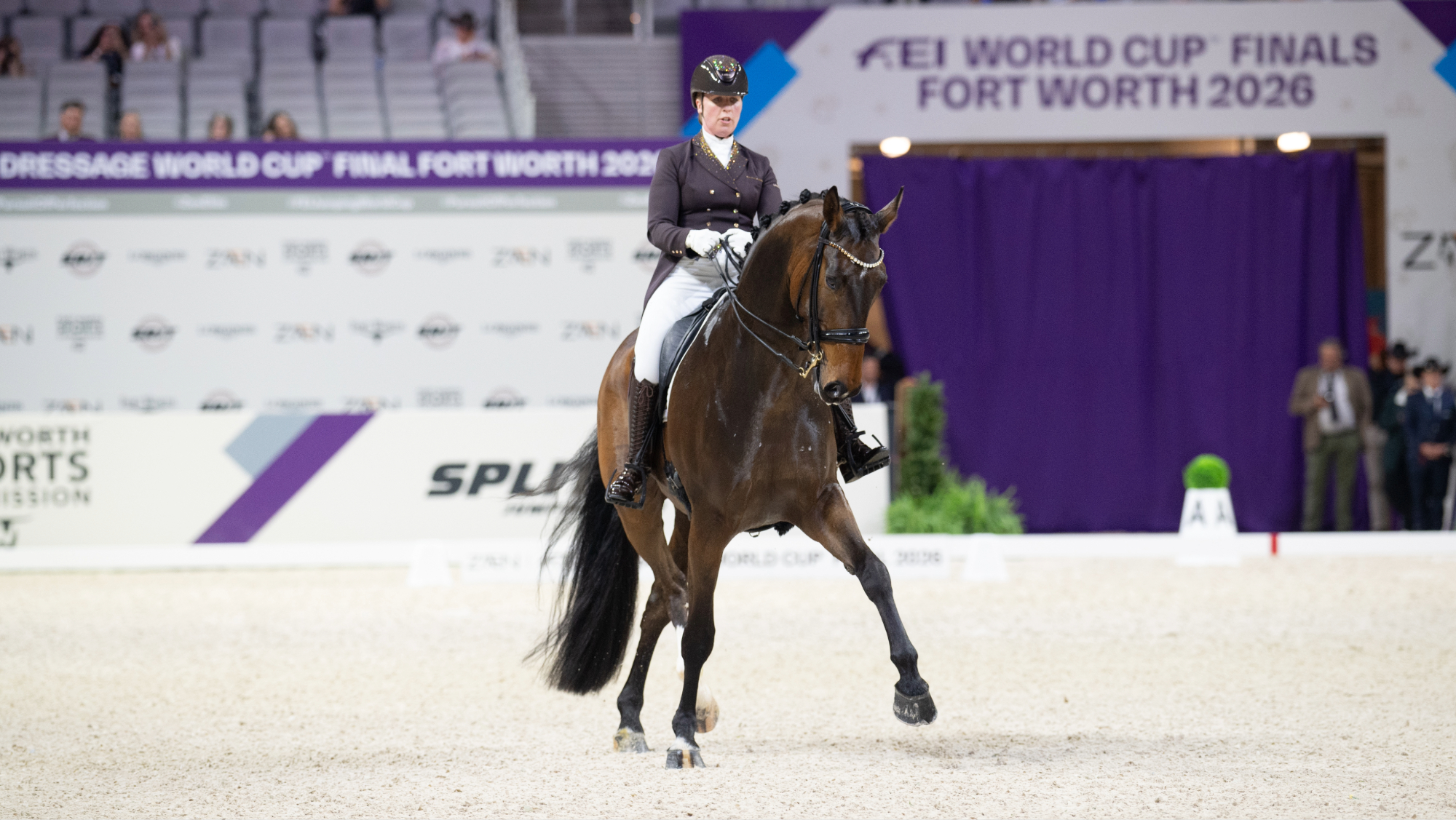
She further elaborated on Jagerbomb’s strengths, describing him as a horse who excels in all facets of the sport rather than possessing a single standout ability. "I always say, he’s not exceptional at anything, but he is just really good at everything," she explained. "He’s a joy to ride in an arena like that, and it was an amazing crowd." Despite the thrill of the competition, Moody humorously recounted a moment of audience interaction that momentarily broke her concentration: "It was a little distracting at the beginning when you’re going around, and you’re in the zone and someone’s hollering ‘We love your outfit though!’"
Strong Contenders Emerge in the Top Rankings
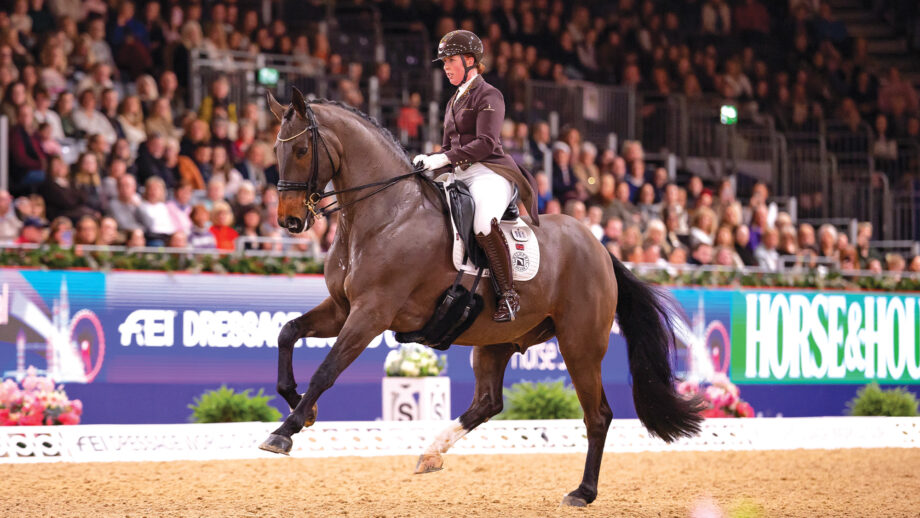
Following closely behind the British duo were the home favourites, Christian Simonson and his mount Indian Rock. The young American rider, at just 23 years of age, demonstrated a promising performance to secure second place with a score of 75.41%. Simonson, one of the youngest competitors in the field, conveyed the profound significance of his World Cup Final debut. "It feels a bit surreal to even say that I’m here at a World Cup Final," he admitted. "Rocky was amazing tonight – he is just so dependable. I love him so much."
Rounding out the top three was the formidable Swedish rider Patrik Kittel, a seasoned World Cup competitor, alongside his horse Touchdown. Kittel, who has graced the World Cup Finals arena on eleven previous occasions, secured third place with a score of 72.87%. He offered high praise for the leading pair, particularly commending the harmony and athleticism displayed by Jagerbomb. "Becky’s horse looks really happy," Kittel observed. "He looks in such great harmony – the neck is beautiful, it’s beautiful in the mouth. It just looks so harmonious, and that’s what we want to see in the sport today." His comments underscore the importance of horse welfare and the aesthetic quality of the sport at this elite level.
A Journey of Firsts and Personal Triumphs
The significance of Moody and Jagerbomb’s victory is amplified by the fact that this competition represents a journey into genuinely unfamiliar territory for the pair. The decision to travel to Texas and compete in the World Cup Final was a carefully considered one, involving significant logistical challenges. "I had never flown a horse before, and he had never flown before, so that was a factor in my decision-making," Moody revealed. This marked a considerable undertaking, requiring meticulous planning and trust in the process of international equine transport.
The experience, however, proved to be invaluable. "I wanted that experience, and for him to have that experience, and I’m really glad I did. We definitely learned things," she stated. The opportunity to compete in Texas also offered a unique cultural immersion. "This is just an amazing opportunity to come to such a fantastic place, and it’s so cool to be surrounded by such a strong equine culture [in Texas] that is completely different to anything I’ve experienced before."
Adding a deeply personal layer to her success, Moody revealed that she had bred Jagerbomb herself over 12 years ago. This intimate connection to her equine partner imbues every achievement with a profound sense of accomplishment. "When you have bred them, it just adds that little bit of extra," she shared, her voice tinged with emotion. "I don’t have any children, so he is my child. He’s just my pride and joy." This breeder-rider bond is a rare and cherished aspect of equestrian sport, highlighting the extraordinary journey they have undertaken together.
Looking Ahead to the Grand Prix Freestyle
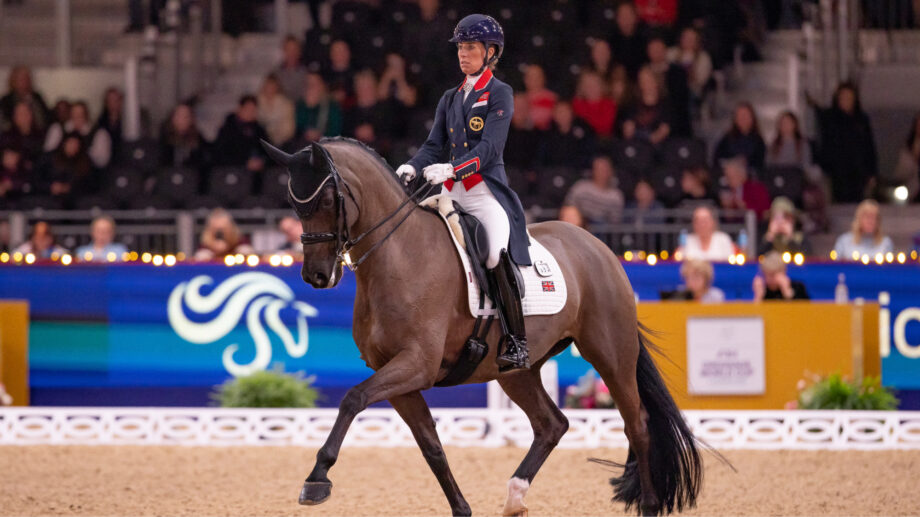
While the Grand Prix victory provides a strong foundation, Moody is not resting on her laurels. She has already identified areas for improvement, noting minor imperfections in the rein-back and pirouettes. These are crucial details that she aims to refine ahead of the Grand Prix Freestyle, the decisive competition that will crown the 2026 World Cup champion on Saturday.
The field for the World Cup Final is exceptionally strong, with all 16 qualified combinations achieving scores above 60% in the Grand Prix. This high standard of competition sets the stage for a thrilling finale. The Grand Prix Freestyle is scheduled to commence at 7pm CST (1am Sunday, British time), and the stakes will be incredibly high as riders vie for the prestigious World Cup title.
In a significant draw, Becky Moody and Jagerbomb have secured the final starting position. This means they will be the last to enter the arena, a strategic advantage that allows them to gauge the performances of their rivals and approach their test with a clear understanding of the target score. The World Cup title truly is theirs to take, contingent on another stellar performance in the freestyle.
The FEI Dressage World Cup: A Global Championship
The Zen Elite FEI Dressage World Cup Final represents the pinnacle of the annual FEI Dressage World Cup series, a global circuit of qualifying competitions held across various regions. This prestigious event brings together the top dressage athletes from around the world to compete for the coveted individual title. The series typically spans several months, with riders accumulating points at designated Grand Prix events throughout the season. The culmination of these efforts is the World Cup Final, a multi-stage competition that typically includes a Grand Prix and a Grand Prix Freestyle.
The FEI (Fédération Equestre Internationale) governs international equestrian sport, setting the rules and standards for competitions worldwide. The Dressage World Cup, established in 1985, has grown in stature and popularity, attracting elite horses and riders and captivating audiences with its blend of athleticism, artistry, and partnership. The competition format demands not only technical proficiency but also a deep connection between horse and rider, showcasing the years of dedication and training required to reach this level.
The Significance of the Texas Venue
The choice of Dickies Arena in Fort Worth, Texas, as the host venue for the 2026 FEI Dressage World Cup Final underscores the growing prominence of equestrian sport in the United States and the increasing appeal of hosting major international events in diverse geographical locations. Fort Worth has a rich Western heritage, and hosting a world-class dressage event highlights the city’s capacity to embrace and celebrate a wide spectrum of equestrian disciplines. Dickies Arena, a state-of-the-art multipurpose venue, offers world-class facilities capable of accommodating the demanding requirements of elite dressage competition, including a spacious arena, warm-up facilities, and spectator amenities. The enthusiastic reception from the Texan crowd further emphasizes the burgeoning equestrian community and its appetite for high-level international sport.
The Enduring Appeal of Dressage
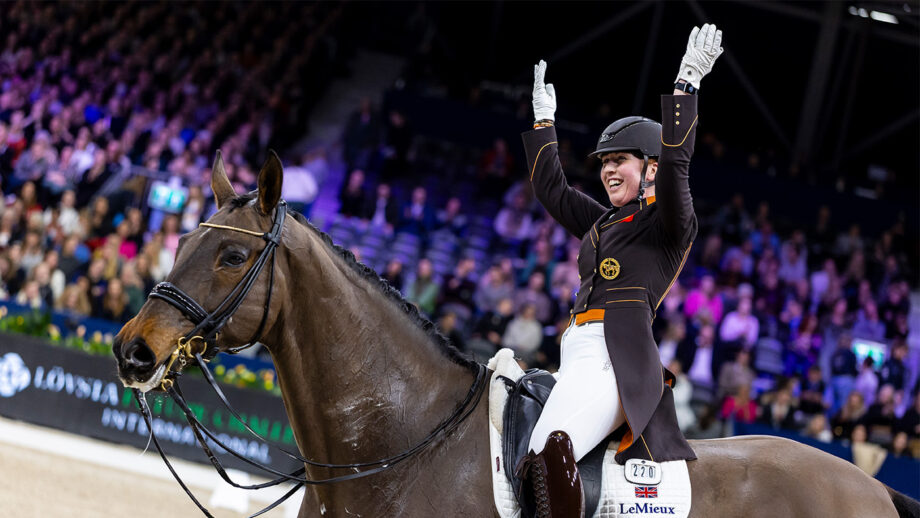
Dressage, often described as "ballet for horses," is an equestrian discipline that tests the training, obedience, and harmony between horse and rider. Competitors perform a series of predetermined movements, known as a dressage test, in a standard arena. Judges evaluate the execution of these movements based on criteria such as accuracy, suppleness, impulsion, and the rider’s position and influence. The ultimate goal is to achieve a seamless, elegant, and powerful performance that demonstrates the horse’s athletic prowess and the strength of the partnership.
The FEI Dressage World Cup Final elevates these principles to an even higher level. The Grand Prix tests the horse’s strength, suppleness, and obedience in a series of compulsory movements, while the Grand Prix Freestyle allows riders to showcase their creativity and precision through a choreographed routine set to music. This latter phase is where the true artistry of the sport shines, with riders and horses performing complex movements in a dynamic and engaging manner. The ability of athletes like Becky Moody and Jagerbomb to execute these demanding tests with such apparent ease and grace is a testament to their exceptional skill and dedication.
The 2026 Zen Elite FEI Dressage World Cup Final is poised to deliver an unforgettable spectacle, with Becky Moody and Jagerbomb leading the charge into the decisive Grand Prix Freestyle. Their journey, marked by personal triumphs and a pioneering spirit, serves as an inspiration to aspiring riders and a testament to the enduring beauty and power of the human-equine partnership.