Field research in the rugged corridors of the Pryor Mountains, which straddle the border of Montana and Wyoming, represents a critical intersection of conservation biology, history, and mathematical data analysis. For over half a century, the Pryor Mountain Wild Horse Range has served as a living laboratory for those dedicated to observing and preserving the wild equids that roam its 16,000-hectare expanse. These horses, often referred to as feral because they are descendants of once-domesticated animals that have returned to a wild state, are the subjects of intense study to monitor their population health, social behaviors, and genetic diversity. The work of field researchers is not merely a matter of observation but a complex task of demographic tracking that ensures the long-term survival of one of America’s most iconic wildlife populations.
The Pryor Mountain Wild Horse Range holds a distinguished place in American history, having been established in 1968 as the first protected refuge specifically dedicated to the mustang. This designation was the result of a grassroots movement that sought to protect these animals from being removed or eradicated from public lands. Today, the range encompasses approximately 40,000 acres—a conversion from its 16,000-hectare metric designation—providing a vast, diverse landscape that ranges from desert lowlands to sub-alpine meadows. To visualize the scale of this habitat, one must consider that one hectare equals 10,000 square meters; thus, the range covers roughly one hundred sixty million square meters of territory. Managing such a vast area requires precise data regarding how many horses the land can support without degrading the ecosystem.

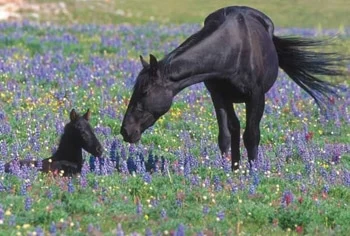
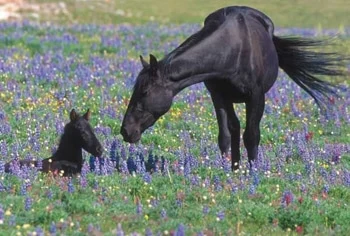
The horses of the Pryor Mountains are particularly significant to researchers because of their genetic heritage. Many of these animals exhibit physical characteristics that trace back to the Spanish horses brought to the Americas in the 16th century. Their primitive markings, such as dorsal stripes down the back and zebra-like striping on the legs, are hallmark traits of their ancient lineage. In the field, researchers categorize these animals by their "colors," which are more than just aesthetic descriptions; they are indicators of the herd’s genetic variety. Common colors in this specific population include dun, grullo, and roan. A grullo horse, for instance, possesses a smoky blue-gray coat, while a dun horse typically has a tan or gold body with dark points. Other common coats include bay, black, and the less frequent chestnut or sorrel.
Field studies conducted during the summer months are essential for updating the herd’s demographics—the quantifiable characteristics of the population. A typical study involves identifying every individual horse within the various bands. In the Pryor Mountains, the population generally fluctuates between 150 and 200 individuals. These horses are not a singular, monolithic group but are organized into 29 to 38 distinct social units known as bands. A band usually consists of a single dominant stallion, several mares, and their offspring, with sizes ranging from two to eleven horses. Younger males, or stallions that have not yet formed a harem, often form "bachelor bands" or live independently until they are strong enough to challenge for leadership of a group.
A recent demographic survey provides a snapshot of the mathematical precision required in wildlife management. In a count of 152 horses, researchers categorized the animals by age, sex, and color to assess the reproductive health of the herd. The results showed a remarkably balanced ecosystem. The data revealed 28 stallions (mature males four years or older) and 33 mares (mature females four years or older). When including the younger animals—colts (young males) and fillies (young females)—the ratio of total males to females was found to be 1:1. This parity is often a sign of a stable, healthy population. Furthermore, the survey identified 24 foals born within the current year, indicating a robust recruitment rate for the next generation.

The data analysis also extends to the prevalence of certain coat colors, which helps researchers track family lineages. In the 152-horse sample, "Black or Bay" was the most common category with 38 individuals, closely followed by Grullo and Dun, each with 35. Roans accounted for 23 horses, while the least common color was the Chestnut/Sorrel group, represented by only 14 individuals. By comparing these numbers over time, scientists can determine if certain genetic traits are becoming more or less common, which may influence management decisions regarding which horses might be gathered or relocated if the population exceeds the range’s carrying capacity.
Understanding the life stages of the horses is another critical component of the field study. Researchers must be able to distinguish between a foal (a horse under one year old), a yearling (between one and two years old), and the sub-adult colts and fillies (under four years old). This classification is vital for predicting future population growth. For example, a high number of fillies suggests a potential for rapid population expansion in three to four years, whereas a high number of colts might lead to increased social competition and aggression among stallions as they reach maturity.
The role of the Bureau of Land Management (BLM), which oversees the range, involves a delicate balancing act. They must ensure the wild horses are protected under the Wild Free-Roaming Horses and Burros Act of 1971 while also protecting the range from overgrazing, which could harm other wildlife and the native vegetation. When the population nears the upper limit of 200, the BLM may implement fertility control measures or conduct "gathers" to move horses to adoption programs. The data provided by field researchers is the foundation upon which these controversial and difficult decisions are made. Without accurate counts of how many horses were born (foals) or how many stallions are competing for territory, the management of the range would be based on guesswork rather than science.

Beyond the immediate management of the Pryor herd, these field studies offer significant educational opportunities. Organizations such as Wild Equus provide training and workshops for students of animal behavior and ethology. These programs emphasize the importance of observational skills—learning to recognize the subtle cues of equine communication and the complex social hierarchy within a band. For many students, the Pryor Mountains serve as a gateway to careers in veterinary science, wildlife biology, or environmental policy. The hands-on experience of tracking a specific band, such as the well-known stallion Galaxy and his mares, allows researchers to document the "life history" of individual animals, providing a narrative depth to the raw statistics.
The timing of these studies is often synchronized with the foaling season. In the Pryor Mountains, foals typically begin to arrive in early April. The birth of the first foal of the season is a major event for the local community and enthusiasts worldwide who follow the herd via social media and research updates. These new additions are immediately integrated into the demographic database, assigned to a band, and monitored for health and survival through the harsh winter months.
The implications of this research extend far beyond the borders of Montana and Wyoming. As climate change alters the availability of water and forage in the American West, the Pryor Mountain wild horses serve as an indicator species for the health of high-altitude ecosystems. Their ability to adapt to varying terrain and seasonal extremes provides valuable insights into equine resilience. Furthermore, the mathematical models developed to track this herd are used as templates for managing other feral equid populations globally, from the zebras of Africa to the wild asses of Asia.

In conclusion, the study of the Pryor Mountain wild horses is a multifaceted endeavor that combines the rigors of mathematical data collection with the nuances of animal behavior and the weight of historical preservation. By meticulously counting every foal, identifying every grullo and dun coat, and calculating the exact area of the range in hectares and acres, researchers ensure that these "mustangs" remain a permanent fixture of the American landscape. The work confirms that conservation is not just about protection, but about understanding the complex demographics that allow a species to thrive in the wild. As new generations of researchers head into the field, the legacy of the 1968 refuge continues, fueled by a commitment to the science of the horse and the spirit of the West.