The Pryor Mountain Wild Horse Range, a rugged expanse spanning approximately 16,000 hectares along the border of Montana and Wyoming, serves as a critical living laboratory for the study of equine behavior, genetics, and population dynamics. Established in 1968, this territory holds the distinction of being the first protected refuge in the United States dedicated specifically to the preservation of mustangs. For over half a century, the range has provided researchers and field biologists with a unique opportunity to observe horses in a feral state—defined scientifically as domestic animals that have returned to living in a wild or untamed environment. These field studies are not merely academic exercises; they are essential management tools used to monitor population numbers, migratory movements, and the complex social structures that define these iconic animals.
The Geography and Scale of the Pryor Mountain Refuge
To understand the scope of wild horse management, one must first grasp the physical dimensions of the habitat. The Pryor Mountain Wild Horse Range covers 16,000 hectares (ha). In the context of land management, the hectare is the standard metric unit of area, with one hectare equaling 10,000 square meters or approximately 2.5 acres. When converted to the units more commonly used in American land surveying, the range encompasses roughly 40,000 acres. On a more granular level, the total area of the refuge reaches an expansive one hundred sixty million square meters.
This vast terrain is characterized by its high-desert environment, steep ridges, and deep canyons, providing a diverse but challenging landscape for the resident herds. The size of the range is a limiting factor for the population; because the resources—primarily forage and water—are finite, the Bureau of Land Management (BLM) and independent researchers must carefully calculate the carrying capacity of the land to ensure the long-term health of both the horses and the ecosystem.

Historical Context and the 1971 Mandate
The Pryor Mountain Wild Horse Range was a precursor to one of the most significant pieces of wildlife legislation in American history: the Wild Free-Roaming Horses and Burros Act of 1971. Before this federal protection, wild horses were often seen as competitors for livestock grazing land and were frequently subject to unregulated hunting and removal. The establishment of the Pryor Mountain refuge in 1968 signaled a shift in public and governmental priorities toward the conservation of mustangs as "living symbols of the historic and pioneer spirit of the West."
Since its inception, the range has been managed with a focus on maintaining a "thriving natural ecological balance." This involves a timeline of regular census-taking and health assessments. Over the decades, the population has fluctuated based on environmental conditions, ranging at times up to 200 individuals, though management goals typically aim for a more sustainable average of closer to 150 horses. This target number is designed to prevent overgrazing, which can lead to soil erosion and the loss of native plant species.
Social Structure and Population Demographics
One of the primary objectives of field research in the Pryor Mountains is the documentation of demographics—the quantifiable characteristics of the population, such as age, sex, and color. Researchers utilize specific terminology to categorize the animals, which is vital for tracking the growth and reproductive health of the herds.
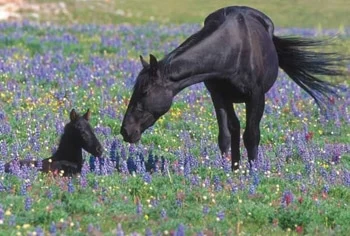
A horse’s life stage and sex are identified using standardized terms. A "foal" is any horse less than one year old, regardless of sex. Within this category, a nursing foal is a "suckling," while one that has been separated from its mother’s milk is a "weanling." As the horse matures, it becomes a "yearling" between the ages of one and two. Juvenile males are known as "colts" and juvenile females as "fillies" until they reach the age of four. Mature females are then classified as "mares," while mature, intact males are "stallions."

The social organization of these horses is highly structured. The population typically divides itself into 29 to 38 distinct bands. These bands usually consist of a lead stallion, several mares, and their offspring, totaling anywhere from 2 to 11 horses per group. Males that do not lead a band, often younger stallions or those who have lost their mares to a rival, form "bachelor herds"—temporary associations where they range independently or in small groups until they can challenge for a band of their own.
Phenotypes and Genetic Heritage
The Pryor Mountain mustangs are world-renowned for their unique genetic heritage. DNA testing has revealed that many of these horses carry strong markers of the Colonial Spanish Horse, descendants of the equines brought to the Americas by Spanish explorers in the 16th century. This lineage is often visible in their "phenotype"—their physical appearance and characteristics.
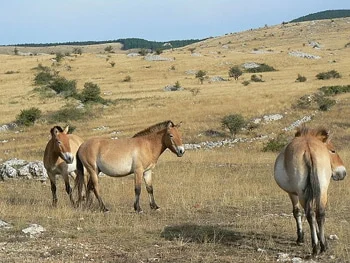
Field studies place a high priority on identifying horses by their coat colors, as certain primitive markings are indicative of their Spanish ancestry. The range is home to a high frequency of "dilution" colors, including:
- Dun: A tan or gold coat with a dorsal stripe down the back and often "zebra stripes" on the legs.
- Grullo: A smoky, mouse-colored coat, which is a dun-version of a black horse.
- Roan: A coat with white hairs intermixed with a base color (like red or blue).
In a recent census, researchers utilized pictographs to display the distribution of these colors within the 152 horses counted. The data revealed that black and bay horses were the most common (38 individuals), followed closely by duns and grullos (35 each). The least common colors were identified as chestnut and sorrel. Such data is crucial for geneticists who monitor the "color diversity" of the herd, ensuring that the unique traits of the Pryor Mountain lineage are not lost through genetic drift or inbreeding in a closed population.

The Role of Modern Field Research and Citizen Science
Current research methodologies have evolved from simple observation to sophisticated data analysis. Organizations like Wild Equus and the Pryor Mountain Wild Horse Range Center engage in year-round monitoring. Field studies typically last between one week and one month, occurring annually to maintain a consistent longitudinal record of the herd.
During these studies, researchers track specific individuals, such as the well-known stallion "Galaxy," to see if they have maintained their bands or if social shifts have occurred. The birth of foals is a particularly high-interest event; for instance, the arrival of the first foal of the season—recently reported in early April—is a key indicator of the herd’s reproductive timing. In the most recent comprehensive count, 24 foals were recorded, representing the next generation of the refuge.
The data collection process is rigorous. To determine the ratio of males to females in the adult population, researchers exclude foals and tally the remaining colts, stallions, fillies, and mares. Recent findings indicated a balanced 1:1 ratio, with 64 males and 64 females, suggesting a stable and healthy reproductive environment.
Management Challenges and Future Implications
Despite the protections in place, the management of the Pryor Mountain Wild Horse Range remains a subject of intense debate. The primary challenge is population control. Because the horses have few natural predators in the range, their numbers can quickly exceed the land’s carrying capacity.

The BLM utilizes several strategies to manage the population, including:
- Immunocontraception: Using vaccines like PZP (porcine zona pellucida) to temporarily prevent mares from conceiving, thereby slowing the growth rate without removing horses from the range.
- Gathers and Adoptions: Periodically, the BLM conducts "gathers" to remove excess horses. These animals are then made available for adoption to the public.
- Range Improvements: Developing water sources and managing invasive plant species to maximize the available habitat.
The implications of these studies extend beyond the Pryor Mountains. The techniques developed here for tracking "equids"—the family of mammals including horses, zebras, and asses—are applied globally. As wild spaces shrink, the lessons learned in Montana and Wyoming about balancing animal populations with fragile ecosystems become increasingly relevant to conservationists worldwide.
The Pryor Mountain mustangs represent more than just a tourist attraction; they are a vital link to the past and a test case for the future of wildlife management. Through the diligent work of field researchers, the use of precise demographic data, and a commitment to genetic preservation, the refuge continues to serve as a sanctuary where the "wild and untamed state" of the horse can be studied and celebrated for generations to come.