The distinction between "wild" and "feral" is often blurred in the public imagination, yet for the scientific community, the difference is fundamental to understanding the evolution and preservation of the equine species. While the American Mustang and the Australian Brumby are frequently romanticized as wild icons of the frontier, they are biologically categorized as feral—descendants of domesticated horses that escaped human control and successfully adapted to life in the wilderness. In contrast, there remains only one true wild horse on Earth: Przewalski’s horse. Dr. Brian Hampson, a leading researcher and co-founder of the Australian Brumby Research Unit, has dedicated much of his career to studying these unique animals, shedding light on their extraordinary biological adaptations and the precarious state of horse breeds globally.
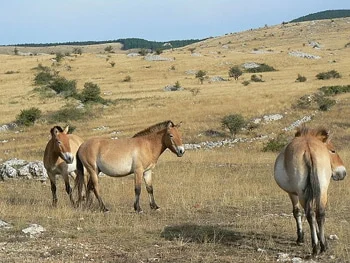
Dr. Hampson’s work, particularly with a herd of Przewalski’s horses residing on Europe’s largest steppe area in Hungary, offers a rare window into the natural behavior of a species that has never been brought under the yoke of human domestication. By monitoring heart rates, body temperatures, movement patterns, and dietary habits, Hampson’s team is uncovering how these resilient animals survive extreme environments, providing data that could redefine how we care for their domesticated cousins.

The Deep History of Horse Domestication
To understand the uniqueness of Przewalski’s horse, one must look back over five millennia. Current archaeological and genetic evidence suggests that horses were first domesticated approximately 5,500 years ago. In these early stages, horses were not primarily utilized for transport or labor; instead, they were kept as livestock, providing a source of milk and meat for ancient pastoralist societies. It would be another 2,500 years before humans began to ride horses regularly, an innovation that fundamentally altered human migration, warfare, and trade.
However, the path of domestication led to a divergence in the equine lineage. While the ancestors of modern domestic horses were being selectively bred for temperament, strength, and speed, the Przewalski’s horse remained in the harsh, arid grasslands of Central Asia, untouched by selective breeding. This isolation preserved a genetic blueprint that is distinct from every other horse on the planet.
Despite this long history, the survival of the equine species is more fragile than many realize. According to data cited by Dr. Hampson, at least 87 horse breeds have already slipped into extinction. Today, approximately 900 breeds remain, but 25% of them—roughly 225 breeds—are currently classified as endangered. This leaves only 675 breeds with stable enough populations to be considered secure. The loss of these breeds represents a significant reduction in the genetic diversity of the species, making the preservation of the Przewalski’s horse even more critical.

The Near-Extinction and Recovery of the Takhi
The Przewalski’s horse, known in its native Mongolia as the "Takhi," faced its own brush with total extinction in the mid-20th century. By the 1960s, the species was declared extinct in the wild, the victim of habitat loss, hunting, and competition with livestock for water and grazing land. The survival of the entire species eventually rested on just a handful of individuals living in European zoos.
In the 1970s, a rigorous and scientifically managed captive breeding program was initiated using just 16 horses. This narrow genetic bottleneck presented a significant challenge, but through careful management and international cooperation, the population began to recover. Today, the global population has rebounded to approximately 2,000 individuals. Many of these horses have been reintroduced to protected areas in Mongolia, China, and Hungary, where they are once again living in self-sustaining wild herds.
The Rare Breeds Survival Trust (RBST) provides a framework for understanding these population numbers. For a breed to be removed from the "endangered" list, it typically requires a minimum of 300 to 500 registered breeding females. In the context of the RBST Watchlist, the current population of 2,000 Przewalski’s horses places them in the "Minority" category, as their numbers sit between the 1,500 and 3,000 threshold. While they are no longer on the immediate brink of vanishing, they remain a high priority for conservationists.

Biological Marvels: Torpor and Winter Survival
One of the most striking findings from Dr. Hampson’s research in Hungary involves the metabolic flexibility of Przewalski’s horse. Unlike domestic horses, which generally maintain a consistent metabolic rate if food is available, Przewalski’s horses have evolved a survival mechanism known as torpor to endure the brutal winters of the steppe.
During the winter months, the horses enter a state of reduced physiological activity. Dr. Hampson’s team recorded that the horses’ heart rates drop by as much as 50%, and their internal body temperature can decrease by up to six degrees Fahrenheit. Furthermore, these horses experience a dramatic reduction in body mass, often losing 20% of their total weight over the winter season.
For an adult Przewalski’s horse, which typically weighs between 200 and 300 kilograms (440 to 660 pounds), this weight loss is substantial. A 200-kilogram horse may lose 40 kilograms (88 pounds) during the winter, while a larger 300-kilogram stallion might see his weight drop to just 240 kilograms (528 pounds) by the time spring arrives. This "biological slowdown" allows the animals to survive on a fraction of the calories they would require in the summer, effectively conserving energy when forage is scarce and temperatures are life-threatening.

Nutrition and Foraging Dynamics
The metabolic shift observed by researchers is closely tied to the horses’ dietary habits. In the lush summer months, a Przewalski’s horse spends the majority of its day foraging, consuming between 12 and 15 pounds (5.4 to 6.8 kilograms) of grass daily. Over the course of a single summer week, a horse might consume upwards of 84 to 105 pounds of vegetation.
However, Dr. Hampson’s data reveals that in the winter, the horses stand still for long periods to conserve heat and energy, reducing their food intake to only one-third of their summer diet. A horse that consumes 12 pounds of grass per day in July may subsist on just 4 pounds per day in January, totaling only 28 pounds for the week. This extreme seasonal fluctuation is a testament to the species’ hardiness and stands in stark contrast to the dietary management of domestic horses, which are often fed a consistent, high-calorie diet year-round.
The resting heart rate of these horses also reflects this seasonal duality. While a normal resting heart rate for a domestic adult horse is between 32 and 44 beats per minute (bpm), a Przewalski’s mare with a September heart rate of 38 bpm might see her pulse drop to a mere 19 bpm in the depths of winter. Conversely, a stallion observed with a winter heart rate of 21 bpm would likely see that figure double to 42 bpm during the active summer breeding season.

Movement Requirements and the Impact of Captivity
Beyond metabolism, the study of wild horses provides vital data on the spatial needs of the equine species. In their natural habitat, Przewalski’s horses are constantly on the move, traveling between 5 and 10 kilometers (3.1 to 6.2 miles) every day to find water and optimal grazing. This movement is essential for their cardiovascular health and the natural wear of their hooves.
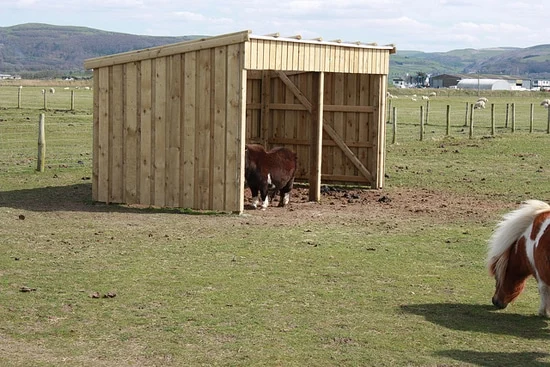
This research poses challenging questions for the management of domestic horses. Many domestic horses are kept in small paddocks or stalls, which severely limit their natural impulse to move. Dr. Hampson’s findings suggest that for a domestic horse to achieve the same level of natural movement as a wild horse, it requires a minimum area of approximately 4 hectares.
To put this into perspective, a hectare is a measure of area equal to 10,000 square meters or approximately 2.47 acres. Therefore, 4 hectares is equivalent to 9.88 acres or 40,000 square meters. For those more familiar with sports metrics, a professional regulation-sized soccer field is roughly 2.69 acres. To provide a horse with the 4 hectares of space necessary for natural movement, one would need the equivalent of approximately 3.67 soccer fields. This data highlights a significant gap between the biological needs of horses and the reality of modern equine boarding, where many animals are confined to much smaller spaces.

The Unsolved Mystery of the Untamed
Perhaps the most intriguing aspect of the Przewalski’s horse is not what they do, but what they have refused to do: integrate with human society. Despite living in proximity to nomadic cultures for thousands of years, the Przewalski’s horse was never domesticated. While the ancestors of our modern horses were being tamed, the Takhi remained wild, aggressive, and fiercely independent.
Biologists and historians continue to debate why this specific species remained untamable. Some suggest that their social structure is more rigid than that of the horses that were domesticated, or that their flight-or-fight response is more finely tuned to the predators of the Asian steppe. Others point to their genetic makeup—Przewalski’s horses possess 66 chromosomes, while domestic horses have 64, a difference that, while allowing for interbreeding, marks a significant evolutionary divide.
The work of Dr. Brian Hampson and the Australian Brumby Research Unit continues to bridge the gap between our understanding of wild and domestic horses. By studying the Przewalski’s horse, we are not just looking at a relic of the past, but a biological blueprint for the future of equine welfare. As we move forward, the data gleaned from these "last true wild horses" serves as a reminder that even after 5,500 years of partnership with humans, the horse remains a creature of the wide-open spaces, defined by a need for movement, a resilience to the elements, and an enduring spirit of independence.