The question of whether horses require a field shelter during the summer months has long been a subject of debate among equestrians, ranging from those who believe horses are hardy enough to withstand any weather to those who advocate for constant access to man-made protection. While many welfare guidelines focus heavily on the necessity of shelter during the harsh winter months to protect against freezing temperatures and snow, the requirements for horses kept on summer pasture are often less clearly defined. To address this gap in scientific literature and provide evidence-based recommendations for horse owners, a team of four researchers from the Swedish University of Agricultural Sciences in Uppsala conducted a rigorous study into the behavior and preferences of horses regarding various shelter designs.
The research team, comprised of Kristina Dahlborn, Elke Hartmann, Richard Hopkins, and Claudia von Brömssen, recognized that the importance of shade, windbreaks, and protection from insects is frequently overlooked in summer welfare protocols. Their objective was to determine not only if horses utilize shelters during the warmer months but also which specific features of a shelter—such as a roof or side walls—are most valued from the horse’s perspective. By observing how horses interacted with different structures, the researchers aimed to establish a foundation for science-based guidelines that could be disseminated to horse owners and barn managers worldwide.
Experimental Framework and Shelter Design
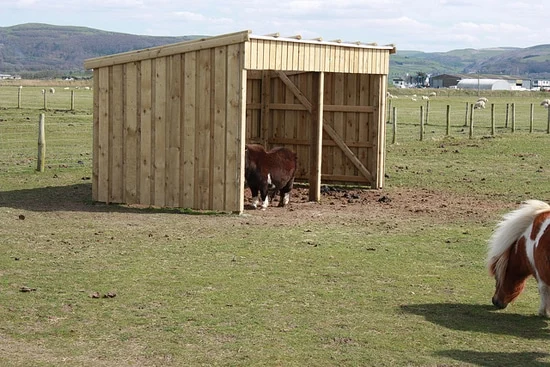
To isolate the variables that attract horses to shelters, the researchers designed a controlled experiment involving three distinct types of structures, each measuring 13 feet by 13 feet (approximately 4 meters by 4 meters). This square configuration provided an area of 169 square feet (16 square meters) per shelter, offering ample room for a single horse to stand or lie down comfortably.

The three designs were categorized as follows:
- Shelter A: A comprehensive structure featuring a solid roof and three enclosed sides, providing maximum protection from both overhead sun/rain and lateral wind.
- Shelter B: A structure with a solid roof, but with a modified rear wall where only the upper half was closed. This design tested whether horses preferred increased ventilation or visibility while still maintaining overhead protection.
- Shelter C: A structure that offered three enclosed walls but lacked a roof entirely. This was a critical component of the study, designed to determine if the roof itself—and the shade or rain protection it provides—was a primary factor in the horse’s decision to enter a shelter.
The study utilized eight warmblood horses. In the context of equine science, "warmblood" refers to a group of middle-weight horse breeds, primarily of European origin, that are bred for equestrian sports such as dressage and show jumping. These horses are distinguished from "cold bloods" (heavy draft horses) and "hot bloods" (refined breeds like the Arabian or Thoroughbred). Warmbloods are often considered a baseline for modern sport horses, making them ideal subjects for a study focused on general welfare.
Methodology and Chronology of the Study
The experiment was conducted over a series of 24-hour testing periods. Each of the eight horses was tested individually for a total of 48 hours across two days. To ensure the results were based on preference rather than novelty, all horses were given a period of familiarization with the test paddocks and the shelter structures before the official data collection began.
The horses were placed in turnout paddocks where no natural shade, such as trees or hedges, was available. They were given access to two shelters at a time to test their preferences: either a choice between Shelter A and Shelter B, or a choice between Shelter A and Shelter C.

Data collection was intensive and continuous. Researchers utilized "scan sampling," a method where the behavior of the animal is recorded at fixed intervals. In this study, samples were taken every five minutes throughout the daytime hours. Based on a 60-minute hour, this resulted in 12 observations per hour. Over a standard 14-hour daytime period, the researchers recorded 168 individual scans for each horse, providing a robust dataset for statistical analysis. In addition to tracking the horses’ locations, the team meticulously noted insect defensive behaviors, such as tail swishing, skin twitching, and head tossing.
Key Observations and Statistical Findings
The results of the study provided clear evidence that horses actively seek out shelters during the summer, even when temperatures are not extreme. Seven of the eight horses involved in the study utilized the shelters frequently. On average, the horses were observed inside a shelter during 35.4% of the daytime observations. Conversely, they spent approximately 64.6% of their time in the open paddock, suggesting that while the shelter is a vital resource, it does not impede the horse’s natural desire to graze or move in the open.
One of the most significant findings involved the horses’ preference for overhead protection. When presented with a choice between Shelter A (roofed) and Shelter C (no roof), the roofless shelter was almost entirely ignored. This strongly indicates that the roof is the most critical component of a field shelter from the horse’s perspective, likely due to its role in providing shade and a barrier against precipitation.
Interestingly, the researchers found that shelter use was not limited to the daylight hours. There was no statistically significant difference in the duration of shelter use between day and night. For the roofed structures (Shelters A and B), horses spent an average of 100.8 minutes inside during the day and 105.8 minutes during the night. The five-minute difference between nocturnal and diurnal use suggests that the motivation for seeking shelter changes as the sun sets. While daytime use is likely driven by a need for shade and insect relief, nighttime use suggests a search for security or a comfortable place to rest.

The Impact of Insects and the Security Hypothesis
The study highlighted a direct correlation between shelter use and a reduction in stress-related behaviors caused by insects. The probability of a horse performing insect defensive behaviors—such as the constant swishing of the tail to ward off flies—was significantly lower when the horses were inside Shelter A compared to when they were in the open paddock.
Insects, including horseflies, stable flies, and gnats, are more than just a nuisance; they can cause significant energy loss through constant movement and can even lead to skin infections or the transmission of equine diseases. The researchers noted that under free-ranging conditions, horses often seek out "refuges" during peak insect activity, such as high-wind areas or ridges. In a confined pasture setting, a three-sided shelter with a roof serves as a man-made version of these natural refuges, breaking the wind in a way that discourages flying insects from congregating around the horse.
Furthermore, the researchers proposed a "security hypothesis" to explain the high rate of nighttime shelter use. Observations during the colder seasons have shown that horses almost exclusively choose to lie down inside shelters rather than in the open. Lying down is the only way a horse can achieve REM sleep, a state in which they are most vulnerable to perceived threats. The researchers believe that the enclosed walls of a shelter provide a sense of psychological safety, allowing the horse to rest more deeply. This suggests that shelters contribute to equine welfare not just physically, but also mentally.
Broader Implications for Equine Welfare and Management
The findings from the Swedish University of Agricultural Sciences have significant implications for how horse owners and regulatory bodies view summer pasture management. Traditionally, many owners have assumed that if a horse has grass and water, its basic needs are met during the summer. However, this research demonstrates that access to a roofed, partially enclosed structure is a priority for the animal’s comfort and health.

From a management perspective, the study suggests that:
- Roofs are Non-Negotiable: A windbreak or a walled enclosure without a roof does not meet the horse’s needs for summer protection.
- Nighttime Access is Essential: Shelters should not be locked or restricted at night, as horses use them just as much for rest and security as they do for daytime shade.
- Insect Mitigation: Providing a shelter is an effective, non-chemical way to reduce the stress and physical toll of biting insects.
The researchers emphasized that while this study focused on individual horses, future research should investigate how horses in group settings utilize shelters. In a herd environment, social hierarchies can play a major role in who is allowed access to a structure. If a shelter is too small, a dominant horse may "block" the entrance, preventing subordinate horses from seeking relief from the sun or insects. This suggests that for group turnout, multiple shelters or much larger structures may be necessary to ensure all animals benefit.
Conclusion: A New Perspective for Equine Scientists
The study conducted by Dahlborn, Hartmann, Hopkins, and von Brömssen serves as a call to action for horse owners to observe their animals more closely. By understanding the "why" behind shelter use—whether it is for shade, insect relief, or security—caretakers can make more informed decisions about barn design and pasture management.
As the global climate continues to shift, bringing more intense summer heatwaves and changing patterns of insect activity, the provision of adequate shelter will become an increasingly critical component of equine welfare. The work of the Uppsala researchers provides the empirical evidence needed to move the conversation from anecdotal preference to scientific necessity. For the "budding equine scientist," observing a horse’s choice to stand in the shade or seek the security of a three-sided stall is no longer just a casual observation; it is an insight into the complex physiological and psychological needs of the species. Through continued research and the application of these findings, the equestrian community can ensure that horses on summer pasture are not just surviving, but thriving.