The horse has remained a central figure in human civilization for millennia, serving as a catalyst for exploration, a cornerstone of ancient warfare, and a focal point of modern sporting achievement. While many enthusiasts are familiar with the speed records of Thoroughbreds or the jumping heights of Warmbloods, the Guinness Book of World Records chronicles more expansive milestones that highlight the sheer scale of human interaction with horses. Among the most remarkable of these entries are the record for the largest horse race ever staged and the discovery of the world’s oldest and largest ancient stables. These records, separated by thousands of years and miles, illustrate the enduring bond between humans and horses, as well as the logistical sophistication required to manage equine populations on a massive scale.
The Mongolian Milestone: A Race of Unprecedented Proportions
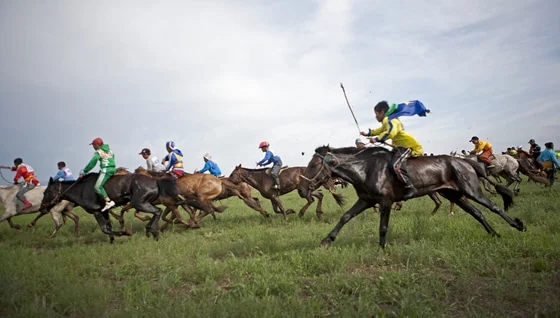
On August 10, 2013, the Federation of Mongolian Horse Racing Sport and Trainers orchestrated an event that would redefine the boundaries of competitive racing. Set against the vast, rolling landscapes of Ulaanbaatar, Mongolia, the event sought to capture a world record for the most runners in a single horse race. While prestigious Western races like the Kentucky Derby limit their field to 20 horses for safety and logistical reasons, and Europe’s most valuable jump race, the Grand National, accommodates a maximum of 40, the Mongolian event shattered these figures with a staggering 4,249 horses completing the course.
The race was not merely a demonstration of quantity but a testament to the cultural heritage of Mongolia, where horse racing is one of the "Three Games of Men" during the traditional Naadam festival. To ensure the integrity of the record, the Guinness World Records guidelines mandated that only horses crossing the finish line would be counted toward the final tally. Official records indicate that 4,279 horses originally started the race, meaning 30 participants did not finish. This represents a remarkably low attrition rate for such a massive field, suggesting a high level of preparation among the trainers and riders.

Logistics and Demographics of the Record-Breaking Event
The logistics of managing over 4,000 horses across an 18-kilometer (11.18-mile) course required extraordinary coordination. Unlike the short, explosive sprints seen in American flat racing, this distance tested the endurance and stamina of the Mongolian horses, a breed known for its hardiness and ability to thrive in extreme climates.
The diversity of the participants was equally noteworthy. The age of the riders spanned 72 years, with the youngest competitor being just 7 years old and the oldest being 79. This demographic spread highlights the intergenerational nature of Mongolian horsemanship, where skills are passed down from early childhood and maintained well into seniority. In Mongolian tradition, the skill of the horse is often prioritized over the weight of the rider, which explains the inclusion of young children in such a grueling endurance event.
Precision in Timing and Performance
The competition at the front of the pack was fierce, with timing recorded to the hundredth of a second. The winning horse crossed the line with a time of 24 minutes and 30.42 seconds. The intensity of the finish was underscored by the narrow margin of victory; the second-place horse finished just four-hundredths of a second later, at 24 minutes and 30.46 seconds.
The gap between the top finishers began to widen as the race progressed. The fourth-place finisher clocked in at 24 minutes and 31.23 seconds, while the fifth-place horse arrived at 25 minutes and 02.36 seconds, a difference of 31.13 seconds. These variations in time over an 18-kilometer stretch demonstrate the varying levels of pacing and stamina among the elite tier of the 4,249 finishers.

The Foundations of Equine History: The Stables of Ramses II
While Mongolia holds the record for modern racing participation, the record for the world’s oldest and most significant equine infrastructure belongs to Ancient Egypt. In 1999, archaeologists working in the Nile Delta discovered the remains of massive stables in the ancient city of Piramesse. These stables were commissioned by Pharaoh Ramses II, also known as Ramses the Great, who reigned from approximately 1304 to 1237 BC.
Ramses II is widely regarded as the most powerful pharaoh of the New Kingdom. His reign was defined by ambitious building projects and military campaigns, most notably the Battle of Kadesh against the Hittites. Central to his military dominance was the Egyptian chariot corps, which necessitated a sophisticated system for breeding, training, and housing thousands of horses.
Architectural Sophistication and Scale
The stables at Piramesse represent a pinnacle of ancient engineering. Covering an estimated area of 17,000 square meters (approximately 182,986 square feet), the facility was designed to house 460 horses at any given time. This was not merely a shelter but a highly functional industrial complex.
One of the most innovative features discovered by archaeologists was the use of slanted floors. The stalls were constructed at a precise angle to allow horse urine to drain away into a central collection system. This served two purposes: it maintained the hygiene and hoof health of the pharaoh’s prized war horses, and it allowed the waste to be collected and utilized as high-quality fertilizer for the surrounding agricultural lands.

In addition to the housing units, the complex featured a central courtyard for exercise and a dedicated horse-bathing pool. These amenities indicate that the Egyptians understood the importance of equine recovery and hygiene, ensuring that the horses remained in peak condition for the rigors of chariot warfare and hunting expeditions.
Historical Context: The Meaning of BC and Ancient Chronology
The record of Ramses II’s stables also serves as a point of interest regarding historical chronology. The dates of his life—1304 to 1237 BC—reflect the "Before Christ" era. In this chronological system, years count backward toward the year zero. Thus, the larger number (1304) represents the year of his birth, and the smaller number (1237) represents the year of his death. This system highlights the antiquity of the stables, which were already over 3,000 years old when they were unearthed in the late 20th century.
Comparative Analysis: Ancient vs. Modern Horse Management
Comparing the Mongolian record of 2013 with the stables of Ramses II reveals a fascinating evolution in how humans manage large groups of horses. In the 13th century BC, the focus was on centralized military readiness. The stables at Piramesse were a government-funded military installation, designed for the maintenance of a specialized elite force. The capacity of 460 horses was immense for the time, representing a significant portion of the pharaoh’s tactical power.
In contrast, the Mongolian record of 4,249 horses represents a decentralized, cultural celebration. These horses were not the property of a single ruler but were brought together from across a nation by individual trainers and families. While the Egyptian stables focused on the "area" of the facility (17,000 m²) to accommodate a standing force, the Mongolian record focuses on the "participation" and the ability of a modern federation to synchronize thousands of independent units into a single sporting event.

Broader Implications and Cultural Heritage
These records serve as more than just trivia; they are indicators of the cultural value placed on the horse across different eras and geographies. The Mongolian race of 2013 helped to solidify the country’s status as the "land of the horse" in the eyes of the international community. It promoted tourism and brought global attention to the traditional Mongolian horse, which remains genetically distinct from the Thoroughbreds that dominate Western racing.
For Egypt, the discovery of the Piramesse stables provided invaluable data on the logistics of the New Kingdom. It allowed historians to quantify the size of the chariot corps and understand the economic impact of maintaining such a force. The use of slanted floors for fertilizer production also speaks to the Egyptian’s mastery of integrated agriculture and animal husbandry, a level of sustainability that is often overlooked in studies of ancient civilizations.
Conclusion
The Guinness World Records for the most runners in a horse race and the oldest horse stables offer a comprehensive look at the scale of equine history. From the 4,249 horses that thundered across the Mongolian plains in 2013 to the 460 war horses that once stood in the meticulously engineered stalls of Ramses II, these milestones reflect a deep-seated human ambition to push the limits of what is possible with our equine companions. Whether for the glory of the finish line or the might of an empire, the horse continues to be a vessel for human achievement, recorded for posterity in the annals of world records and the ruins of ancient cities.