rifanmuazin
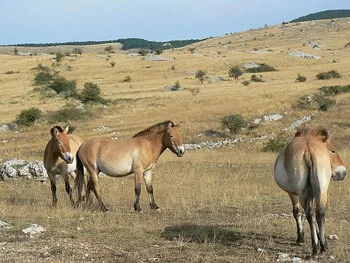
The global scientific community continues to focus its attention on the Przewalski’s horse, the world’s only remaining "true" wild horse, as researchers uncover new data regarding its unique physiological adaptations and survival strategies. Dr. Brian Hampson, co-founder of the Australian Brumby Research Unit, has emerged as a leading voice in this field, collaborating with international teams to study these equines in environments ranging from the Mongolian steppes to the expansive grasslands of Hungary. Unlike the mustangs of North America or the Brumbies of Australia, which are technically feral animals descended from domesticated ancestors, the Przewalski’s horse (Equus ferus przewalskii) represents a lineage that has never been brought under human subjugation. This distinction is not merely semantic; it carries profound implications for genetics, conservation biology, and our understanding of equine evolution.
The Scientific Distinction Between Wild and Feral
In the realm of equine science, the terms "wild" and "feral" are often used interchangeably by the public, yet they describe two vastly different biological states. A feral animal is one that has escaped from domestication and returned to a wild state. Mustelids, various island pig populations, and the famous Mustangs of the American West fall into this category. These animals carry the genetic markers of selective breeding—traits chosen by humans for docility, speed, or strength.

Conversely, a true wild horse is one whose ancestry has never been influenced by human selective breeding. The Przewalski’s horse is the sole survivor of this category. While archaeological evidence suggests that horses were first domesticated approximately 5,500 years ago—initially for meat and milk, and later for transport and riding around 3,000 years ago—the Przewalski’s lineage remained distinct. Genomic studies have revealed that Przewalski’s horses possess 66 chromosomes, compared to the 64 found in domestic horses, highlighting a deep evolutionary divergence that occurred long before the dawn of civilization.
A History of Near-Extinction and Recovery
The journey of the Przewalski’s horse through the 20th century is a harrowing tale of conservation at the brink. By the 1960s, the species was declared extinct in the wild, with the last sightings occurring in the Gobi Desert of Mongolia. The population had been decimated by habitat loss, competition with livestock, and hunting. The survival of the entire species eventually rested on just a few dozen individuals held in European zoos.
A pivotal turning point occurred in the 1970s when a concerted international effort was launched to save the species. A core group of 16 captive horses became the founders of the modern population. Through meticulous genetic management and breeding programs designed to maximize diversity and minimize inbreeding depression, the population began to stabilize. By the 1990s, reintroduction efforts commenced in Mongolia, and later, semi-wild herds were established in other regions, including the Hortobágy National Park in Hungary. Today, the global population is estimated to be near 2,000 individuals, a remarkable recovery from a founder group of fewer than 20.

Physiological Marvels: The Winter Torpor
Recent research conducted by Dr. Hampson and his colleagues in Hungary has provided groundbreaking insights into how these horses survive extreme environmental fluctuations. By monitoring a herd living on Europe’s largest steppe area, the team collected comprehensive data on heart rates, body temperatures, movement patterns, and dietary habits.
The most striking discovery was the observation of a "torpor-like" state during the winter months. While horses are generally considered non-hibernating mammals, the Przewalski’s horse exhibits a significant metabolic depression to conserve energy when resources are scarce. During the winter, their resting heart rates can drop by as much as 50%. For an adult horse with a normal resting heart rate of 32 to 44 beats per minute (bpm), this means a drop to as low as 16 to 22 bpm.
This metabolic slowdown is accompanied by a reduction in core body temperature by up to 6 degrees Fahrenheit and a substantial loss in body mass. Researchers found that a Przewalski’s horse, which typically weighs between 200 and 300 kilograms (440 to 660 lbs), can lose up to 20% of its body weight over a single winter. For a 200 kg horse, this represents a 40 kg loss; for a 300 kg horse, the weight can drop by 60 kg, leaving the animal at 240 kg by the arrival of spring. This physiological flexibility allows the species to survive on a fraction of its summer diet, consuming only one-third of the 12 to 15 pounds of grass they typically forage daily during warmer months.

Conservation Status and the Rare Breeds Survival Trust
Despite the success of reintroduction programs, the Przewalski’s horse remains a conservation priority. The Rare Breeds Survival Trust (RBST) and other international bodies monitor equine populations closely, as the loss of genetic diversity in horses is a global concern. According to data cited by Dr. Hampson, at least 87 horse breeds have already gone extinct, and of the approximately 900 remaining breeds worldwide, 25% are currently classified as endangered.
The RBST defines a breed as "endangered" when the number of registered breeding females falls between 300 and 500. While the Przewalski’s horse has surpassed these specific numbers, it is often categorized in "Minority" or "At Risk" brackets because its genetic bottleneck—descending from only 16 ancestors—makes it vulnerable to disease and environmental shifts. Out of the 900 extant horse breeds, roughly 675 are considered stable, while the remaining 225 face varying degrees of threat. The Przewalski’s horse serves as a flagship species for these conservation efforts, illustrating the intensive resources required to pull a breed back from the "Extinct in the Wild" status.
Spatial Requirements and Movement Ecology
A critical component of Dr. Hampson’s research involves the "movement ecology" of horses. In the wild, Przewalski’s horses are highly active, covering between 5 and 10 kilometers (3.1 to 6.2 miles) per day as they forage and navigate their social hierarchies. This movement is essential for their hoof health, digestive efficiency, and psychological well-being.

One of the most significant findings for domestic horse owners is the disparity between wild movement and typical paddock confinement. Dr. Hampson’s data suggests that for a domesticated horse to achieve a level of movement comparable to its wild counterparts, it requires a minimum area of approximately 4 hectares (ha).
To put this into perspective, one hectare is equivalent to 10,000 square meters or approximately 2.47 acres. Therefore, a 4-hectare enclosure encompasses 40,000 square meters or 9.88 acres. Given that a professional regulation-sized soccer field is roughly 2.69 acres, a horse would need an area equivalent to nearly 3.67 soccer fields to mimic the natural roaming behavior of a wild Przewalski’s horse. This data challenges the traditional "stall and small paddock" model of horse keeping, suggesting that many domestic equines suffer from a significant "movement deficit."
Implications for Modern Equine Management
The study of Przewalski’s horses offers more than just historical or biological trivia; it provides a blueprint for improving the welfare of all equines. By understanding the "basal" state of the horse—how they eat, move, and regulate their metabolism without human interference—veterinarians and owners can better address common issues such as obesity, laminitis, and behavioral vices.

The discovery of winter metabolic depression, for instance, suggests that the modern practice of "over-blanketing" and "over-feeding" horses in the winter may interfere with natural biological rhythms. While domestic horses have been bred for different traits, their underlying physiology remains remarkably similar to that of the Przewalski’s. Allowing for some natural weight fluctuation and encouraging movement over large areas are practices that stem directly from observing wild populations.
Future Outlook and Ethical Considerations
As we look to the future, the Przewalski’s horse remains a symbol of both human negligence and human ingenuity. The fact that the species was nearly lost due to hunting and habitat destruction is a sobering reminder of the impact of industrialization. Conversely, the fact that science and international cooperation have brought them back to the steppes of Mongolia is a testament to what conservation can achieve.
The question remains: why was the Przewalski’s horse never domesticated? Some researchers suggest their temperament is more aggressive and less socialized toward humans than the ancestors of our modern horses. Others point to the harshness of their environment, which favored survival traits that were incompatible with the docility required for human use. Whatever the reason, their "wildness" is their most precious attribute.

As genetic technologies advance, there are ongoing discussions about using cloning or advanced genomic editing to further diversify the Przewalski’s population. However, the core of their survival will always depend on the preservation of vast, open landscapes. Protecting the Przewalski’s horse is not just about saving a single species; it is about preserving the last vestige of the prehistoric world and ensuring that the science of equine conservation continues to gallop forward, informed by the resilient spirit of the only true wild horse left on Earth.