The Pryor Mountain Wild Horse Range, a rugged expanse of approximately 16,000 hectares straddling the border of Montana and Wyoming, serves as a critical laboratory for the study of feral equids. Established in 1968, this territory holds the distinction of being the first protected refuge in the United States specifically dedicated to the preservation of mustangs. Field research within this range is not merely an observational hobby but a rigorous scientific necessity. Monitoring the numbers, migratory activities, and social behaviors of these horses is essential for maintaining the ecological balance of the high-desert environment and ensuring the genetic viability of a population with deep historical roots.
Historical Context and the Legacy of the Pryor Mountain Mustangs
The establishment of the Pryor Mountain Wild Horse Range was a landmark event in American conservation history. Before the passage of the Wild and Free-Roaming Horses and Burros Act of 1971, wild horses across the American West faced significant threats from overhunting and habitat encroachment. The 1968 designation of the Pryor Mountain tract provided a blueprint for federal protection. The horses found here are of particular interest to geneticists and historians alike; they are widely considered descendants of Colonial Spanish Horses, brought to the Americas by explorers in the 16th century. This lineage is visible in their distinct phenotypes, including primitive markings such as dorsal stripes and zebra-like leg barring.
The range itself encompasses a diverse topography, ranging from red desert bighorn sheep habitat to subalpine meadows reaching elevations of over 8,000 feet. This environmental variety requires horses to be highly adaptable, and research field studies are designed to track how these adaptations manifest in movement patterns across the 16,000-hectare (roughly 40,000-acre) landscape. To put the scale of this research area into perspective, 16,000 hectares equates to one hundred sixty million square meters, a vast territory that necessitates sophisticated tracking and identification protocols.

Population Demographics and Social Stratification
Effective management of the Pryor Mountain herd relies on an intimate understanding of its demographics—the quantifiable characteristics of the population, including age, sex, and coat color. While the population has reached as many as 200 individuals in peak years, it is generally managed to average closer to 150 horses to prevent overgrazing and habitat degradation.
The social structure of the Pryor Mountain horses is complex and highly organized. The population typically divides into 29 to 38 distinct bands. These "harem bands" usually consist of one dominant stallion, several mares, and their offspring, ranging in size from two to 11 individuals. Males that do not lead a harem, often referred to as "bachelors," form temporary bachelor bands or range independently until they are strong enough to challenge a lead stallion for his mares.
Researchers utilize specific terminology to categorize the herd during census counts:
- Foal: A horse of either sex under one year of age. This category is further divided into "sucklings" (nursing) and "weanlings" (recently separated from the mare’s milk).
- Yearling: An adolescent horse between one and two years of age.
- Colt: A male horse under the age of four.
- Filly: A female horse under the age of four.
- Mare: A female horse four years of age or older.
- Stallion: A mature male horse, four years or older, capable of reproduction.
In a recent census, the population exhibited a balanced sex ratio. Excluding foals, the count identified 64 females (comprising both mares and fillies) and 64 males (comprising stallions and colts), resulting in a 1:1 ratio. This balance is often a sign of a stable, healthy population in a protected environment.

Phenotypic Diversity and the Significance of Coat Color
One of the primary tasks for field researchers is the identification of individual horses through their "phenotype," or physical appearance. In the Pryor Mountains, coat color is more than an aesthetic trait; it is a marker of the herd’s unique genetic heritage. The range is famous for its high frequency of "dilute" colors and primitive markings.
The most common colors observed in recent data sets include:
- Dun and Grullo: These colors are characterized by the "Dun gene," which creates a washed-out body color and dark primitive markings. Grullo horses have a smoky, crane-colored coat, while Duns are typically tan or gold. In recent counts, 35 Grullos and 35 Duns were identified.
- Black and Bay: These are foundational horse colors. A recent survey accounted for 38 individuals in this category.
- Roan: A color pattern characterized by an even mixture of white and colored hairs. Researchers counted 23 roan horses.
- Chestnut and Sorrel: These reddish coats are the least common in the Pryor herd, with only 14 individuals identified in the most recent major census.
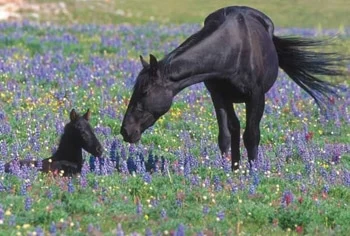
By tracking these colors alongside reproductive data—such as the 24 foals born in the latest counting cycle—researchers can monitor which stallions are successfully passing on their genes and how the herd’s appearance might shift over generations.
Methodology in Field Observations and Data Representation
The work of a wild horse researcher is a blend of rugged outdoor tracking and meticulous data analysis. Researchers spend weeks in the field, often in remote areas, using high-powered optics to identify horses from a distance to avoid disrupting their natural behavior. Each horse is named or numbered, and their "life history" is recorded in digital databases. Famous stallions like "Galaxy" become focal points of study; researchers monitor whether they have maintained their bands or lost mares to younger rivals, providing insights into the "social turnover" of the herd.

Once the field season concludes, the raw data is transformed into visual representations such as pictographs. These tools are essential for communicating findings to the Bureau of Land Management (BLM) and the public. For instance, a pictograph where each icon represents two horses allows for a quick assessment of the herd’s health. In a recent analysis of 152 total horses, such data visualization helped stakeholders quickly identify that the population was within the "Appropriate Management Level" (AML) required for environmental sustainability.
Management Challenges and Conservation Implications
The management of the Pryor Mountain Wild Horse Range is not without controversy. The BLM is tasked with the difficult balance of preserving the horses’ wild nature while preventing their numbers from exceeding the land’s "carrying capacity." If the population grows too large, the limited forage and water resources of the arid range can be depleted, leading to starvation for the horses and the destruction of habitat for other native species like bighorn sheep and mule deer.
To manage the population without the frequent use of "gathers" (removals), researchers and advocates have pioneered the use of Porcine Zona Pellucida (PZP), a form of reversible immunocontraception. By darting specific mares with PZP, researchers can slow the birth rate, allowing the horses to remain on the range longer while maintaining a stable population size. This "on-range" management strategy relies heavily on the demographic data collected during field studies; managers must know exactly which mares are of breeding age and which have already produced offspring to ensure genetic diversity is not lost.
Educational Initiatives and the Global Equid Context
The study of the Pryor Mountain horses is part of a larger global effort to understand equids—mammals of the horse family, including zebras and wild asses. Organizations such as Wild Equus provide educational programs that train students in ethology (the study of animal behavior). These programs offer hands-on experience in observational techniques, teaching the next generation of scientists how to interpret the subtle body language of a stallion defending his territory or a mare teaching her foal to navigate steep terrain.

The implications of this research extend beyond the Montana-Wyoming border. Lessons learned in the Pryor Mountains regarding population control, genetic preservation, and habitat management are shared with conservationists working with Przewalski’s horses in Mongolia or wild burros in the Southwest.
Conclusion: The Future of the Pryor Mountain Herd
As the first foal of the season is reported—this year as early as April 2—the cycle of life on the Pryor Mountain Wild Horse Range begins anew. The continued survival of this unique herd depends on the intersection of public policy, community advocacy, and rigorous scientific study. By accurately measuring the area of the range, documenting every chestnut and grullo, and calculating the ratio of stallions to mares, researchers provide the evidence needed to protect these animals.
The Pryor Mountain mustangs are more than a tourist attraction; they are a living link to history and a testament to the resilience of the natural world. As long as field researchers continue to climb the rugged ridges to count the bands and monitor the health of the foals, the legacy of the American mustang remains secure. The data gathered today ensures that future generations will still be able to witness the sight of a wild band moving across the high-altitude meadows of the Pryor Mountains, a symbol of untamed freedom preserved through the lens of science.