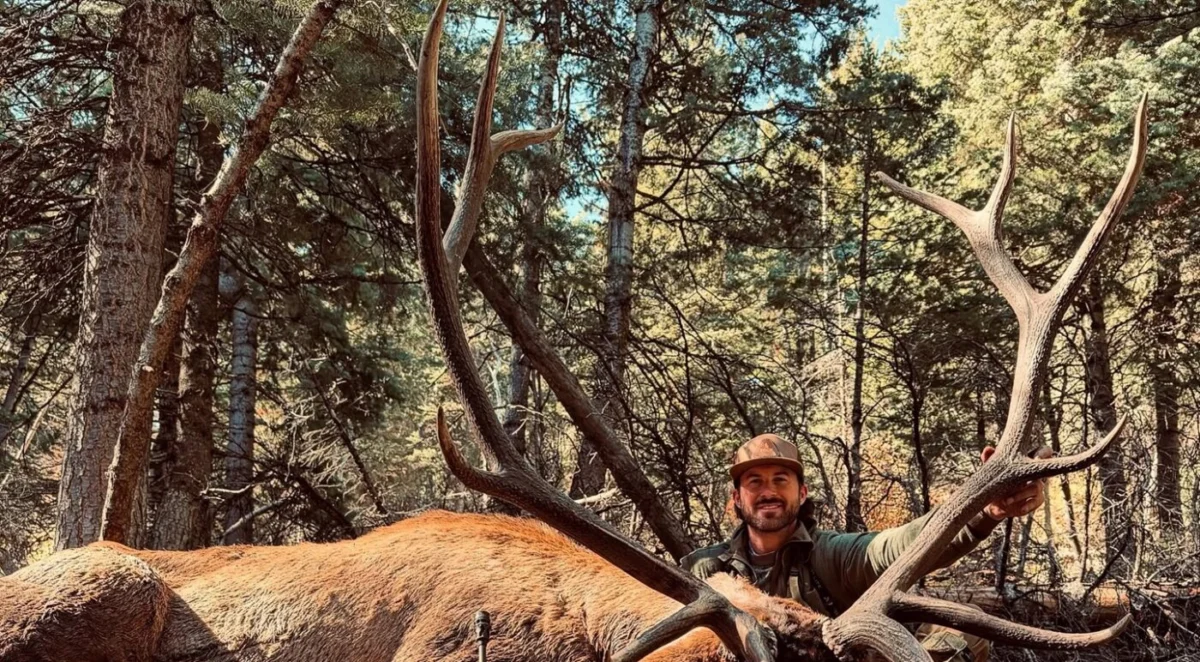
Country music artist and television personality Riley Green recently completed a successful big-game hunting expedition in the rugged wilderness of Utah, transitioning from his well-known "Duckman" persona to what fans are now calling "Elkman." Green, a prominent figure in the modern country music landscape and a newly appointed coach on the hit vocal competition series The Voice, documented the harvest of a substantial bull elk using a compound bow. The event has drawn significant attention not only for the size of the animal but also for the technical difficulty associated with archery hunting in high-altitude terrain and the broader implications for wildlife conservation funding within the United States.
Known for chart-topping hits such as "I Wish Grandpas Never Died" and "Worst Way," Green has long integrated his passion for the outdoors into his professional brand. This identity is perhaps most visible in his Nashville-based business venture, Riley Green’s Duck Blind, a bar and music venue that pays homage to his roots in waterfowl hunting. However, his recent venture into the mountains of the American West highlights a different facet of his outdoor expertise: the pursuit of North American elk (Cervus canadensis), a feat that requires immense physical stamina and precision.
The Technical Challenges of Archery Elk Hunting
The harvest of a bull elk with a compound bow is widely considered one of the most demanding achievements in the sporting world. Unlike rifle hunting, which allows for engagements at several hundred yards, archery requires the hunter to close the distance to within 40 to 60 yards—and often much closer—to ensure an ethical and effective shot. This necessity for proximity demands a mastery of stealth, scent management, and an intimate understanding of animal behavior.
Green’s success in Utah was not a product of chance but rather a culmination of days spent navigating mountainous terrain. The physical toll of "glassing" (using binoculars to spot animals from a distance) and then "stalking" through steep elevations can be grueling. For a high-profile artist with a demanding touring schedule, maintaining the fitness required for such an endeavor is a significant commitment. In social media dispatches following the hunt, Green emphasized the challenging nature of the trip, noting that "not many things challenge you like bow hunting elk."
The process does not end with the shot. Once an animal of that magnitude is downed—often weighing between 700 and 1,000 pounds—the "pack out" begins. This involves processing the animal in the field and carrying hundreds of pounds of meat out of the wilderness on foot. Green shared footage of this labor-intensive process, providing a transparent look at the "field to table" philosophy that many modern hunters embrace.
Utah’s Wildlife Management and the Conservation Model
The state of Utah serves as a premier destination for elk hunting due to rigorous management practices overseen by the Utah Division of Wildlife Resources (DWR). Currently, Utah boasts a robust elk population estimated to be between 82,000 and 84,000 animals. The state’s management plan aims to maintain a population of at least 80,000 to ensure ecological balance and the health of the species.
The economic and conservation impact of hunters like Green is substantial. Hunting in Utah is a highly regulated activity, with tags (permits) often distributed through a competitive lottery system or sold at premium prices for non-residents. These fees, combined with the federal excise taxes on firearms, ammunition, and archery equipment via the Pittman-Robertson Act, provide the primary funding for wildlife conservation in the United States.
Revenue generated from these licenses is directly reinvested into the "Beehive State’s" natural resources. This includes:
- Habitat Restoration: Improving sagebrush and forest ecosystems to support not just elk, but hundreds of non-game species.
- Public Land Access: Maintaining trails and protecting open spaces from over-development.
- Scientific Research: Funding biological studies to monitor herd health and migration patterns.
By participating in the regulated harvest of a bull elk, Green is contributing to a system where the "user-pay, public-benefit" model ensures that wildlife populations remain sustainable for future generations.
A Growing Trend Among Country Music Figures
Riley Green is part of a larger cohort of country music stars who utilize their platforms to promote the outdoor lifestyle. This trend reflects a deep-seated cultural connection between the country music genre and rural traditions. Other notable artists who frequently share their hunting and fishing exploits include Cody Johnson, Chase Rice, and Koe Wetzel.
Recently, fellow country superstar Luke Combs also traveled to Utah for an elk hunt. While Combs was successful in harvesting a bull, his experience provided a point of comparison for fans. Combs initially attempted the hunt with a bow but eventually switched to a rifle to complete the harvest. Green’s success with a compound bow has sparked friendly discourse among the fan bases of both artists, highlighting the added layer of difficulty Green overcame to secure his trophy.
This visibility is crucial for the hunting community, which often faces scrutiny from urban populations unfamiliar with the realities of wildlife management. When celebrities like Green demonstrate the ethical pursuit of wild game and the subsequent utilization of the meat, it serves to humanize and normalize the practice for a mainstream audience.
The "Field to Table" Aspect and Nutritional Value
A central theme of Green’s expedition was the replenishment of his personal food supply. In his post-hunt commentary, he succinctly stated, "Freezer is full." This highlights the "locavore" movement—a growing interest in consuming organic, free-range meat that has not been subjected to the industrial processing common in the commercial meat industry.
Elk meat is highly prized for its nutritional profile. It is significantly leaner than beef, containing less fat and cholesterol while offering high levels of protein, iron, and B vitamins. For an athlete or a touring musician who requires high-quality nutrition to sustain energy levels, wild-harvested elk is an ideal protein source. The versatility of the meat—ranging from steaks and roasts to ground meat for burgers and stews—ensures that the harvest will provide months of sustenance.
Public Reception and Cultural Impact
In an era where celebrity posts regarding hunting can often trigger "cancel culture" or intense backlash from animal rights groups, the reaction to Green’s hunt was notably positive. This can be attributed to the authenticity with which Green presents his lifestyle. He does not treat the hunt as a mere photo opportunity but rather as a grueling, respectful engagement with nature.
Fans, particularly those within the country music demographic, have praised Green for his "common man" appeal. Despite his fame and success on The Voice, his willingness to engage in the hard labor of a backcountry hunt resonates with a base that values self-reliance and traditional outdoor skills. The engagement on his social media platforms suggests that his audience views his hunting success as an extension of the values expressed in his songwriting.
Strategic Analysis of Brand Integration
From a brand management perspective, Green’s Utah hunt reinforces his position as a lifestyle influencer within the "outdoors-meets-entertainment" niche. As he prepares for his coaching role on The Voice, maintaining his "authentic Alabamian" roots is essential for his brand’s longevity.
The intersection of music and the outdoors provides a unique marketing vertical. Green is able to reach outdoor enthusiasts who may not typically follow country music, and conversely, he introduces his music fans to the concepts of conservation and ethical hunting. This cross-pollination is valuable for sponsors in the outdoor industry, ranging from archery manufacturers to camouflage apparel brands, who see Green as a credible ambassador for their products.
Conclusion and Future Implications
Riley Green’s successful bow hunt in Utah is more than a personal milestone; it is a high-profile endorsement of the North American Model of Wildlife Conservation. By successfully taking down a "monster" bull elk with a compound bow, Green has demonstrated a level of skill and perseverance that commands respect within the sporting community.
As Green returns to the recording studio and the television set, he does so with a literal and figurative "full freezer." The story of his Utah expedition will likely find its way into future lyrics, further cementing the bond between his life experiences and his art. For the state of Utah, the publicity generated by such a high-profile visitor underscores the value of its natural resources and the success of its wildlife management programs.
As the country music industry continues to evolve, figures like Riley Green serve as a bridge between traditional rural values and modern mainstream success. His recent achievement in the Utah mountains stands as a testament to the enduring appeal of the wilderness and the timeless challenge of the hunt.