 rifanmuazin
The Pryor Mountain Wild Horse Range stands as a cornerstone of North American equid conservation, representing the first protected refuge in the United States specifically dedicated to the preservation of mustangs. Spanning approximately 16,000 hectares—an area equivalent to 40,000 acres or one hundred sixty million square meters—the range straddles the rugged border between Montana and Wyoming. Established in 1968, this sanctuary serves as a living laboratory for biologists, ecologists, and field researchers who seek to understand the complex social structures, genetic lineages, and migratory patterns of horses living in a feral state. As wild horse populations continue to face environmental and political pressures, the scientific data gathered within this range provides a critical foundation for sustainable management and federal policy.
The necessity of wild horse research field studies cannot be overstated. Unlike domestic equines, these animals exist in a state described by scientists as feral—a term used to identify animals that live in an untamed state but are descendants of domesticated ancestors. To effectively manage these populations, researchers must conduct rigorous monitoring of their numbers, movements, and behaviors. This stewardship involves more than simple observation; it requires a deep dive into the demographics of the herd, which includes quantifiable characteristics such as age, sex, and color. By analyzing these variables, scientists can determine the health of the population, the success of breeding seasons, and the impact of the horses on the local ecosystem.
A Legacy of Conservation: The Establishment of the Pryor Mountains
The history of the Pryor Mountain Wild Horse Range is deeply intertwined with the evolution of American conservation law. Prior to its formal designation in 1968, the horses of the Pryor Mountains were often subject to unregulated management and competition with livestock. The push for a dedicated refuge was driven by public outcry and the recognition that these horses possessed a unique genetic heritage, often linked to the Spanish horses brought to the Americas in the 16th century. Following the establishment of the range, the passage of the Wild and Free-Roaming Horses and Burros Act of 1971 further solidified the federal government’s responsibility to protect these animals as "living symbols of the historic and pioneer spirit of the West."

Today, the Bureau of Land Management (BLM) oversees the 16,000-hectare expanse, ensuring that the population remains within the "Appropriate Management Level" (AML). While the population has historically reached as high as 200 individuals, the average count typically hovers around 150. This specific density is calculated based on the available forage and water sources in the high-desert environment, which is characterized by steep limestone ridges and alpine meadows. Maintaining this balance is essential to prevent overgrazing, which could jeopardize not only the horses but also other native wildlife, such as bighorn sheep and mule deer.
Field Methodologies: Tracking and Identification
Field research in the Pryor Mountains is a labor-intensive process that relies on both traditional observation and modern data visualization. Researchers and summer field assistants are tasked with identifying individual horses within their respective social units, known as bands. These bands are the primary social structure of the wild horse world, typically consisting of 2 to 11 horses. A standard band includes one or more dominant stallions, several mares, and their offspring. Younger males, or bachelors, often form temporary independent bands as they wait for the opportunity to challenge a lead stallion for his harem.
One of the most critical aspects of field identification is the cataloging of horse colors and markings. The Pryor Mountain herd is world-renowned for its high frequency of "primitive" coat colors, which are indicative of their Spanish ancestry. These include:
- Dun: A tan or gold coat with a dorsal stripe down the back and often "zebra stripes" on the legs.
- Grullo: A rare smoky or mouse-colored coat, technically a blue dun, which is highly sought after by equine enthusiasts.
- Roan: A coat color with white and colored hairs mixed together, creating a frosted appearance.
- Bay and Black: More common equine colors that also appear frequently within the herd.
In a recent census, researchers identified a diverse distribution of colors among 152 observed horses. The data showed 35 Grullo horses, 38 Black or Bay horses, 35 Dun horses, 23 Roans, and 14 individuals of other variations. The least common color recorded was Chestnut (or Sorrel). This level of detail allows researchers to track lineage and genetic diversity without the need for invasive testing in every instance.

Understanding Herd Demographics and Terminology
To communicate findings accurately, the scientific community uses a specific set of terms to describe the age and sex of the horses. Understanding these definitions is essential for interpreting the demographic health of the herd:
- Foal: A horse of either sex under one year of age. Those still nursing are "sucklings," while those recently separated from their mother’s milk are "weanlings."
- Yearling: A young horse between one and two years of age.
- Colt: A male horse under the age of four.
- Filly: A female horse under the age of four.
- Mare: A female horse four years of age or older.
- Stallion: A male horse four years of age or older, capable of breeding.
In the most recent comprehensive count, the demographics revealed a remarkably balanced population. Excluding the 24 foals born that year, the ratio of male horses (stallions and colts) to female horses (mares and fillies) was exactly 1:1, with 64 individuals in each category. This 50/50 split is often seen as a sign of a stable, healthy population in the wild, as it suggests that neither sex is being disproportionately affected by environmental stressors or predation.
The Annual Cycle: Foaling and Population Growth
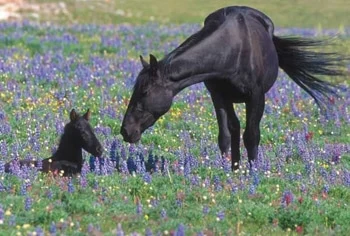
The arrival of spring marks the most critical time for researchers in the Pryor Mountains: the foaling season. The first foal of the season is traditionally a cause for celebration and a key data point for the year’s growth projections. For example, in a recent observation cycle, the first foal was reported on April 2. By the end of the counting period, 24 foals had been successfully added to the herd.
Monitoring the survival rate of these foals is a primary objective of summer field studies. Researchers must answer several key questions: Are the foals healthy? Are they all accounted for as the bands move across the 16,000-hectare range? Has the overall population increased or decreased compared to the previous year? These questions are not merely academic; they inform the BLM’s decisions regarding "gathers"—the controversial but sometimes necessary practice of removing horses from the range to prevent overpopulation.

Educational Outreach and Global Equid Research
The work performed in the Pryor Mountains is part of a larger global effort to study equids—mammals belonging to the horse family, including zebras and asses. Organizations such as Wild Equus play a pivotal role in this endeavor, offering educational programs and workshops that train the next generation of animal behaviorists. These programs provide students with hands-on experience in observational techniques and research methodologies, using the Pryor Mountain mustangs as a primary case study.
These educational initiatives help bridge the gap between scientific research and public understanding. By involving students and volunteers in data collection, these organizations foster a sense of stewardship and transparency. Participants learn how to create pictographs and other data visualizations to present their findings to the public, ensuring that the community remains informed about the status of the "Galaxy" band or the welfare of the newest yearlings.
Implications for the Future of Wild Horse Management
The data collected from the Pryor Mountain Wild Horse Range has far-reaching implications for wildlife management across the American West. As climate change alters water availability and forage growth, the intensive monitoring practiced in this range serves as a model for other wild horse territories. The use of demographic ratios, color identification for lineage tracking, and social band analysis allows for a non-intrusive yet highly accurate assessment of herd health.
Furthermore, the Pryor Mountain research highlights the importance of genetic preservation. Because these horses carry rare markers of Spanish colonial history, their survival is viewed by many as a matter of cultural and biological heritage. The ongoing field studies ensure that this heritage is not lost to the pressures of the modern world.

In conclusion, the Pryor Mountain Wild Horse Range is more than just a scenic vista on the Montana-Wyoming border; it is a vital center for scientific inquiry. Through the diligent work of researchers and the support of federal and non-profit organizations, the mustangs of the Pryors continue to roam their 160 million square meters of habitat, providing invaluable insights into the natural world. As we look toward the future, the continued integration of rigorous science and public education will be the key to ensuring that these "living symbols" remain a part of the American landscape for generations to come.