 rifanmuazin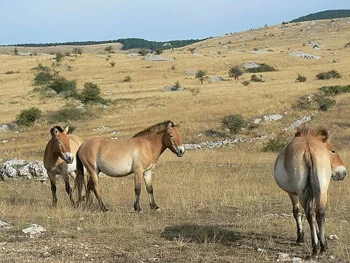
The global scientific community continues to focus its attention on the Przewalski’s horse, the world’s only remaining species of truly wild horse, as researchers uncover the sophisticated biological mechanisms that have allowed this ancient breed to survive the harsh climates of the Central Asian steppe. Dr. Brian Hampson, co-founder of the Australian Brumby Research Unit, has emerged as a leading figure in this field, spearheading a multi-national team dedicated to monitoring the health, movement, and survival strategies of these equines. Through his work, particularly with herds located in the expansive steppe regions of Europe, Hampson is providing critical data that could redefine our understanding of equine biology and the requirements for successful rewilding projects.
To understand the significance of the Przewalski’s horse, it is necessary to distinguish between "wild" and "feral" animals. In common parlance, North American Mustangs and Australian Brumbies are frequently referred to as wild. However, in scientific terms, these are feral populations—descendants of once-domesticated animals that escaped or were released and subsequently adapted to life in the wilderness. The Przewalski’s horse, known in its native Mongolia as the "Takhi," occupies a unique biological niche because its lineage has never been subjected to human domestication. While domestic horses (Equus ferus caballus) possess 64 chromosomes, the Przewalski’s horse (Equus ferus przewalskii) possesses 66, marking a significant genetic divergence that occurred tens of thousands of years ago.

A Legacy of Domestication and Extinction
The history of the human-equine relationship is deep and complex. Current archaeological evidence suggests that horses were first domesticated approximately 5,500 years ago, primarily by the Botai culture in what is now Kazakhstan. Initially, these animals were kept for their milk and meat rather than for transportation. It was not until roughly 3,000 years ago that humans began riding horses, a shift that fundamentally altered the course of human civilization, warfare, and trade.
However, the proliferation of domesticated horses has coincided with a precipitous decline in equine biodiversity. According to data cited by Dr. Hampson, at least 87 distinct horse breeds have already slipped into extinction. Today, approximately 900 breeds remain, but the future for many is precarious. Statistical analysis indicates that 25% of these remaining breeds—roughly 225 distinct types of horses—are currently classified as endangered. This leaves approximately 675 breeds that are not currently under immediate threat of extinction, though many of these remain on watchlists.
The criteria for these classifications are rigorous. Organizations such as the Rare Breeds Survival Trust (RBST) define an endangered horse breed as one with only 300 to 500 registered breeding females left in existence. When a population drops below these numbers, the genetic pool becomes dangerously shallow, leading to inbreeding depression and a lack of resilience against disease or environmental changes.

The Chronology of a Species on the Brink
The Przewalski’s horse serves as a hallmark case for conservation success, having narrowly escaped total extinction in the 20th century. By the 1960s, the species was declared extinct in the wild, with the last sighting of a wild Takhi occurring in the Gobi Desert in 1969. The survival of the species rested entirely on a small number of captive animals held in European and North American zoos.
In the 1970s, a concerted international breeding effort was launched, utilizing only 16 captive individuals. This genetic bottleneck presented a massive challenge, but through careful management and pedigree tracking, the population began to stabilize. By the 1990s, reintroduction programs were initiated in Mongolia, China, and later in Hungary. Today, the global population has rebounded to approximately 2,000 individuals worldwide. While this progress is substantial, the species remains classified in the "Minority" or "Endangered" categories on various watchlists, as a population of 2,000 is still considered vulnerable to localized catastrophes.
Biological Adaptations: The Hungary Study
To better understand how these horses manage their energy in extreme environments, Dr. Hampson and his team conducted an intensive study of a Przewalski herd residing in Hungary’s Hortobágy National Park. This site represents the largest semi-natural grassland in Europe, offering an environment that mimics the Mongolian steppe.

The researchers equipped the horses with monitoring devices to collect real-time data on heart rate, body temperature, movement, grazing habits, and location. The findings revealed a remarkable physiological state known as torpor. During the winter months, the Przewalski’s horse enters a state of decreased physiological activity to conserve energy when food is scarce and temperatures are sub-zero.
The data showed that during this period, the horses’ heart rates dropped by approximately 50%. For an adult horse with a normal resting heart rate of 38 beats per minute (bpm) in the late summer, the winter rate might plummet to a mere 19 bpm. Similarly, a stallion with a winter resting rate of 21 bpm would see that figure double back to 42 bpm as the spring thaw arrived and activity levels increased.
Furthermore, the study documented a significant drop in core body temperature—up to six degrees Fahrenheit—and a dramatic reduction in body mass. An adult Przewalski horse typically weighs between 200 and 300 kilograms (440 to 660 pounds). The research indicated that these horses lose roughly 20% of their body weight over the winter. A 200-kilogram horse would lose approximately 40 kilograms, while a larger 300-kilogram horse might end the winter weighing only 240 kilograms. This weight loss is not merely a sign of starvation but a programmed biological response to the environment.

Foraging and Movement Patterns
Dietary habits also shift dramatically with the seasons. In the summer, a Przewalski’s horse spends the majority of its day foraging, consuming between 12 and 15 pounds of grass daily. This equates to roughly 84 to 105 pounds of forage per week. However, in the winter, the horses become remarkably sedentary. Dr. Hampson’s team found that the horses would stand for long periods, eating only about one-third of their summer intake. A horse that consumed 84 pounds of grass weekly in July might consume only 28 pounds per week in January.
Movement patterns are equally telling. Wild horses typically travel between 5 and 10 kilometers (3.1 to 6.2 miles) per day to find food and water. For domesticated horses, replicating this level of natural movement requires significant space. Research suggests that a domesticated horse needs an area of at least 4 hectares (approximately 9.88 acres) to achieve movement levels comparable to their wild counterparts.
To put this in perspective, a regulation professional soccer field is approximately 2.69 acres. Therefore, a single horse requires the equivalent of nearly 3.67 soccer fields of open space to maintain its natural physical health and movement behaviors. This data has significant implications for how domestic horses are housed, suggesting that the small paddocks common in many modern equestrian facilities may be insufficient for optimal equine welfare.

Broader Impact and Conservation Implications
The study of the Przewalski’s horse offers more than just biological trivia; it provides a roadmap for the conservation of other endangered species. The ability of the Takhi to adapt its metabolism—lowering its heart rate and temperature—highlights the resilience of ancient lineages. It also raises the question of why the Przewalski’s horse was never domesticated while its cousin, the ancestors of the modern domestic horse, was.
Historians and biologists suggest that the Przewalski’s horse possesses a temperament that is fundamentally incompatible with human handling. Unlike domestic horses, which exhibit a "flight" response to threats, Przewalski’s horses are known for a fierce "fight" response. Their social structure is rigid, and their physical strength, combined with a stocky build and powerful jaw, made them difficult to tame for ancient nomadic tribes.
The ongoing research led by Dr. Hampson emphasizes the importance of preserving large, contiguous tracts of land. As the global climate shifts, the ability of these horses to enter torpor may be their greatest asset, but they still require the space to migrate and forage. The success of the Przewalski’s horse reintroduction serves as a beacon of hope, proving that with rigorous scientific monitoring and international cooperation, even a species on the very brink of the abyss can be brought back to its ancestral home.

As the population continues to grow toward the target of a self-sustaining wild population of 3,000 to 5,000 individuals, the lessons learned from their heart rates, their weight cycles, and their steps across the Hungarian steppe will remain vital. The Przewalski’s horse is not just a relic of the past; it is a living laboratory of survival, offering insights into the delicate balance between a species and its environment.