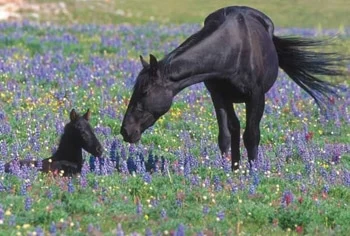
The global equine population is often perceived through the lens of domesticity, yet a sharp distinction exists between horses that have escaped human control and those that have never known it. While the iconic Mustangs of the American West and the Brumbies of Australia are frequently labeled as "wild," they are technically feral—descendants of domesticated animals that returned to the wilderness and adapted to their environments. In contrast, the Przewalski’s horse stands as the world’s only remaining true wild horse. Dr. Brian Hampson, co-founder of the Australian Brumby Research Unit, has joined an international cohort of scientists to study this unique species, focusing on its survival mechanisms, physiological adaptations, and the precarious state of equine biodiversity.
The Genetic Heritage of the Przewalski’s Horse
The history of the horse is inextricably linked to human civilization. Archeological evidence suggests that horses were first domesticated approximately 5,500 years ago, primarily by the Botai culture in what is now Kazakhstan. These early interactions were focused on subsistence, with horses providing milk and meat. It was not until roughly 3,000 years ago that humans began riding horses, a development that revolutionized transport, warfare, and agriculture.

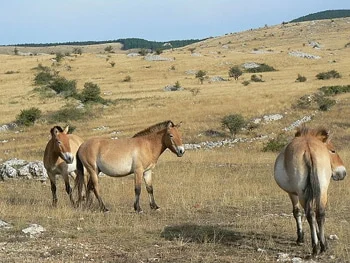
Despite this long-standing relationship, the Przewalski’s horse (Equus ferus przewalskii), native to the steppes of Central Asia, remained outside the reach of domestication. Genetic studies have revealed that Przewalski’s horses possess 66 chromosomes, whereas the domestic horse (Equus ferus caballus) possesses 64. While the two can interbreed to produce fertile offspring, the Przewalski’s horse remains a distinct evolutionary lineage. This refusal to be tamed has long intrigued biologists. Unlike their domestic counterparts, Przewalski’s horses are known for a stockier build, a "dun" coloring with a primitive dorsal stripe, and a short, upright mane.
A Species Reborn from the Brink
The mid-20th century was nearly the end for the Przewalski’s horse. By the 1960s, the species was declared extinct in the wild, a victim of habitat loss, competition with livestock, and harsh climatic events. The survival of the species depended entirely on a small number of individuals kept in European and North American zoos.
In the 1970s, a dedicated conservation effort began with a captive population of just 16 horses. Through meticulous genetic management and breeding programs, the population was slowly rebuilt. Today, the global population has reached approximately 2,000 individuals. Reintroduction programs have successfully established herds in their native Mongolia, as well as in China and Europe. One of the most significant research sites is located in Hungary, on the Puszta of Hortobágy National Park, which represents Europe’s largest semi-natural grassland. It is here that Dr. Hampson and his team have conducted extensive longitudinal studies on the herd’s behavior and biology.

Physiological Marvels: The Winter Torpor
Survival in the extreme temperatures of the Eurasian steppe requires extraordinary biological adaptations. Dr. Hampson’s research in Hungary utilized advanced biotelemetry to collect data on heart rates, body temperatures, movement, and grazing habits. The findings revealed a remarkable survival strategy: a state of physiological torpor.
Torpor is defined as a state of decreased physiological activity in an animal, usually by a reduced body temperature and metabolic rate. While common in some small mammals and birds, it is rarely observed in large ungulates. During the winter months, the Przewalski’s horse undergoes significant changes:
- Heart Rate Reduction: The resting heart rate of an adult horse typically ranges from 32 to 44 beats per minute (bpm). In winter, the heart rates of Przewalski’s horses drop by as much as 50%. For a mare with a late-summer heart rate of 38 bpm, her winter resting rate may fall to as low as 19 bpm.
- Thermal Regulation: The team observed body temperature drops of up to six degrees Fahrenheit.
- Metabolic Slowdown: To conserve energy when forage is scarce, the horses reduce their food intake to one-third of their summer diet. While a horse might consume 12 pounds of grass daily in the summer (totaling 84 pounds per week), this drops to roughly 4 pounds per day in the winter.
- Weight Management: Adult Przewalski’s horses weigh between 200 and 300 kilograms (440 to 660 pounds). Over a single winter, these animals may lose up to 20% of their body mass. A 200 kg horse can lose 40 kg, while a 300 kg stallion might end the winter weighing just 240 kg.
This ability to enter a low-energy state allows the Przewalski’s horse to endure sub-zero temperatures and limited nutrition that would likely prove fatal to many domestic breeds.

The Broader Crisis of Equine Biodiversity
The struggle of the Przewalski’s horse is a microcosm of a larger crisis facing equine biodiversity. According to Dr. Hampson, the world has already lost at least 87 distinct horse breeds to extinction. Of the approximately 900 remaining horse breeds, 25% are currently classified as endangered. This means that only 675 breeds are considered to have stable populations.
The Rare Breeds Survival Trust (RBST) provides a rigorous framework for these classifications. For a horse breed to be listed as "endangered," the number of registered breeding females must fall between 300 and 500. With a global population of 2,000, the Przewalski’s horse is currently categorized within the "Minority" watchlist bracket—an improvement from its previous "Critical" status, but still a position of vulnerability.
The loss of these breeds represents a significant reduction in the genetic toolkit of the species. Many rare breeds possess unique traits, such as resistance to specific diseases or the ability to thrive in niche environments, which could be vital for the future of the species in a changing global climate.

Movement and Spatial Requirements
One of the most critical aspects of the Hungarian study involved tracking the natural movement of the wild herd. The research found that Przewalski’s horses typically travel between 5 and 10 kilometers (3.1 to 6.2 miles) per day. This movement is not merely for exercise; it is a fundamental part of their foraging behavior and social structure.
This data highlights a stark contrast with the management of domestic horses. For a horse to achieve a "wild" level of movement through natural behavior, it requires a minimum area of approximately 4 hectares (9.88 acres). To put this into perspective, 4 hectares is equivalent to 40,000 square meters or roughly 3.67 professional, regulation-sized soccer fields.
Most domestic horses are housed in much smaller paddocks or stalls, which severely restricts their natural movement and can lead to various health issues, including hoof deformities and metabolic disorders. The research suggests that providing domestic horses with more space to roam could significantly improve their physical and psychological well-being.

The Question of Domestication
A lingering question in the scientific community is why the Przewalski’s horse was never domesticated. Throughout history, humans have successfully tamed a wide variety of animals, yet the Takhi (the Mongolian name for the breed) remained wild.
Several theories exist. Some researchers point to the horse’s aggressive temperament and strong "flight or fight" response, which may have made them unmanageable for early pastoralists. Others suggest that the specific geography of their habitat—vast, open steppes with little natural enclosure—made it difficult for humans to corral and control them before they could be bred for docility. Furthermore, the genetic difference (the two-chromosome discrepancy) may have played a role in their behavioral divergence from the ancestors of the domestic horse.
Implications and Future Outlook
The ongoing research into the Przewalski’s horse provides vital data for both conservationists and domestic horse owners. By understanding how the "original" horse survives in the wild, veterinarians and breeders can better tailor the care of domestic breeds to align with their biological heritage.

The recovery of the Przewalski’s horse is one of the great success stories of modern conservation biology, but it remains a work in progress. The species still faces threats from potential disease outbreaks within small, isolated populations and the ongoing threat of habitat degradation.
The work of Dr. Hampson and the Australian Brumby Research Unit emphasizes that protecting the Przewalski’s horse is about more than just saving a single species; it is about preserving the ancestral blueprint of all horses. As the global community continues to grapple with the loss of biodiversity, the Przewalski’s horse serves as a living reminder of the resilience of nature and the importance of scientific intervention in preventing the permanent loss of our planet’s unique inhabitants.