The question of whether horses require a field shelter during the summer months has long been a subject of debate among equestrians, ranging from recreational owners to professional stable managers. While the necessity of protection during harsh winter conditions is widely accepted, the importance of shade, windbreaks, and insect relief during the warmer seasons has historically been overlooked in many welfare guidelines. To address this gap in scientific literature, a dedicated team of researchers from the Swedish University of Agricultural Sciences (SLU) in Uppsala conducted an intensive study to determine the specific preferences and behavioral patterns of horses when provided with various types of shelter. The research team, comprised of Kristina Dahlborn, Elke Hartmann, Richard Hopkins, and Claudia von Brömssen, aimed to provide an empirical foundation for future equine welfare standards, ensuring that guidelines for summer pasture management are based on the actual needs and choices of the animals themselves.
Research Framework and Experimental Design
The study was centered on the premise that current welfare guidelines often fail to account for the complexities of equine behavior in a pasture environment. To isolate which features of a shelter are most attractive to horses, the researchers designed a controlled experiment involving three distinct structural configurations. Each structure was meticulously measured at 4 meters by 4 meters (approximately 13 feet by 13 feet), providing a total floor area of 16 square meters or 169 square feet per unit. The square geometry of these shelters was chosen to provide uniform space, allowing for easy movement and various standing positions for the subjects.
The three shelter types were categorized as follows:

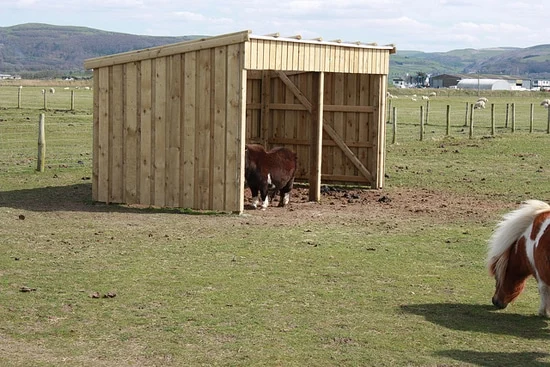
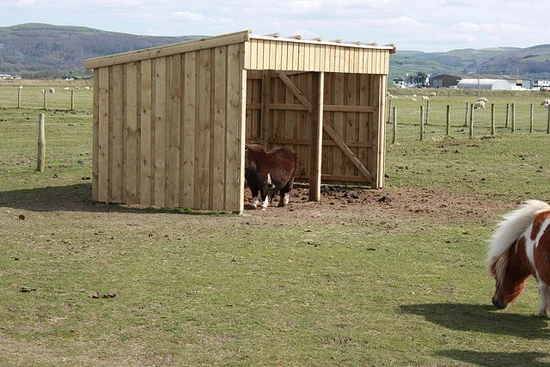
- Shelter A: A comprehensive structure featuring a full roof and three solid walls, providing maximum protection from overhead sun, precipitation, and lateral wind.
- Shelter B: A structure with a full roof, but with a modified rear wall where only the upper half was closed, allowing for increased ventilation while maintaining overhead coverage.
- Shelter C: A structure consisting of four walls but no roof. This specific design was crucial to the experiment, as it allowed researchers to determine if the presence of a roof—and the subsequent shade or overhead protection it provides—was a primary factor in a horse’s decision to seek shelter.
The methodology employed a group of eight warmblood horses. In the context of equine science, "warmbloods" represent a category of middle-weight breeds primarily of European origin. These horses are distinct from "cold bloods" (heavy draft breeds) and "hot bloods" (refined breeds like Thoroughbreds and Arabians). Warmbloods are often preferred for sport and research due to their balanced temperament and physical sensitivity, making them ideal candidates for a study on environmental comfort.
Chronology of the Observation Period
The experiment was conducted over a series of 24-hour cycles, ensuring that the researchers could capture data during both peak daylight hours and the overnight period. Each of the eight horses underwent testing for a total of two days, spending 48 hours in the specialized test paddocks. The horses were placed individually into turnout paddocks that offered a choice between two of the three shelter designs: either Shelter A and B, or Shelter A and C.
To ensure the validity of the data, a rigorous familiarization phase was implemented. Before the actual data collection began, all eight horses were given ample time to explore the paddocks and the shelters, ensuring that their subsequent choices were based on comfort and preference rather than curiosity or fear of a new object. It is also important to note that the test environment was controlled to ensure that no natural shade, such as trees or hedgerows, was available, forcing the horses to rely solely on the man-made structures for relief from the elements.
The monitoring process was exhaustive. Shelter usage was recorded continuously throughout the night and day. During the daylight hours, the researchers utilized a "scan sampling" technique. Every five minutes, the team recorded the horses’ locations and specific behaviors, particularly "insect defensive behaviors" such as tail swishing, skin twitching, and head tossing. This frequency meant that researchers collected 12 individual data points every hour. Over a projected 14-hour daylight period, this resulted in 168 scan samples per horse, per day, providing a robust dataset for statistical analysis.

Quantitative Findings and Statistical Analysis
The results of the study revealed a clear and statistically significant preference for specific shelter features. Of the eight horses involved, seven utilized the shelters frequently. On average, the horses were observed inside a shelter during 35.4% of the daytime observations. Conversely, the horses spent 64.6% of their daylight hours in the open pasture, indicating that while shelters are vital, horses still prioritize grazing and movement during the day.
However, the choice between shelter types was stark. When horses were given the option between Shelter A (three-sided with a roof) and Shelter B (partially open rear with a roof), they utilized both. In contrast, when the choice was between Shelter A and the roofless Shelter C, the horses almost entirely ignored the roofless option. This finding suggests that the roof is the most critical component of a field shelter from the horse’s perspective, likely due to its role in providing shade and protection from vertical precipitation.
Interestingly, the researchers found that the duration of shelter use did not fluctuate significantly between day and night. The data showed that horses spent an average of 105.8 minutes inside the roofed shelters during the night and 100.8 minutes during the day. This narrow 5-minute difference suggests that the motivation for seeking shelter extends beyond mere shade-seeking during the hottest parts of the day.
Behavioral Insights: Insect Relief and Security
The study provided significant insights into the "why" behind shelter use. One of the most compelling correlations found was the relationship between shelter use and insect harassment. The probability of a horse performing insect defensive behaviors—such as the constant swishing of the tail—was at its lowest when the horses were inside Shelter A.

In free-ranging environments, horses often seek out "refuges" to escape peak insect activity. These refuges are typically areas with higher wind velocity or lower vegetation density where insects are less prevalent. The researchers noted that a three-sided shelter with a roof effectively acts as a mechanical barrier against many biting flies and midges, which are often deterred by the darker, cooler, and more enclosed environment of a shed.
Beyond physical comfort, the researchers hypothesized that "security seeking" plays a major role in shelter use, particularly at night. The observation that horses frequently used shelters during the night—when neither sun nor high insect activity was a factor—points toward a psychological need for safety. During the colder seasons, previous studies have shown that horses often lie down to sleep almost exclusively inside shelters. This behavior supports the theory that the structures provide a sense of enclosure that mimics the safety of a herd or a cave, allowing the horse to enter deep sleep cycles with a reduced fear of predation.
Broader Implications for the Equine Industry
The findings from the Swedish University of Agricultural Sciences have substantial implications for horse owners, stable managers, and welfare legislators. The preference for roofed structures over roofless ones suggests that current "windbreaks" or "corrals" that lack overhead coverage may be insufficient for meeting a horse’s welfare needs during the summer.
Key takeaways for the industry include:

- Prioritizing Overhead Coverage: When constructing or purchasing field shelters, the inclusion of a solid roof is non-negotiable for maximizing animal comfort.
- Insect Management: For horses sensitive to "sweet itch" or other insect-borne skin conditions, providing a three-sided shelter can significantly reduce the animal’s stress levels and the physical energy expended on defensive behaviors.
- Nighttime Access: The data suggests that horses should have access to shelters 24/7, as their use of these structures during the night is just as frequent as during the day, likely for reasons related to security and rest quality.
- Individual vs. Group Dynamics: While this study focused on individual horses to isolate personal preferences, the researchers noted that future studies must examine how group hierarchies affect shelter access. In a herd setting, dominant horses may prevent subordinates from entering a shelter, potentially leaving the most vulnerable animals exposed.
Conclusion and Future Research Directions
The work of Kristina Dahlborn and her colleagues at SLU represents a vital step toward a more scientific approach to equine husbandry. By moving away from anecdotal evidence and toward observed preference, the study highlights that a horse’s environment is a complex interaction of physical protection and psychological security.
However, the researchers emphasize that their work is not exhaustive. Future studies are needed to determine if the size of the shelter relative to the horse affects usage, and how different climatic zones (such as more humid or more arid environments) might alter these preferences. Additionally, there is a need to investigate whether horses that have spent the majority of their lives in traditional stables have a higher "learned" dependency on shelters compared to those raised entirely on the range.
For the modern horse owner, these findings serve as a reminder to observe their animals with a scientific eye. Understanding that a horse standing in a shelter at midnight is likely seeking a sense of safety, rather than just escaping the wind, allows for better-informed management decisions that enhance the overall quality of life for the equine companion. As welfare guidelines continue to evolve globally, the integration of such behavioral data will be essential in defining what constitutes a "humane" and "natural" environment for the domesticated horse.